
Middle East Conflict Fuels Global Fuel Price Surge, Gold Edges Higher

Global fuel prices are experiencing a sharp upward trend, driven by the ongoing conflict in the Middle East. This geopolitical instability has directly translated into increased costs for consumers across the United States, Europe, and Asia. Retail prices for gasoline and diesel have already seen significant jumps, ranging from 5% to as high as 80% in some nations, with the Philippines reporting a record surge of 80%.
Market Context
The impact of the Middle East conflict on energy markets is profound. Countries heavily reliant on imports from the region, such as India which sources about half of its crude oil from the Middle East, are feeling the pinch acutely. The Strait of Hormuz, a critical chokepoint for energy shipments, remains a focal point of concern. In the Philippines, where over 95% of oil is imported from the Persian Gulf, the situation has led to government intervention, including a national emergency declaration, as surging pump prices threaten economic growth prospects. In the United States, the average gasoline price has climbed by approximately $1 per gallon in just one month, exacerbated by peak spring break demand and regional conflicts.
Analysis & Drivers
The primary driver behind the current energy price shock is the heightened geopolitical risk stemming from the Middle East. Disruptions or perceived threats to supply routes, particularly through the Strait of Hormuz, send ripples through global markets. Governments are responding with various measures to mitigate the impact on consumers. Australia, for instance, has announced a plan to halve its fuel excise on gasoline and diesel for three months, a move expected to reduce the cost of filling a tank by approximately US$13 (AUS$19). Additionally, Australia is releasing 20% of its strategic fuel reserves and has temporarily lowered fuel quality standards. These actions underscore the severity of the supply crunch and the proactive stance governments are taking to manage domestic energy security and consumer affordability.
Simultaneously, gold prices are showing resilience, finding a footing as US Treasury yields have eased. The precious metal, widely regarded as a safe-haven asset, benefits from periods of geopolitical uncertainty and declining interest rate expectations. Central banks continue to be significant buyers of gold, increasing their reserves to diversify holdings and bolster currency strength during turbulent times. In 2022 alone, central banks added approximately 1,136 tonnes of gold, the highest yearly purchase on record. Gold's inverse correlation with the US Dollar and US Treasuries means that a weaker dollar and lower yields often support its price, making it an attractive hedge against inflation and currency depreciation.
Trader Implications
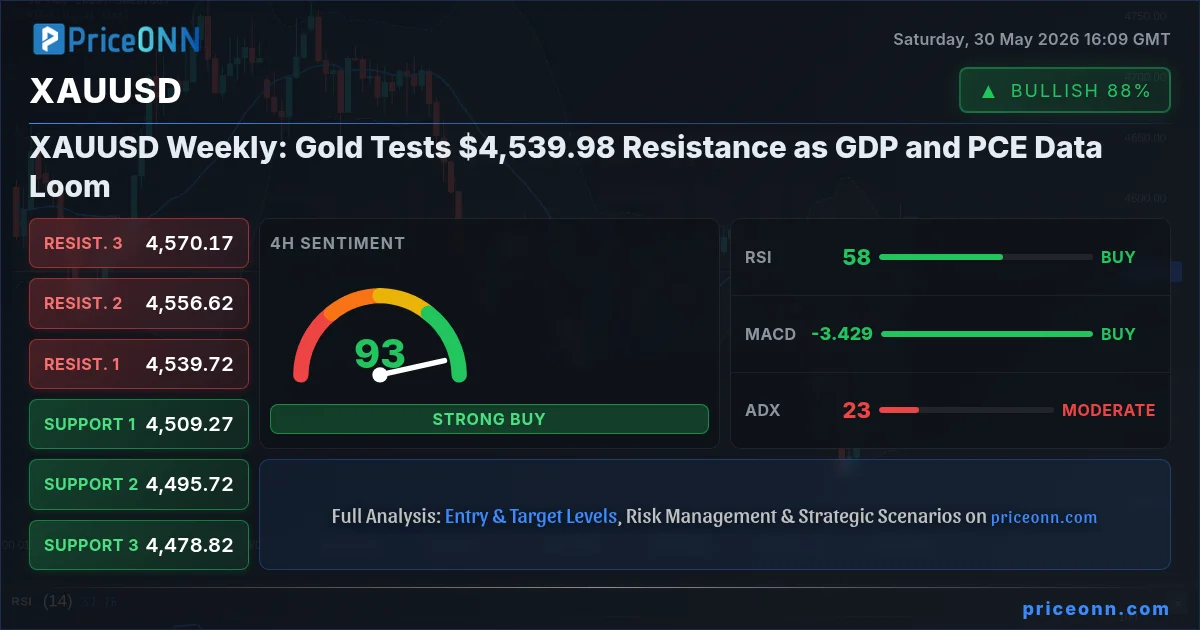
Traders in the energy markets should closely monitor developments in the Middle East for any escalation or de-escalation that could impact oil supply. Key levels to watch for crude oil benchmarks will be crucial in determining the continuation of the current price trend. For gasoline and diesel, the effectiveness of government interventions like tax cuts and reserve releases will be critical factors. On the gold front, the interplay between geopolitical tensions and the trajectory of US interest rates will be paramount. Traders should be aware of gold's inverse relationship with the US Dollar and US Treasury yields. Key support for XAU/USD could be tested around the $4,419 level, while resistance might emerge near the recent high of $4,576.
Outlook
The outlook for energy prices remains heavily dependent on the duration and intensity of the Middle East conflict. Should tensions persist or escalate, further fuel price increases are likely, potentially prompting more aggressive government interventions. Conversely, any signs of a diplomatic resolution could lead to a stabilization or even a decline in oil prices. For gold, continued geopolitical uncertainty and a potentially dovish stance from major central banks could provide further upside, reinforcing its safe-haven appeal. Investors and traders will be watching upcoming economic data and central bank communications for further clues on interest rate paths.
Frequently Asked Questions
How much have fuel prices increased globally due to the Middle East conflict?
Retail prices for gasoline and diesel have surged between 5% and 80% in various countries. The Philippines has reported a notable 80% increase, highlighting the significant impact on consumers.
What measures is Australia taking to address rising fuel costs?
Australia is halving its fuel excise on gasoline and diesel for three months, which is expected to reduce the cost of filling a tank by about US$13. They are also releasing fuel reserves and adjusting fuel quality standards.
Why is gold performing well amid these energy market disruptions?
Gold is acting as a safe-haven asset amidst geopolitical tensions and easing US Treasury yields. Central banks' continued accumulation of gold reserves also supports its value as a hedge against inflation and currency depreciation.
Track markets in real-time
Empower your investment decisions with AI-powered analysis, technical indicators and real-time price data.
Join Our Telegram Channel
Get breaking market news, AI analysis and trading signals delivered instantly to your Telegram.
Join Channel PriceONN News
The Iran war suddenly turned what had started as a year of oversupply in global oil and LNG markets into the worst oil and gas supply disruption in history. Three months after the U.S.-Israeli strikes on Iran began on February 28, the world has already lost 1 billion barrels of crude oil supply, oil and gas prices have found a new, much higher floor, and whipsaw with violent volatility nearly every day, trade routes have shifted, and tanker rates have spiked. Actual supply shortages are...
PriceONN News
Crude oil prices experienced a significant drop, with WTI futures falling over 1.8% to $87.25, as optimism grew for a U.S.-Iran deal potentially reopening the Strait of Hormuz.
PriceONN News
Crude oil prices experienced a significant downturn as market sentiment shifted towards optimism about a potential US-Iran Memorandum of Understanding that could reopen the Strait of Hormuz. WTI futures fell nearly 2% on the news.
PriceONN News
(RTTNews) - Crude oil prices have tumbled on Friday as expectations of the U.S. and Iran signing a Memorandum of Understanding run high. The MoU would allow for immediate reopening of the Strait of Hormuz and pave the way for the resumption of oil and energy trade.
PriceONN News
Crude oil futures experienced a dramatic intraday reversal on Thursday, soaring overnight on geopolitical fears only to pull back significantly as reports of a potential diplomatic understanding between the U.S. and Iran emerged.
PriceONN News
Crude oil futures experienced a dramatic intraday reversal, soaring to $92.52 before pulling back significantly on Thursday. The volatile session was driven by shifting geopolitical narratives and U.S. inventory data.
PriceONN News
Crude oil futures experienced a dramatic reversal, soaring overnight to $92.52 before plummeting nearly 6% to $89 a barrel. This volatility was driven by escalating US-Iran tensions followed by reports of a potential preliminary diplomatic understanding.
PriceONN News
(RTTNews) - Crude oil futures skyrocketed overnight but have shown a significant pullback over the course of the trading day on Thursday.
PriceONN News
The market’s faith in an imminent US-Iran peace breakthrough has clearly weakened today - but it has not disappeared yet. Oil prices jumped again in after fresh military escalation around the Strait of Hormuz reignited fears of prolonged supply disruptions across the Gulf. Brent crude pushed back toward the mid-$90s after new U.S. strikes inside […] The post Brent Oil Holding Below $100 Suggests Markets Still See Room for a US-Iran Deal appeared first on ActionForex.
PriceONN News
(RTTNews) - Extending the losses from yesterday's session, crude oil prices have gone into freefall on Wednesday as investor expectations on a potential U.S.-Iran agreement continue to rise despite the U.S. refusing to ease its demands.
PriceONN News
(RTTNews) - Crude oil prices have tumbled on Tuesday as optimism about a U.S.-Iran peace deal that could lead to reopening of the Strait of Hormuz soon grows despite reports of fresh U.S. strikes on Iran yesterday.
PriceONN News
Crude oil benchmarks experienced a sharp decline of over 5% this week, driven by renewed optimism surrounding U.S.-Iran peace talks and a potential easing of Middle East tensions. Both Brent and WTI futures saw significant drops as market sentiment shifted towards de-escalation.