
Middle East Conflict Halts 28 Oil Ships, Sending U.S. Gas Prices Over $4

The escalating conflict in the Middle East has created a critical bottleneck for global energy supplies, with 28 ships carrying vital crude oil, LPG, and LNG to India now stranded near the Strait of Hormuz. This severe disruption has coincided with a significant spike in U.S. gasoline prices, which have surpassed the $4 per gallon threshold, underscoring the growing impact of geopolitical instability on energy markets.
Market Context
A fleet of 28 vessels, comprising 18 Indian-flagged and 10 foreign-flagged ships, is currently stalled in waters adjacent to the Strait of Hormuz. These vessels are laden with essential energy commodities destined for India, the world's third-largest oil importer. The blockage, confirmed by Indian government officials, includes four foreign-flagged crude oil tankers, three LPG carriers, and three LNG carriers, alongside 18 Indian-flagged vessels. This situation directly stems from heightened regional conflicts that have severely impacted transit through this crucial chokepoint. Concurrently, the national average price for gasoline in the United States breached $4 per gallon on Monday, later settling around $3.950 according to GasBuddy and $3.990 per AAA, marking multi-year highs.
Analysis & Drivers
The primary driver behind this crisis is the intensifying geopolitical conflict in the Middle East. The Strait of Hormuz, a critical artery for global oil and gas shipments, is effectively being choked off, disrupting the flow of millions of barrels of crude oil daily. This disruption is particularly acute for energy-importing nations like India, which relies heavily on the region for its supply. Japan, for instance, sources approximately 90% of its crude oil from the Middle East and has already released about 80 million barrels from its strategic petroleum reserves to mitigate immediate shortages. The situation was further exacerbated by an alleged Iranian drone attack on a Kuwaiti oil tanker, the Al Salmi, anchored in Dubai, which was fully laden with 2 million barrels of oil. While authorities reported the fire was controlled, the incident highlights the volatile nature of the region.
The impact on U.S. fuel prices is direct. Analysts note that the continued disruption in the Strait is causing upward pressure on fuel costs, with forecasts suggesting gasoline prices could remain above $4 and diesel could climb towards $6 per gallon if the situation does not de-escalate. This surge in energy prices poses a significant risk to the broader economy, potentially reaccelerating inflation.
Trader Implications
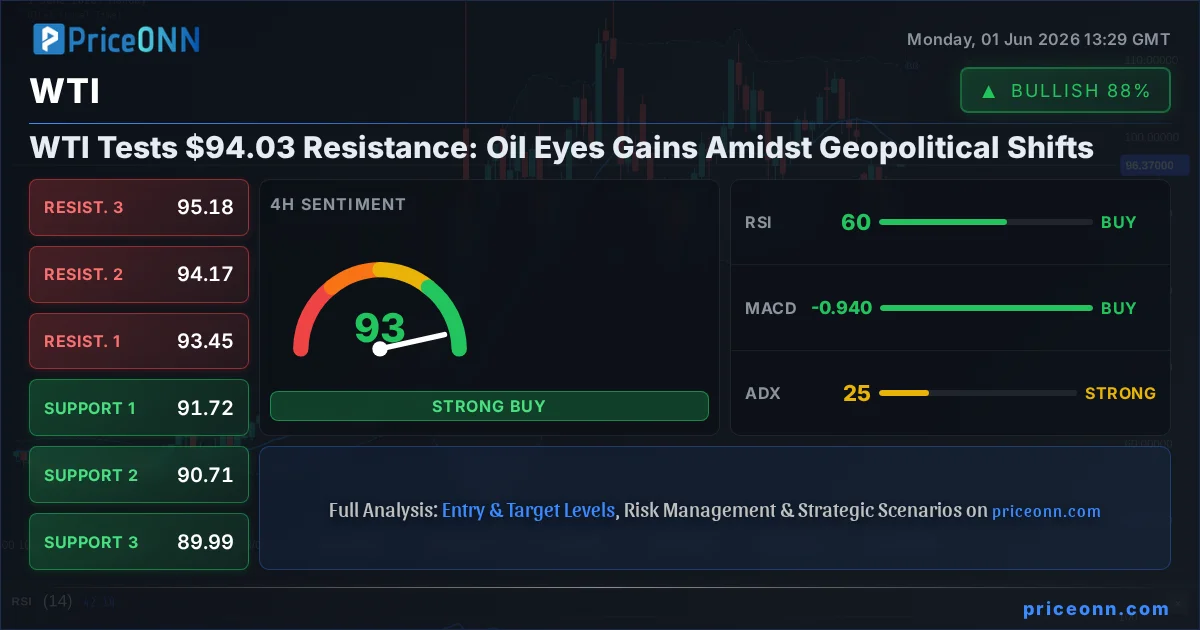
Traders should closely monitor developments in the Middle East, as any further escalation or prolonged disruption of the Strait of Hormuz will likely lead to continued volatility and upward price pressure in crude oil, gasoline, and LNG markets. Key levels to watch for Brent crude include resistance at $115 per barrel and support around $105 per barrel. For WTI, resistance is seen near $105 per barrel, with support at $95 per barrel. The U.S. gasoline price action remains critical; a sustained move above $4.00 per gallon could signal broader inflationary concerns. Investors should consider the potential for supply chain disruptions to impact refining margins and the profitability of energy companies. The safe passage of Indian-flagged vessels, especially those carrying LPG, is a key factor to track for India's domestic energy security.
Outlook
The outlook for energy markets remains highly uncertain and dependent on geopolitical de-escalation. Until tensions subside and shipping lanes are secured, expect continued price volatility and upward pressure on oil and gas products. The strain on energy security for major importers like India and Japan will persist, potentially leading to further strategic reserve releases or shifts in sourcing strategies. The threat of further attacks or disruptions in the region remains a significant wildcard, with potential to push commodity prices even higher.
Frequently Asked Questions
What is the immediate impact of the Strait of Hormuz disruption on India?
India is facing a significant energy supply crunch as 28 vessels carrying crude oil, LPG, and LNG are stranded near the Strait of Hormuz. This blockage affects critical energy lifelines, with immediate concerns for domestic cooking gas (LPG) supplies.
How are U.S. gasoline prices reacting to the Middle East conflict?
U.S. national average gasoline prices have surpassed $4 per gallon, reaching approximately $3.950 at one point on Monday. This surge is directly attributed to the curtailment of crude oil flow from the Middle East and is expected to persist as long as supplies are constrained.
What is the outlook for oil prices amid these geopolitical tensions?
The outlook remains volatile, with upward price pressure expected to continue as long as the Strait of Hormuz remains disrupted. Brent crude is facing resistance near $115/barrel, while WTI is testing resistance around $105/barrel. De-escalation is crucial for price stabilization.
Track markets in real-time
Empower your investment decisions with AI-powered analysis, technical indicators and real-time price data.
Join Our Telegram Channel
Get breaking market news, AI analysis and trading signals delivered instantly to your Telegram.
Join Channel PriceONN News
The Iran war suddenly turned what had started as a year of oversupply in global oil and LNG markets into the worst oil and gas supply disruption in history. Three months after the U.S.-Israeli strikes on Iran began on February 28, the world has already lost 1 billion barrels of crude oil supply, oil and gas prices have found a new, much higher floor, and whipsaw with violent volatility nearly every day, trade routes have shifted, and tanker rates have spiked. Actual supply shortages are...
PriceONN News
China has been cited as an example of a country that has managed to insulate itself relatively well against oil crises. With over a billion barrels in estimated inventories before the war in the Middle East started, China was the poster child of forward planning in energy security. But this could change, and if it does, it would make an already severe crisis even worse. Kpler sounded the alarm about that prospect earlier this month, reporting that Chinese refiners have reduced their purchases...
PriceONN News
Crude oil prices experienced a significant drop, with WTI futures falling over 1.8% to $87.25, as optimism grew for a U.S.-Iran deal potentially reopening the Strait of Hormuz.
PriceONN News
Crude oil prices experienced a significant downturn as market sentiment shifted towards optimism about a potential US-Iran Memorandum of Understanding that could reopen the Strait of Hormuz. WTI futures fell nearly 2% on the news.
PriceONN News
(RTTNews) - Crude oil prices have tumbled on Friday as expectations of the U.S. and Iran signing a Memorandum of Understanding run high. The MoU would allow for immediate reopening of the Strait of Hormuz and pave the way for the resumption of oil and energy trade.
PriceONN News
Crude oil futures experienced a dramatic intraday reversal on Thursday, soaring overnight on geopolitical fears only to pull back significantly as reports of a potential diplomatic understanding between the U.S. and Iran emerged.
PriceONN News
Crude oil futures experienced a dramatic intraday reversal, soaring to $92.52 before pulling back significantly on Thursday. The volatile session was driven by shifting geopolitical narratives and U.S. inventory data.
PriceONN News
Crude oil futures experienced a dramatic reversal, soaring overnight to $92.52 before plummeting nearly 6% to $89 a barrel. This volatility was driven by escalating US-Iran tensions followed by reports of a potential preliminary diplomatic understanding.
PriceONN News
(RTTNews) - Crude oil futures skyrocketed overnight but have shown a significant pullback over the course of the trading day on Thursday.
PriceONN News
The market’s faith in an imminent US-Iran peace breakthrough has clearly weakened today - but it has not disappeared yet. Oil prices jumped again in after fresh military escalation around the Strait of Hormuz reignited fears of prolonged supply disruptions across the Gulf. Brent crude pushed back toward the mid-$90s after new U.S. strikes inside […] The post Brent Oil Holding Below $100 Suggests Markets Still See Room for a US-Iran Deal appeared first on ActionForex.
PriceONN News
(RTTNews) - Extending the losses from yesterday's session, crude oil prices have gone into freefall on Wednesday as investor expectations on a potential U.S.-Iran agreement continue to rise despite the U.S. refusing to ease its demands.
PriceONN News
(RTTNews) - Crude oil prices have tumbled on Tuesday as optimism about a U.S.-Iran peace deal that could lead to reopening of the Strait of Hormuz soon grows despite reports of fresh U.S. strikes on Iran yesterday.