
Oil Markets Price In Peace, but the Upside Risk Remains
 PriceONN Editorial Desk
Multi-source verification
PriceONN Editorial Desk
Multi-source verification
Markets Anticipate De-escalation, Yet Benchmarks Hold Firm
A notable shift occurred in crude oil markets as prices braced for a significant retreat this past week. This anticipated dip, however, unfolded against a backdrop of persistent geopolitical friction in the Middle East. The primary catalyst for this downward price pressure stemmed from encouraging pronouncements suggesting an imminent cessation of hostilities. Traders, reacting to these signals, began to price in a less volatile future, pulling back from recent highs.
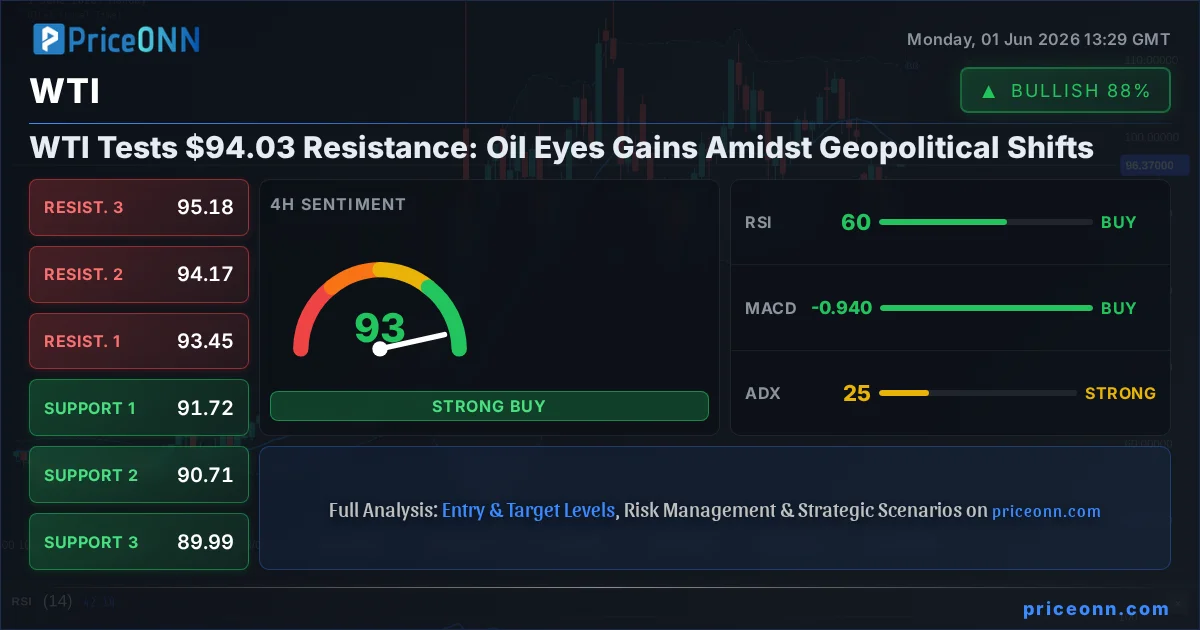
At the time of this report, Brent crude was exchanging hands at $107.98 per barrel. Concurrently, the benchmark West Texas Intermediate (WTI) stood at $94.12 per barrel. These figures represent a distinct pullback from earlier in the week; Brent had traded above $111 on Monday, while WTI saw prices exceeding $98. Despite this recent decline, both major oil benchmarks remain substantially elevated compared to their positions at the dawn of the year. The underlying market dynamics suggest that this upward price trend may yet see further extension, even should diplomatic efforts successfully quell the immediate conflict.
Analyst Scenarios Paint a Complex Picture
Specialists in commodity markets have been actively revising their forecasts. One prominent analysis from ING outlined three distinct potential scenarios for oil and gas markets moving forward. Their base-case projection hinges on a rapid de-escalation of the current conflict, thereby avoiding any deep, structural damage to global energy supply chains. This optimistic outlook, however, is contingent on swift diplomatic success.
The alternative scenarios paint a starker picture. Should the conflict drag on or escalate, ING analysts warn of fundamental alterations within oil and gas markets. Such a development would inevitably cast a long shadow over the global economy, potentially triggering widespread economic headwinds. The current situation is largely characterized as a supply-side shock, which inherently fuels inflationary pressures and complicates the delicate balancing act for central banks worldwide, according to the ING report. The ramifications are already being felt acutely in various regions.
Global Impact and Looming Supply Concerns
The ongoing conflict has already exacted a considerable toll on global oil availability. Estimates suggest that approximately 11 million barrels per day have been withdrawn from the market due to the hostilities. Some analyses place this figure even higher, potentially reaching 13 million barrels daily, with projections indicating a further increase to 14 million barrels per day if the conflict persists over an extended period. This level of supply disruption is not merely an abstract number; it is actively forcing stringent conservation measures in several Asian nations. Australia, for instance, is experiencing a palpable fuel supply crunch, exacerbated by the absence of a robust strategic petroleum reserve to cushion the blow.
Reading Between the Lines
While the immediate market reaction appears to be driven by hopes of peace, the underlying supply constraints and geopolitical risks cannot be dismissed lightly. The current price levels, though off their recent peaks, still reflect a market on edge. The discrepancy between the optimistic pricing of de-escalation and the stark reality of ongoing supply deficits creates a tension that traders are closely watching. The potential for renewed escalation or protracted conflict means that upside risk remains a significant factor.
The market's eagerness to price in peace highlights its sensitivity to perceived resolutions. However, the fundamental damage to supply infrastructure or the long-term withdrawal of key producers from the market could lead to structural price increases that persist long after the immediate crisis subsides. This scenario would present a formidable challenge for global economic recovery and monetary policy. The current situation underscores the fragility of energy markets when faced with significant geopolitical shocks. Key levels to monitor include the $100 mark for WTI and $110 for Brent, as breaches or defenses of these psychological levels could signal shifts in market sentiment and future trajectory.
The impact extends beyond just crude oil prices. Currencies like the Canadian Dollar (CAD), closely tied to commodity prices, could see volatility. Furthermore, inflation expectations, a critical concern for central banks like the Federal Reserve, will remain sensitive to energy price movements. Investors should also keep an eye on energy sector equities, which could experience swings based on supply security news and demand outlook revisions. The interplay between geopolitical events and energy supply remains a dominant theme for the foreseeable future.
Track markets in real-time
Empower your investment decisions with AI-powered analysis, technical indicators and real-time price data.
Join Our Telegram Channel
Get breaking market news, AI analysis and trading signals delivered instantly to your Telegram.
Join Channel PriceONN News
Brent crude prices surged towards the mid-$90s amid fears of supply disruptions from Middle East tensions, only to pare gains later as whispers of a potential US-Iran diplomatic understanding emerged.
PriceONN News
Crude oil benchmarks experienced a sharp decline of over 5% this week, driven by renewed optimism surrounding U.S.-Iran peace talks and a potential easing of Middle East tensions. Both Brent and WTI futures saw significant drops as market sentiment shifted towards de-escalation.
PriceONN News
Crude oil prices experienced a significant drop, with WTI futures falling over 1.8% to $87.25, as optimism grew for a U.S.-Iran deal potentially reopening the Strait of Hormuz.
PriceONN News
(RTTNews) - Crude oil prices have tumbled on Friday as expectations of the U.S. and Iran signing a Memorandum of Understanding run high. The MoU would allow for immediate reopening of the Strait of Hormuz and pave the way for the resumption of oil and energy trade.
PriceONN News
Crude oil futures experienced a dramatic intraday reversal on Thursday, soaring overnight on geopolitical fears only to pull back significantly as reports of a potential diplomatic understanding between the U.S. and Iran emerged.
PriceONN News
Crude oil futures experienced a dramatic intraday reversal, soaring to $92.52 before pulling back significantly on Thursday. The volatile session was driven by shifting geopolitical narratives and U.S. inventory data.
PriceONN News
Crude oil futures experienced a dramatic reversal, soaring overnight to $92.52 before plummeting nearly 6% to $89 a barrel. This volatility was driven by escalating US-Iran tensions followed by reports of a potential preliminary diplomatic understanding.
PriceONN News
(RTTNews) - Crude oil futures skyrocketed overnight but have shown a significant pullback over the course of the trading day on Thursday.
PriceONN News
Global oil prices are treading water after a significant 5% slump, as market sentiment grapples with cautious optimism over Middle East de-escalation efforts versus lingering geopolitical uncertainties. Brent crude hovers near $104.72 and WTI near $98.07.
PriceONN News
The Iran war suddenly turned what had started as a year of oversupply in global oil and LNG markets into the worst oil and gas supply disruption in history. Three months after the U.S.-Israeli strikes on Iran began on February 28, the world has already lost 1 billion barrels of crude oil supply, oil and gas prices have found a new, much higher floor, and whipsaw with violent volatility nearly every day, trade routes have shifted, and tanker rates have spiked. Actual supply shortages are...
PriceONN News
The Iran war has handed the United States a rare opportunity: a new dawn of energy dominance in an increasingly fractured world. With coordinated US-Israeli strikes disrupting the Strait of Hormuz from late February, roughly 20% of global LNG supply has been stripped from the market since early March. Prices have surged across Asia and Europe. And into that vacuum, American gas has flowed. The numbers speak for themselves. US LNG exports to Asia jumped sharply in April, with nearly a quarter of...
PriceONN News
Crude oil prices experienced a significant downturn as market sentiment shifted towards optimism about a potential US-Iran Memorandum of Understanding that could reopen the Strait of Hormuz. WTI futures fell nearly 2% on the news.