
Oil Prices Rebound Amid Iran Denials and Hormuz Passage

Global oil benchmarks experienced a sharp rebound in early Asian trading, recovering some of the significant losses from the previous session. The upward momentum was primarily fueled by Iran's strong denial of any direct negotiations with the United States regarding its energy sector, coupled with a notable development in maritime traffic through a critical chokepoint.
Market Context: Geopolitical Reversals Drive Volatility
As of the latest reporting, West Texas Intermediate (WTI) crude futures climbed 3.87% to $91.54 per barrel. The international benchmark, Brent crude, followed suit, rising 3.43% to $103.40. This price action represents a dramatic reversal from Monday's steep selloff, during which Brent briefly dipped below the $100 per barrel mark for the first time since early March. The initial decline on Monday was attributed to reports suggesting U.S. President Trump had indicated productive discussions with Iran and a potential postponement of planned strikes. However, the narrative quickly shifted as Iran vehemently denied any direct talks, although acknowledging the involvement of third-party mediators. Market sentiment was further complicated by reports suggesting U.S. negotiators had indeed been in contact with Iranian officials, which were subsequently denied by Iran's Parliament Speaker.
Analysis & Drivers: Supply Fears Reignite
The core driver behind the recent price swings remains the persistent geopolitical tension between the U.S. and Iran. Despite U.S. President Trump's reported decision to delay potential strikes on Iran's energy infrastructure for a five-day period, the situation remains highly volatile. Explosions reportedly heard in Tehran and other Iranian cities, coupled with Iran's firm stance against direct negotiations, have amplified supply concerns among traders. Iranian officials have characterized U.S. statements as attempts to manipulate financial and oil markets, or as tactics to artificially depress energy prices while advancing military objectives. This ongoing conflict, now in its 25th day according to some reports, has introduced significant uncertainty into supply forecasts. Adding another layer of complexity, reports suggest key regional players like Saudi Arabia and the United Arab Emirates may be increasingly inclined to join the confrontation, a move that could further destabilize the region and impact oil flows.
In a significant development that potentially eases some immediate transit fears, a very large crude carrier (VLCC) flying a Panamanian flag, the Omega Trader, has successfully passed through the Strait of Hormuz carrying 2 million barrels of Iraqi crude. This marks the first such export since Iran significantly restricted passage through the vital waterway. Ship-tracking data indicates the vessel, operated by Japan's Mitsui OSK, has arrived in India, a key destination for oil permitted to transit the strait. While this passage is a positive sign, maritime traffic data suggests that overall vessel crossings remain under stringent limitations, with only 16 vessel crossings with active AIS signals observed in the past week. This indicates Iran is maintaining a selective transit model, permitting passage for specific vessels and cargo, often within designated corridors, rather than an outright reopening of the strait.
Trader Implications: Navigating the Volatility
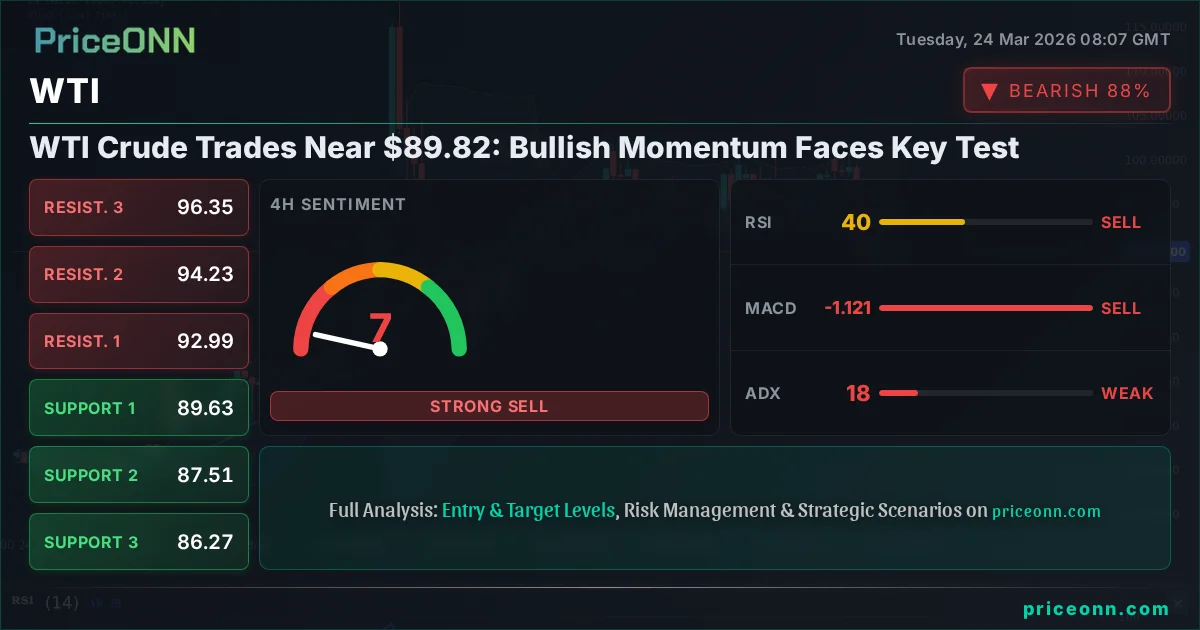
Traders should remain highly attentive to any further official statements from both the U.S. and Iran, as these will dictate immediate price direction. Key levels to watch for WTI crude are resistance at the recent highs around $91.50-$92.00 and support near the $90.00 psychological mark. For Brent crude, resistance lies around $103.50-$104.00, with support at the $100.00 level, which was briefly breached. The successful transit of the Omega Trader offers a temporary reprieve, but the underlying geopolitical risks persist. Any escalation in rhetoric or military action, or conversely, any concrete signs of de-escalation through confirmed diplomatic channels, will trigger significant price movements. Traders should also monitor news regarding potential involvement from other regional powers, as this could dramatically alter the supply landscape. The selective transit through the Strait of Hormuz highlights the continued risk premium embedded in oil prices due to the ongoing tensions.
Outlook
The outlook for oil prices remains heavily dependent on the evolving geopolitical situation between the U.S. and Iran. While Iran's denial of talks provided an immediate boost, the underlying tensions show no signs of abating. The successful passage of the Omega Trader is a positive, but the broader restrictions on the Strait of Hormuz and the potential for further escalation mean that supply concerns will likely keep a floor under prices. Traders will be closely watching upcoming economic data from major consuming nations and any further statements from OPEC+ members regarding production levels, though geopolitical events currently dominate market sentiment. Expect continued volatility as the situation develops.
Frequently Asked Questions
What is the current price of WTI crude oil?
As of the latest reporting, West Texas Intermediate (WTI) crude oil has surged to $91.54 per barrel, representing a 3.87% increase in early Asian trade.
What is the significance of the Omega Trader passing through the Strait of Hormuz?
The passage of the Omega Trader carrying 2 million barrels of Iraqi crude is significant as it is the first tanker to export Iraqi crude since Iran imposed restrictions on the Strait of Hormuz, indicating a selective, permission-based transit model is in effect.
What is the short-term outlook for oil prices?
The short-term outlook for oil prices remains volatile, heavily influenced by geopolitical developments between the U.S. and Iran. Key support for WTI is seen at $90.00 and for Brent at $100.00, with ongoing supply concerns providing a floor.
Track markets in real-time
Empower your investment decisions with AI-powered analysis, technical indicators and real-time price data.
Join Our Telegram Channel
Get breaking market news, AI analysis and trading signals delivered instantly to your Telegram.
Join Channel

PriceONN