
Why Did Oil Prices Rebound Amidst Conflicting Iran Narratives and Strait of Hormuz Activity?
Oil prices staged a notable recovery in early Asian trading, clawing back some of the steep losses from the previous session. The surge was primarily fueled by Iran's strong denial of any direct negotiations with the United States regarding its oil sector, a development that immediately refocused market attention on persistent geopolitical supply risks.
Market Context: Volatility Fueled by Geopolitical Crosscurrents
West Texas Intermediate (WTI) crude futures climbed approximately 3.87% to trade around $91.54 per barrel. Concurrently, the international benchmark, Brent crude, saw a gain of 3.43%, reaching $103.40. This rebound contrasts sharply with the dramatic sell-off experienced on Monday, where Brent briefly dipped below the critical $100 per barrel mark for the first time since March 11. The initial downturn was reportedly influenced by claims from President Trump suggesting constructive discussions with Iran and a potential postponement of strikes on energy infrastructure.
However, this narrative shifted rapidly as Iran issued unequivocal denials of direct talks with the U.S. While acknowledging the involvement of third-party mediators, including Pakistan, Egypt, and Turkey, Tehran maintained its firm stance against bilateral discussions. This geopolitical uncertainty resurfaced just as market data indicated increased activity through the Strait of Hormuz, a vital energy chokepoint.
In a significant development, a Panamanian-flagged tanker, the Omega Trader, successfully transited the Strait of Hormuz carrying approximately 2 million barrels of Iraqi crude. Operated by Japan's Mitsui OSK, this marks the first export of Iraqi crude through the waterway since recent restrictions were imposed. The vessel has since arrived in India, a key destination for oil shipments navigating these managed passages. Maritime tracking data suggests that traffic through the strait remains under stringent limitations, with only about 16 vessel crossings observed with active AIS signals in the past week.
Analysis & Drivers: Supply Fears Reignited
The conflicting narratives surrounding U.S.-Iran relations are a primary driver of current oil market volatility. Iran's denial of direct negotiations effectively removes the immediate prospect of a de-escalation, causing traders to reassess the potential for further supply disruptions. The market remains highly sensitive to any signals that could impact the flow of oil from the Middle East, a region critical to global energy security.
Furthermore, the U.S. Treasury Department's recent issuance of a general license permitting the import of Iranian crude loaded onto vessels as of March 20 appears to have had limited impact. China's Sinopec, Asia's largest refiner, has indicated it will not purchase Iranian crude despite this waiver, citing potential trade risks. This decision underscores the persistent challenges and complexities in engaging with Iranian oil, even under relaxed sanctions. Historically, China has been the primary buyer of Iranian crude, often through independent refiners willing to navigate these risks for discounted prices. Sinopec's stance suggests that major state-owned entities remain risk-averse.
The controlled passage of Iraqi crude through the Strait of Hormuz, while a positive sign for transit, also highlights the selective nature of access. Industry observers suggest Iran is implementing a carefully managed transit system, permitting passage for specific cargo types and vessels, often within Iranian territorial waters. This model reinforces the perception of a permission-based framework rather than an open waterway, contributing to underlying supply concerns.
Trader Implications: Watching Key Levels and Geopolitical Signals
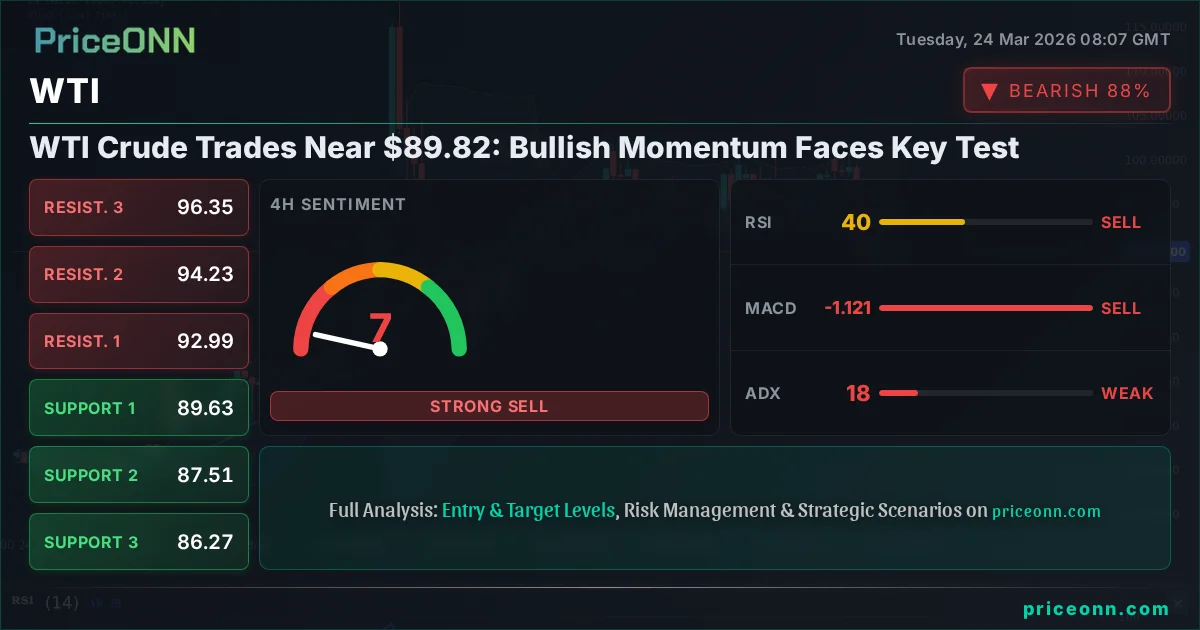
Traders should closely monitor the evolving geopolitical rhetoric between the U.S. and Iran. Any further escalation or renewed de-escalation signals could trigger significant price swings. Key resistance levels for Brent crude are currently around $105 per barrel, while support is being tested near the $100 psychological mark. For WTI, resistance lies near $93, with support holding around $89.
The market's reaction to Sinopec's decision to forgo Iranian crude, despite the U.S. waiver, warrants attention. If other major buyers follow suit, it could limit the actual impact of the waiver on global supply. Conversely, any indication of increased demand from independent Chinese refiners could provide a floor for Iranian crude prices.
The managed transit through the Strait of Hormuz, while allowing some oil to flow, introduces an element of uncertainty regarding future passage. Traders should remain vigilant for any changes in Iran's transit policies or any incidents involving maritime traffic in this critical waterway. The potential for supply disruptions remains elevated, making risk management paramount.
Outlook: Supply Concerns to Persist
Looking ahead, oil prices are likely to remain sensitive to geopolitical developments in the Middle East and any shifts in U.S. policy towards Iran. While the waiver offers a theoretical opening for Iranian crude exports, significant practical and political hurdles remain. The market's focus will likely continue to be on actual supply flows and the potential for disruptions, suggesting that elevated price volatility is set to persist. Upcoming economic data releases from major consuming nations will also play a role in shaping demand expectations.
Frequently Asked Questions
What is the current price of Brent crude oil?
As of early Asian trade on Tuesday, Brent crude oil had risen 3.43% to trade around $103.40 per barrel, reversing some of Monday's sharp losses.
Will China significantly increase its purchase of Iranian oil due to the U.S. waiver?
It appears unlikely, as Sinopec, a major Chinese refiner, has stated it will 'basically won't buy' Iranian crude due to perceived risks, despite the U.S. waiver allowing imports loaded after March 20.
What is the significance of the Omega Trader's passage through the Strait of Hormuz?
The Omega Trader carrying 2 million barrels of Iraqi crude is the first tanker to export Iraqi oil through the Strait of Hormuz since Iran imposed significant restrictions, indicating a managed but ongoing flow of vital energy resources.
Track markets in real-time
Empower your investment decisions with AI-powered analysis, technical indicators and real-time price data.
Join Our Telegram Channel
Get breaking market news, AI analysis and trading signals delivered instantly to your Telegram.
Join Channel


PriceONN