
Why Did WTI Crude Plummet Below $100 After Geopolitical Tensions Eased?

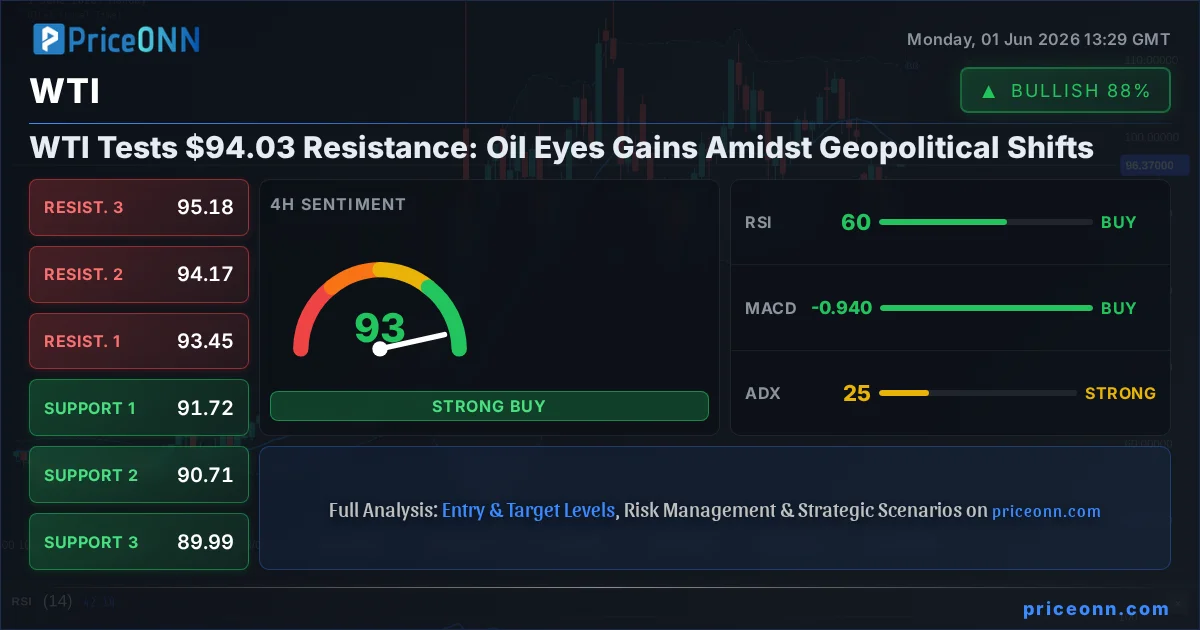
West Texas Intermediate (WTI) crude oil futures experienced a sharp sell-off, plunging approximately 9% and trading back below the $100 per barrel level, even testing the $90.00 mark. This significant downturn came as market participants reacted to a perceived easing of geopolitical tensions, specifically reports of postponed energy infrastructure strikes.
Market Context: A Volatile Week for Oil
The past week has been characterized by extreme volatility in the oil markets. Following a period of heightened concerns over potential supply disruptions stemming from the Middle East, WTI crude had seen a substantial run-up. However, the sentiment shifted rapidly as news emerged that potential strikes on energy infrastructure were being postponed. This development immediately eased fears of a significant supply shock, prompting a wave of selling pressure. The intraday price swings have been some of the widest seen in modern oil market history, highlighting the market's sensitivity to geopolitical developments.
Analysis & Drivers: Geopolitics and Supply Fears
The primary driver behind the recent price surge and subsequent plunge is the delicate balance of global oil supply and demand, heavily influenced by geopolitical events. The United States, as the world's largest crude oil producer consistently pumping over 13.6 million barrels per day, often finds its domestic consumers affected by global price movements. This paradox arises because crude oil prices, which constitute about 51% of the average gasoline price, are set on international benchmarks like WTI and Brent. Even with robust domestic output, the U.S. consumes over 20 million barrels per day, maintaining a reliance on global supply chains. Furthermore, U.S. refining capacity is often optimized for specific crude grades, meaning that even abundant domestic production of certain types doesn't fully insulate the market from international price fluctuations. The recent conflict in the Middle East amplified these sensitivities, leading to a rapid ascent in crude prices due to fears of disrupted supply routes and production facilities. The subsequent de-escalation, however, has led to a swift unwinding of these risk premiums.
Trader Implications: Watching Key Levels and Inventory Data
Traders are now focused on several key factors. The $90.00 per barrel level for WTI has become a significant psychological and technical support zone. A sustained break below this could signal further downside. Conversely, any resurgence in geopolitical tensions or unexpected supply disruptions could quickly push prices back upwards. Market participants will also be closely monitoring weekly oil inventory reports from the American Petroleum Institute (API) and the Energy Information Administration (EIA). A significant draw in inventories typically indicates strong demand, which could support prices, while builds suggest weakening demand or increased supply. The decisions of OPEC+ regarding production quotas remain a critical factor, as any changes in their output strategy can significantly impact global supply dynamics.
Outlook: Cautious Optimism Amidst Underlying Volatility
The immediate outlook for WTI crude suggests a period of consolidation as the market digests the recent geopolitical developments and assesses the true state of global supply and demand. While the postponement of strikes has provided temporary relief, the underlying tensions in the Middle East remain a significant wildcard. Traders should remain vigilant for any shifts in the geopolitical landscape or surprises in economic data that could reignite price volatility. Key price levels to watch are the $90.00 support and the previous highs near $100 as resistance.
Frequently Asked Questions
What is the significance of WTI crude falling below $100 per barrel?
A fall below $100 per barrel for WTI crude indicates a significant reduction in risk premium associated with Middle Eastern geopolitical tensions. It suggests that fears of immediate supply disruptions have subsided, leading to a price correction from recent highs.
How does U.S. domestic oil production affect gasoline prices?
Despite being the world's largest producer, U.S. domestic oil production doesn't entirely insulate consumers from global price swings. Crude oil, which makes up roughly 51% of gasoline costs, is priced internationally. U.S. consumption exceeding production and refinery specifications mean global prices directly impact pump prices.
What should traders watch for after the WTI price drop?
Traders should monitor the $90.00 support level for WTI crude. Additionally, upcoming API and EIA inventory reports will be crucial for gauging demand and supply trends, while any renewed geopolitical escalations in the Middle East could quickly reverse the current downward trend.
Track markets in real-time
Empower your investment decisions with AI-powered analysis, technical indicators and real-time price data.
Join Our Telegram Channel
Get breaking market news, AI analysis and trading signals delivered instantly to your Telegram.
Join Channel PriceONN News
Crude oil prices experienced a significant drop, with WTI futures falling over 1.8% to $87.25, as optimism grew for a U.S.-Iran deal potentially reopening the Strait of Hormuz.
PriceONN News
(RTTNews) - Crude oil prices have tumbled on Friday as expectations of the U.S. and Iran signing a Memorandum of Understanding run high. The MoU would allow for immediate reopening of the Strait of Hormuz and pave the way for the resumption of oil and energy trade.
PriceONN News
Crude oil futures experienced a dramatic intraday reversal on Thursday, soaring overnight on geopolitical fears only to pull back significantly as reports of a potential diplomatic understanding between the U.S. and Iran emerged.
PriceONN News
Crude oil futures experienced a dramatic intraday reversal, soaring to $92.52 before pulling back significantly on Thursday. The volatile session was driven by shifting geopolitical narratives and U.S. inventory data.
PriceONN News
(RTTNews) - Crude oil futures skyrocketed overnight but have shown a significant pullback over the course of the trading day on Thursday.
PriceONN News
Global oil prices are treading water after a significant 5% slump, as market sentiment grapples with cautious optimism over Middle East de-escalation efforts versus lingering geopolitical uncertainties. Brent crude hovers near $104.72 and WTI near $98.07.
PriceONN News
The Iran war suddenly turned what had started as a year of oversupply in global oil and LNG markets into the worst oil and gas supply disruption in history. Three months after the U.S.-Israeli strikes on Iran began on February 28, the world has already lost 1 billion barrels of crude oil supply, oil and gas prices have found a new, much higher floor, and whipsaw with violent volatility nearly every day, trade routes have shifted, and tanker rates have spiked. Actual supply shortages are...
PriceONN News
Crude oil prices experienced a significant downturn as market sentiment shifted towards optimism about a potential US-Iran Memorandum of Understanding that could reopen the Strait of Hormuz. WTI futures fell nearly 2% on the news.
PriceONN News
Brent crude prices surged towards the mid-$90s amid fears of supply disruptions from Middle East tensions, only to pare gains later as whispers of a potential US-Iran diplomatic understanding emerged.
PriceONN News
Crude oil futures experienced a dramatic reversal, soaring overnight to $92.52 before plummeting nearly 6% to $89 a barrel. This volatility was driven by escalating US-Iran tensions followed by reports of a potential preliminary diplomatic understanding.
PriceONN News
The market’s faith in an imminent US-Iran peace breakthrough has clearly weakened today - but it has not disappeared yet. Oil prices jumped again in after fresh military escalation around the Strait of Hormuz reignited fears of prolonged supply disruptions across the Gulf. Brent crude pushed back toward the mid-$90s after new U.S. strikes inside […] The post Brent Oil Holding Below $100 Suggests Markets Still See Room for a US-Iran Deal appeared first on ActionForex.
PriceONN News
(RTTNews) - Extending the losses from yesterday's session, crude oil prices have gone into freefall on Wednesday as investor expectations on a potential U.S.-Iran agreement continue to rise despite the U.S. refusing to ease its demands.