
Oil Prices Surge as Brent-WTI Spread Blows Out on Iran Supply Risk

Oil prices surged sharply on Wednesday as the Iran conflict continued to disrupt flows through the Persian Gulf, with the global benchmark pulling decisively away from U.S. crude as the Brent-WTI spread widened to roughly $10 per barrel, signaling mounting stress in seaborne supply markets.
The divergence reflects a market increasingly pricing risk around barrels exposed to the Strait of Hormuz, where military activity tied to the U.S.-Israeli war with Iran has begun to disrupt tanker movements and raise insurance and freight costs.
The widening gap shows a clear split in market fundamentals. Brent, which prices most internationally traded crude, is reacting directly to fears of supply disruption across the Middle East, where roughly a fifth of global oil flows transit through Hormuz. Any sustained interference in that corridor immediately tightens availability for refiners in Europe and Asia, forcing buyers to bid up seaborne grades.
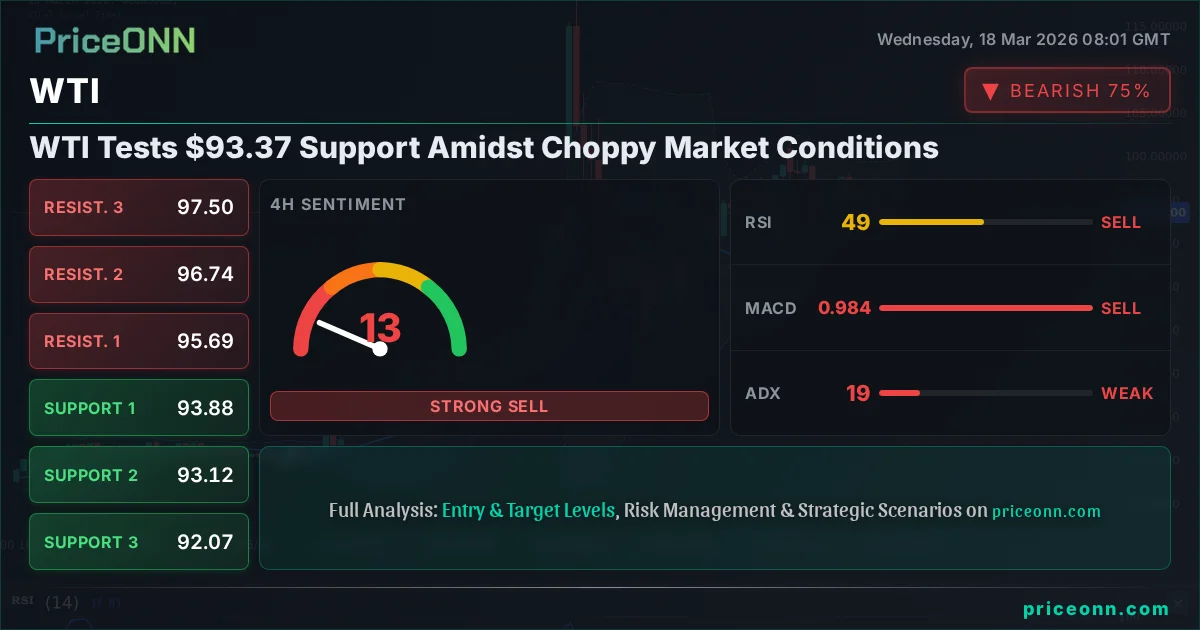
WTI remains more insulated. U.S. crude pricing continues to reflect domestic supply conditions, including steady production and localized inventory dynamics that have not yet tightened to the same degree. That has left U.S. barrels comparatively discounted even as global benchmarks rally.
Physical markets are already showing signs of strain. Middle Eastern grades tied to Dubai and Oman benchmarks are trading at elevated premiums, indicating that refiners are scrambling to secure prompt cargoes amid uncertainty over future shipments.
Traders are now watching the spread itself as a real-time indicator of how severe the disruption may become. A further blowout would suggest that the conflict is increasingly constraining globally traded barrels rather than remaining a regional risk.
Track markets in real-time
Empower your investment decisions with AI-powered analysis, technical indicators and real-time price data.
Join Our Telegram Channel
Get breaking market news, AI analysis and trading signals delivered instantly to your Telegram.
Join Channel