
Why Did US Crude Oil Inventories Unexpectedly Surge 6.5 Million Barrels?


US crude oil inventories experienced a significant and unexpected build of 6.556 million barrels in the week ending March 13, according to API estimates. This starkly contrasts with the previous week's draw of 1.7 million barrels and the consensus forecast for a 600,000-barrel decline.
Market Context
The substantial accumulation of crude in storage facilities has raised questions about demand signals and the broader market balance. Analysts had anticipated a reduction in stockpiles, reflecting typical seasonal patterns and ongoing geopolitical supply concerns. However, the data suggests a divergence between expected inventory drawdowns and the actual market reality. Meanwhile, inventories held within the U.S. Strategic Petroleum Reserve (SPR) remained unchanged for multiple weeks at 415.4 million barrels, significantly below maximum capacity.
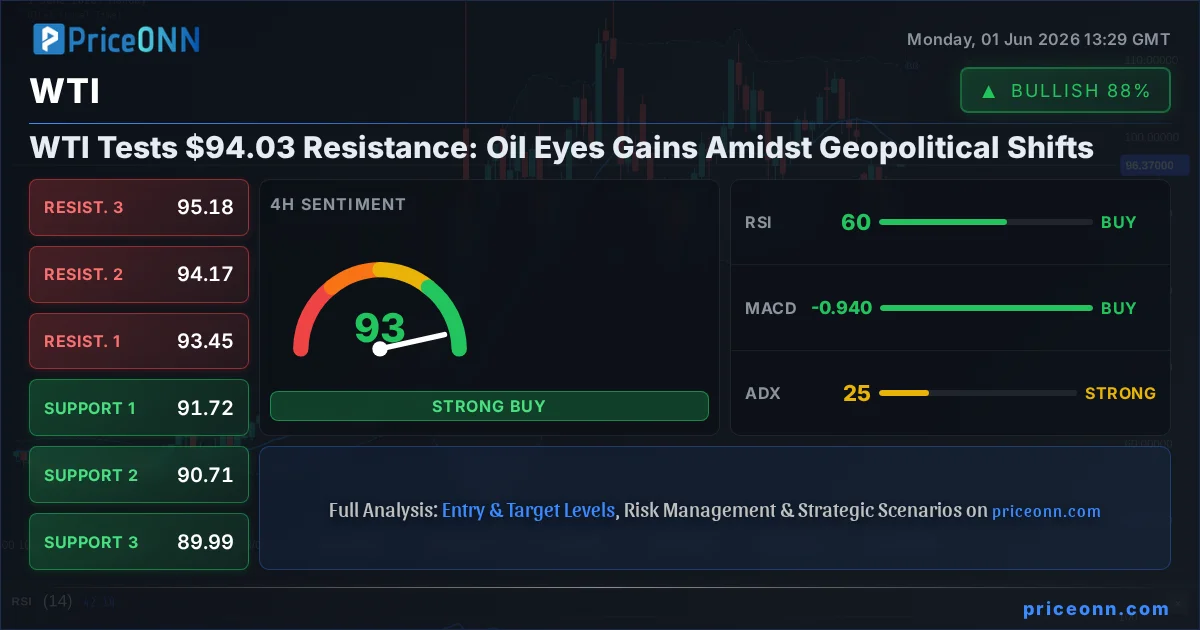
Despite the inventory build, crude oil prices showed resilience. Brent crude traded up approximately 3.16% on the day at $103.40 per barrel, and West Texas Intermediate (WTI) also saw gains, rising 2.63% to $95.96. These price movements are being supported by persistent supply-side anxieties, including stalled tanker traffic in the Strait of Hormuz and reported significant production disruptions in Iraq, the UAE, and Saudi Arabia.
Further drawing down stored products, gasoline inventories fell by a notable 4.6 million barrels, and distillate inventories decreased by 1.4 million barrels. While gasoline stocks remain above the five-year average, distillate inventories are slightly below it.
Analysis & Drivers
The primary driver behind the surprising inventory build appears to be a complex interplay of shifting global trade dynamics and potentially softening domestic demand signals. The U.S. waiver on the purchase of Russian crude oil transported via tankers has significantly altered Asian energy flows. This has led to a notable increase in India's imports of Russian crude, with vessels rerouting from China to Indian refineries. For instance, the Aqua Titan tanker, initially bound for China, has changed course for India's Mangalore refinery.
This redirection of Russian oil, which was previously discounted due to sanctions, is now commanding a premium as competition for available supplies intensifies. This shift in global flows may be impacting the arbitrage opportunities and refining economics within the U.S., contributing to the larger-than-expected inventory accumulation. Concurrently, U.S. crude production has seen a slight dip, falling to an average of 13.678 million bpd in the week ending March 6, though it remains higher year-on-year.
Trader Implications
Traders should closely monitor upcoming U.S. inventory reports, particularly the official EIA data, to confirm the trend indicated by the API. The unexpected build suggests that the market may be overestimating near-term demand or underestimating the impact of rerouted global supplies. Key support levels for WTI crude are around $94.50, while resistance lies near $97.00. For Brent crude, the $102.00 mark is a crucial support, with resistance at $105.00.
The continued supply concerns in the Middle East and geopolitical tensions remain potent upside risks for oil prices. However, the growing U.S. crude stockpiles present a potential headwind. Traders might consider strategies that account for this dichotomy, such as selling into rallies or looking for confirmation of a sustained demand recovery before committing to long positions. The divergence between product inventory draws (gasoline, distillates) and the crude build warrants attention, potentially signaling refining margin pressures.
Outlook
The coming weeks will be critical in determining whether the U.S. crude inventory build is a one-off event or the start of a trend. Market participants will be scrutinizing economic data for signs of demand strength and monitoring any further shifts in geopolitical supply disruptions. The ongoing recalibration of global oil trade routes, particularly concerning Russian crude, is likely to remain a significant factor influencing price action and inventory levels across major consuming regions.
Frequently Asked Questions
What caused the surprise increase in US crude oil inventories?
The API reported a surprise build of 6.556 million barrels for the week ending March 13. This was driven by a combination of factors including shifting global trade routes as India increases Russian crude imports, potentially impacting U.S. refinery demand, and a slight decrease in U.S. production.
How have oil prices reacted to the inventory data?
Despite the large inventory build, oil prices have remained firm. Brent crude traded above $103.00 and WTI was near $96.00. This resilience is attributed to ongoing geopolitical supply concerns and production issues in key producing nations.
What should traders watch for in the coming weeks?
Traders should monitor U.S. EIA inventory reports for confirmation of the build trend, alongside key economic data indicating demand. Geopolitical developments affecting supply in regions like the Strait of Hormuz and major oil-producing countries remain critical watchpoints.
Track markets in real-time
Empower your investment decisions with AI-powered analysis, technical indicators and real-time price data.
Join Our Telegram Channel
Get breaking market news, AI analysis and trading signals delivered instantly to your Telegram.
Join Channel PriceONN News
Crude oil prices experienced a significant drop, with WTI futures falling over 1.8% to $87.25, as optimism grew for a U.S.-Iran deal potentially reopening the Strait of Hormuz.
PriceONN News
(RTTNews) - Crude oil prices have tumbled on Friday as expectations of the U.S. and Iran signing a Memorandum of Understanding run high. The MoU would allow for immediate reopening of the Strait of Hormuz and pave the way for the resumption of oil and energy trade.
PriceONN News
Crude oil futures experienced a dramatic intraday reversal on Thursday, soaring overnight on geopolitical fears only to pull back significantly as reports of a potential diplomatic understanding between the U.S. and Iran emerged.
PriceONN News
Crude oil futures experienced a dramatic intraday reversal, soaring to $92.52 before pulling back significantly on Thursday. The volatile session was driven by shifting geopolitical narratives and U.S. inventory data.
PriceONN News
(RTTNews) - Crude oil futures skyrocketed overnight but have shown a significant pullback over the course of the trading day on Thursday.
PriceONN News
Global oil prices are treading water after a significant 5% slump, as market sentiment grapples with cautious optimism over Middle East de-escalation efforts versus lingering geopolitical uncertainties. Brent crude hovers near $104.72 and WTI near $98.07.
PriceONN News
The Iran war suddenly turned what had started as a year of oversupply in global oil and LNG markets into the worst oil and gas supply disruption in history. Three months after the U.S.-Israeli strikes on Iran began on February 28, the world has already lost 1 billion barrels of crude oil supply, oil and gas prices have found a new, much higher floor, and whipsaw with violent volatility nearly every day, trade routes have shifted, and tanker rates have spiked. Actual supply shortages are...
PriceONN News
Crude oil prices experienced a significant downturn as market sentiment shifted towards optimism about a potential US-Iran Memorandum of Understanding that could reopen the Strait of Hormuz. WTI futures fell nearly 2% on the news.
PriceONN News
Brent crude prices surged towards the mid-$90s amid fears of supply disruptions from Middle East tensions, only to pare gains later as whispers of a potential US-Iran diplomatic understanding emerged.
PriceONN News
Crude oil futures experienced a dramatic reversal, soaring overnight to $92.52 before plummeting nearly 6% to $89 a barrel. This volatility was driven by escalating US-Iran tensions followed by reports of a potential preliminary diplomatic understanding.
PriceONN News
The market’s faith in an imminent US-Iran peace breakthrough has clearly weakened today - but it has not disappeared yet. Oil prices jumped again in after fresh military escalation around the Strait of Hormuz reignited fears of prolonged supply disruptions across the Gulf. Brent crude pushed back toward the mid-$90s after new U.S. strikes inside […] The post Brent Oil Holding Below $100 Suggests Markets Still See Room for a US-Iran Deal appeared first on ActionForex.
PriceONN News
(RTTNews) - Extending the losses from yesterday's session, crude oil prices have gone into freefall on Wednesday as investor expectations on a potential U.S.-Iran agreement continue to rise despite the U.S. refusing to ease its demands.