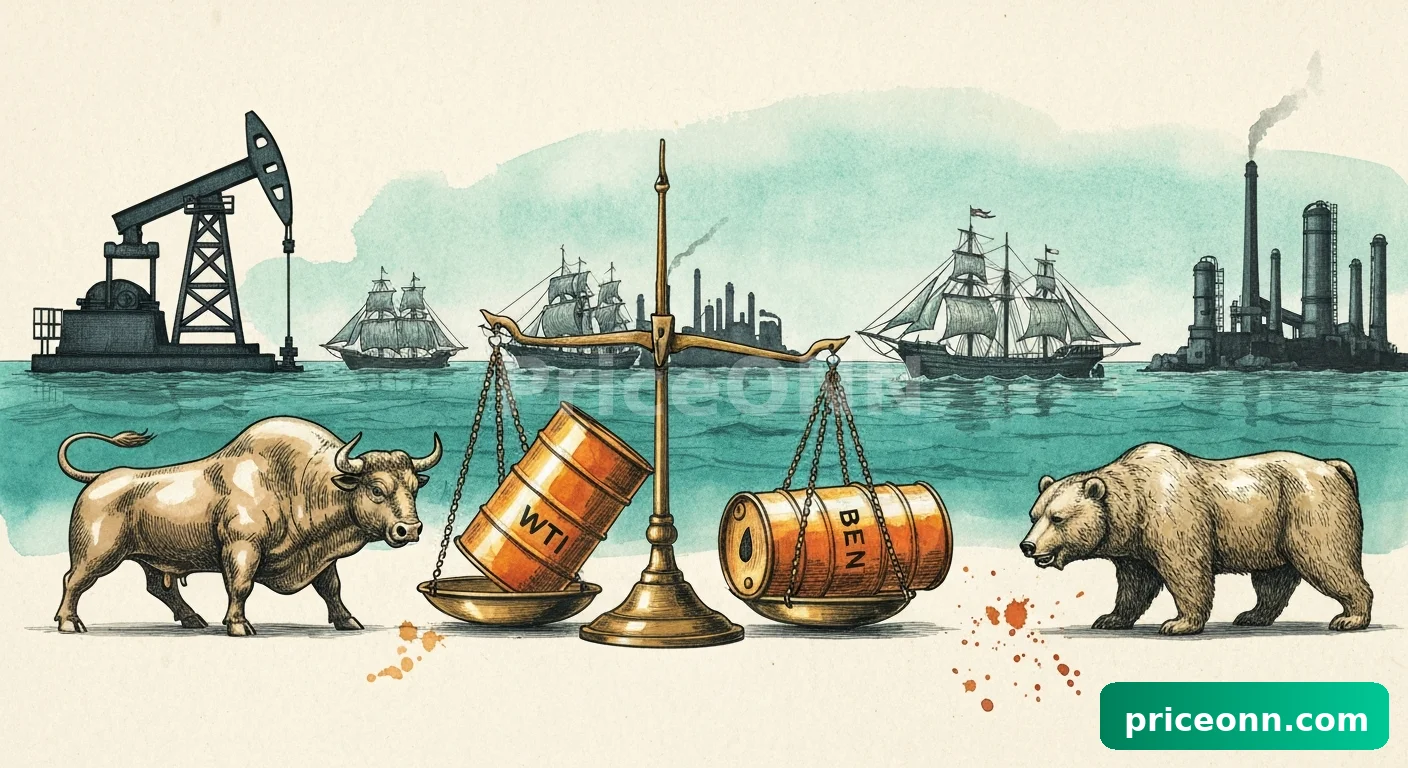
Oil Prices Under Pressure as Saudi Arabia Reroutes Supply Amidst Mideast Tensions
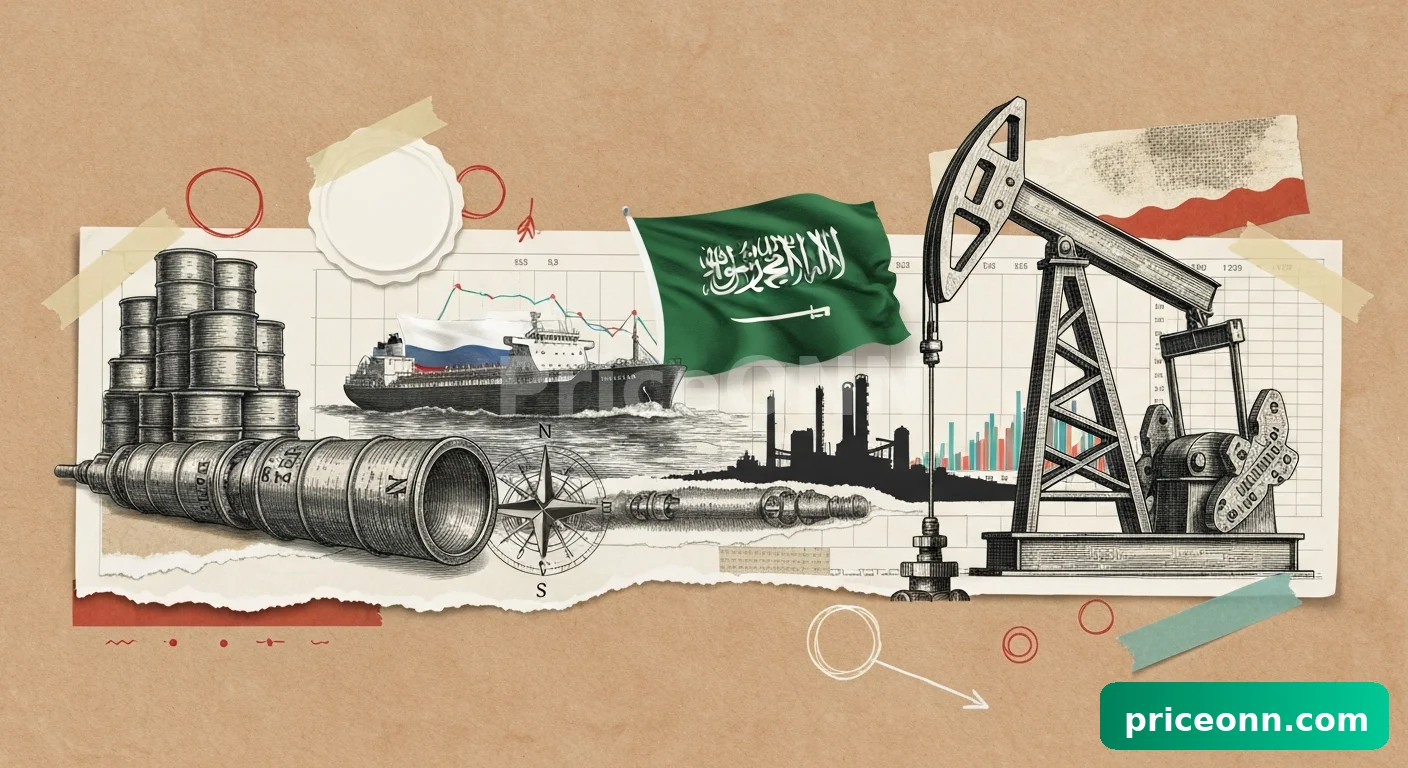
Oil prices are facing headwinds this week, with Brent crude hovering around $100 per barrel and West Texas Intermediate (WTI) crude around $95, as a confluence of factors impacts the market. Saudi Arabia's strategic shift towards the Red Sea and a temporary U.S. waiver for stranded Russian oil cargoes are contributing to the complex dynamics.
Market Context
The market is seeing increased volatility as Saudi Arabia redirects its crude supply from the Persian Gulf to the Red Sea, evident in its recent offering of 2 million barrels of Arab Light crude for loading from Yanbu. This is the kingdom's fourth such tender, reflecting a broader strategy to leverage the 7 million barrels per day Petroline pipeline. This shift has dramatically increased Yanbu's oil exports by 330% compared to pre-war levels, reaching approximately 2.47 million barrels per day.
Concurrently, the U.S. has issued a temporary 30-day license allowing countries to purchase Russian crude and petroleum products stranded at sea, providing short-term relief to global oil markets. This move initially pushed Brent crude down 0.38% to $100.10 per barrel, and WTI futures down 0.58% to $95.17 per barrel.
Analysis & Drivers
Saudi Arabia's strategic pivot is driven by a desire to diversify export routes and potentially mitigate risks associated with the Strait of Hormuz. The increase in tanker traffic to Yanbu, with 27 supertankers en route compared to fewer heading to other Saudi ports, underscores this shift. However, Yanbu's terminal capacity, estimated at a maximum loading capability of 3 million barrels per day, may present a bottleneck despite the Petroline pipeline's capacity.
Geopolitical tensions in the Middle East, particularly near the Strait of Hormuz, continue to exert upward pressure on prices. Earlier this week, WTI saw a sharp rally, rising over 7.5% amid concerns about prolonged supply disruptions. While operations at Fujairah oil terminals are gradually returning to normal after a drone attack, the incident underscores the vulnerability of critical oil infrastructure in the region.
The temporary U.S. waiver for Russian oil aims to alleviate immediate supply constraints but its long-term impact remains uncertain. The U.S. Energy Department's plan to release 172 million barrels from the Strategic Petroleum Reserve, coordinated with the IEA's release of 400 million barrels, offers further short-term relief.
Trader Implications
Traders should monitor key indicators, including:
- Geopolitical developments: Escalations or de-escalations in the Middle East will significantly impact prices.
- Saudi Arabia's export strategy: Further shifts in export routes and capacity constraints at Yanbu.
- U.S. inventory data: Weekly reports from the API and EIA provide insights into supply and demand dynamics.
- OPEC decisions: Production quota adjustments can significantly influence prices.
Key levels to watch include $100 for Brent crude, which acts as a psychological resistance, and $90-95 range for WTI as a potential support zone. A break above $100 for Brent could signal further upside, while a drop below $90 for WTI could trigger a deeper correction.
Outlook
Oil prices are likely to remain volatile in the near term, influenced by geopolitical risks, supply adjustments, and economic data. The market will be closely watching OPEC's next moves and the impact of the U.S. strategic reserve releases. While the temporary U.S. waiver and Saudi Arabia's export strategy may provide some downward pressure, persistent tensions in the Middle East could offset these factors, leading to continued price swings.
Track markets in real-time
Empower your investment decisions with AI-powered analysis, technical indicators and real-time price data.
Join Our Telegram Channel
Get breaking market news, AI analysis and trading signals delivered instantly to your Telegram.
Join Channel