RBA Warns of ‘Restrictive’ Shift: Why Rising Neutral Rates and Petrol Shocks Could Trigger More Hikes

Energy Crisis Reshapes Monetary Landscape
A significant geopolitical flare-up in the Middle East is unexpectedly reshaping the economic outlook for Australia, compelling the Reserve Bank of Australia (RBA) to reassess its monetary policy trajectory. Assistant Governor Christopher Kent articulated this evolving challenge, suggesting that the ongoing conflict is not merely a temporary disruption but a force actively pushing up the economy's underlying 'neutral' interest rate. This upward revision to what's considered a non-stimulating rate implies that current policy settings might not be as restrictive as previously thought, potentially clearing the path for further cash rate increases.
While global instability often acts as a dampener on market sentiment and economic activity, Kent pointed out that the current situation presents a unique dual threat. The persistent supply constrictions in the energy sector are creating inflationary pressures that are proving difficult to dislodge. These shocks are essentially acting like a broad-based tax on consumers and businesses, diminishing purchasing power and economic output simultaneously. The RBA's challenge, therefore, is to navigate this delicate balance: acknowledging the unavoidable economic slowdown caused by these supply disruptions while rigorously preventing these immediate price surges from embedding into longer-term inflation expectations.
The 'Wealth Tax' of Conflict and Asset Repricing
Kent vividly described the impact of rising oil and gas prices stemming from the Middle East conflict as a form of "wealth tax." This surge in energy costs effectively makes the entire nation poorer by reducing the real value of incomes and savings. He acknowledged that the central bank has no direct control over global oil supply dynamics. However, the RBA's mandate requires it to respond to the significant adjustments occurring in asset valuations that are directly triggered by the war. The central bank's primary role in such scenarios is to act as a bulwark against the de-anchoring of inflation expectations. By maintaining credibility and demonstrating a commitment to price stability, the RBA aims to prevent a vicious cycle where higher immediate prices lead to demands for higher wages, which in turn fuel further price increases.
Rethinking the Neutral Rate
The crux of Kent's address was a clear message to market participants anticipating imminent interest rate reductions. He elaborated on the complex interplay of forces at play. The energy shock, while negative for economic activity, simultaneously exerts upward pressure on inflation. This dynamic is leading to a reassessment of the neutral rate, defined as the theoretical interest rate at which monetary policy is neither expansionary nor contractionary. If this neutral rate is indeed rising, it suggests that a higher policy rate is now required to achieve the same level of monetary restriction as before. The pricing within financial markets already reflects this sentiment, with traders revising their expectations upwards for future RBA policy settings.
Commitment to Price Stability
Concluding his remarks, Kent underscored the RBA Board's unwavering dedication to its medium-term inflation objectives. He stressed that the central bank will not capitulate to temporary price volatility caused by external supply shocks. The goal remains to ensure that these transient increases do not become a permanent feature of Australia's economic landscape. This stance signals a heightened vigilance against inflation, even if it necessitates a more protracted period of tighter monetary conditions than initially envisioned by some market observers.
Market Ripple Effects
The RBA's commentary injects a fresh layer of uncertainty into the Australian economic outlook, directly challenging market assumptions about the peak of the interest rate cycle. The potential for further tightening, driven by external supply shocks rather than domestic demand overheating, presents a complex scenario for investors. This development is likely to keep upward pressure on Australian government bond yields, particularly at the shorter to medium maturities, as the market prices in a higher terminal rate. Consequently, the Australian Dollar (AUD) could find renewed support, especially against currencies where central banks are signaling a more dovish stance.
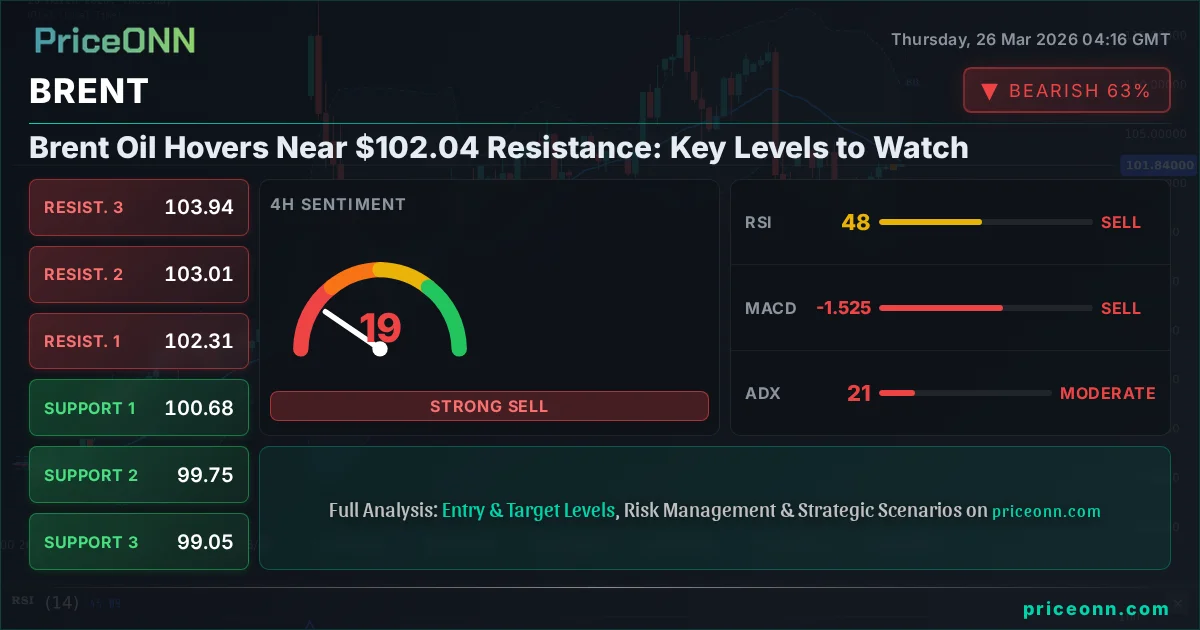
Furthermore, the heightened inflation risk associated with energy prices could spill over into broader commodity markets and influence global inflation expectations. Traders will be closely monitoring energy benchmarks like Brent Crude and WTI Crude for any sustained upward trend. A continued surge in these commodities could reinforce the RBA's hawkish bias and potentially impact other central bank policies globally. The implications extend to equity markets as well; higher borrowing costs and persistent inflation can weigh on corporate earnings and consumer spending, creating headwinds for sectors sensitive to interest rate changes, such as technology and real estate. Investors should remain attuned to upcoming inflation data releases and RBA communications for further clarity on the path forward.
Track markets in real-time
Empower your investment decisions with AI-powered analysis, technical indicators and real-time price data.
Join Our Telegram Channel
Get breaking market news, AI analysis and trading signals delivered instantly to your Telegram.
Join Channel