
Risk Probably for Fed Guidance to be Still More Hawkish
 PriceONN Editorial Desk
Multi-source verification
PriceONN Editorial Desk
Multi-source verification

Markets
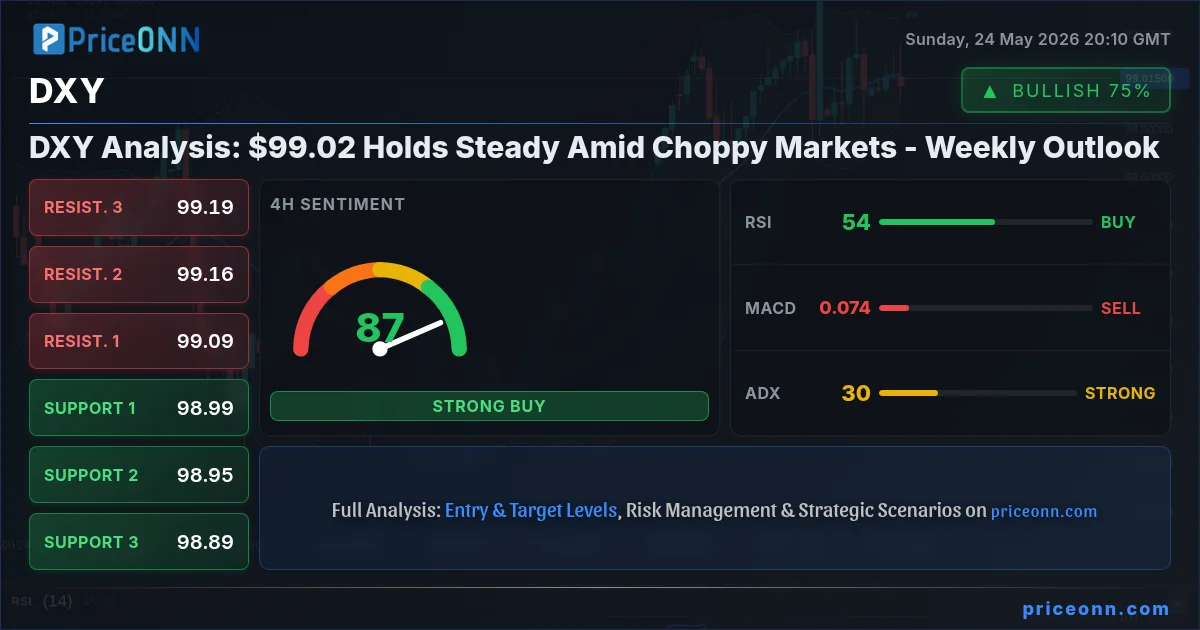
There was little ‘real’ market relevant news from the conflict in the Middle East, yesterday. There was hardly any progress on ideas/strategies to secure a passage through the Strait of Hormuz. Visibility on how and when the conflict might end also remains close to non-existent. With higher energy prices the major economic fall-out, markets now might move to a position where oil prices in the vicinity of $100-105 p/b are somewhat of a short-term anchor point/new normal which is more or less priced in. In technical trading yields US yields didn’t show any clear directional trend with yields changing between +0.25 bps (2-y) and -2.6 bps (30-y). German yields at the same time ceded between 1.9 bps (2-y) and -4.2 bps (30-y). The reaction function of bond markets currently is far from unequivocal, but given market sensitivity to inflation risk premia and to a lesser extent, fiscal risk premia, a bull flattening of the curve currently probably should be seen as a sign of tentative easing of market stress. In this context, it coincided with modest equity gains for the second consecutive day (S&P +0.25% ; Eurostoxx 50 +0.53%). In the same move, the dollar corrected slightly further (DXY from 99.87 to 99.58; EUR/USD from 1.1505 to 1.1540, USD/JPY marginally lower at 159).
The starting point today is similar when looking at the situation in the Middle East. (Brent) oil ($100.8), US yields and the dollar (DXY 99.45, USD/JPY 158.75) are easing a bit further. Asian equities are recovering (Nikkei +2.77%). In the absence of ‘new news’ from the Middle East the focus later today might turn to the Fed policy decision, new quarterly projections (dots) and the assessment from Fed Chair Powell at the press conference. Of course, any Fed scenario thinking also remains highly conditional on event risk/energy price scenarios. Even so, recent developments (higher oil prices potentially pushing PCE/CPI inflation to the 3.5%+ area) might cause at least some governors to abstain from guidance on future interest rate cuts. In the December dots, 7 out of 19 Fed members already indicated interest rates staying unchanged throughout 2026. So not that much is need for tipping this balance to an unchanged median dot. US money markets still discount one additional Fed rate cut by year end (compared to 2.5 cuts before the start of the war). The risk probably is for Fed guidance to be still more hawkish compared to current market pricing, suggesting room for some further bear flattening. Such an outcome would add to overall USD strength since the beginning of March, potentially denting risk sentiment.
News & Views
February trade data published by the Japanese Ministry of Finance this morning showed export (value) rising by 4.2% Y/Y (from +16.8% in January). A significant increase of export to the EU (+14% Y/Y) offset declines to the US (-8% Y/Y) and China (-10.9% Y/Y). Towards the US, tariffs especially weighed on car shipments. When it comes to China, the timing of Lunar NY might have distorted the data. Japanese imports (value) increased by 10.2% Y/Y (from -2.6% Y/Y in January) with especially import growth from Asia (+16.2% Y/Y) and China (+33.3% Y/Y) increasing rapidly. Imports from the EU were down 2% Y/Y. On a seasonally adjusted basis, the trade balance swung from an exceptional JPY 499.1bn surplus in January to a JPY 374.2bn deficit in February.
New Zealand consumer confidence has taken a knock in Q1, albeit only a small one at this stage. The Westpac-McDermott Miller index fell from 95.5 to 94.7 with levels below 100 indicating that there are more households pessimistic about economic conditions than optimistic. Surveys were conducted during the first two weeks of March. Improving domestic conditions (improving financial positions thanks to continued strength in export commodity prices like dairy and a large drop in borrowing costs) have been over taken by more worrying global events. The outbreak of war in the Middle East sent local fuel costs already sharply higher with spillover to other costs like airfares. The longer the conflict continues, the larger the resulting disruptions to economic activity and pressure on households’ finance will be.
Track markets in real-time
Empower your investment decisions with AI-powered analysis, technical indicators and real-time price data.
Join Our Telegram Channel
Get breaking market news, AI analysis and trading signals delivered instantly to your Telegram.
Join Channel PriceONN News
USDJPY has returned to the area of previous interventions. The ECB is moving towards a rate hike in June. The US dollar retreated on Friday amid new record highs for stock indices and rumours of amendments to the US-Iran agreement. However, tit-for-tat exchanges between the adversaries pushed the dollar index back into the support zone […] The post Yen Braces for a New Storm appeared first on ActionForex.
PriceONN News
For a market supposedly obsessed with geopolitics, investors appear remarkably calm. The proposed US-Iran agreement remains unsigned, key details are still unresolved, and military exchanges between the two sides continue. Yet financial markets are behaving as though a lasting settlement is only a matter of time. Oil remains well below recent highs, Treasury yields are […] The post Trump Says “Relax”, Markets Appear To Be Listening Despite Ongoing Iran Tensions appeared first on ActionForex.
PriceONN News
USD/CAD is showing signs of potential weakness as Canada's economy struggles with a -0.1% Q1 GDP contraction and the specter of renewed trade uncertainties, while global oil prices react to Middle East truce hopes.
PriceONN News
The US Dollar experienced a notable decline last week as markets priced in a potential diplomatic resolution to the US-Iran conflict, leading to a drop in oil prices and Treasury yields. This shift in sentiment suggests a move away from stagflation fears towards a more stable economic outlook.
PriceONN News
Canada's labor market is showing signs of stabilization, with analysts predicting a dip in the unemployment rate to 6.8% in May, driven by an expected 25,000 new jobs. This follows a period of sluggish GDP growth and rising joblessness earlier in the year.
PriceONN News
The Canadian dollar faces headwinds as domestic demand cools and investment remains sluggish. However, upcoming trade negotiations could offer a much-needed catalyst for a rebound.
PriceONN News
Markets are pricing in a potential de-escalation in the US-Iran conflict, leading to a significant drop in crude oil prices and a weakening US Dollar as diplomatic efforts appear to be gaining traction.
PriceONN News
Canada's economy showed signs of a slowdown in early 2026, but upcoming May jobs data is expected to reveal a modest uplift. Analysts anticipate the unemployment rate to fall to 6.8%.
PriceONN News
The dominant story across financial markets last week was not artificial intelligence, central banks, or economic data. It was a dramatic shift in expectations regarding the future of the US-Iran conflict. Investors increasingly embraced the view that the three-month war is moving toward a diplomatic resolution after reports emerged that negotiators had drafted a 60-day […] The post US-Iran Endgame in Sight? Markets Vote for Peace as Oil, Yields and Dollar Fall appeared first on ActionForex.
PriceONN News
USD/CAD faces pressure as Canada's economy shows signs of stalling, with Q1 GDP contracting 0.1% and domestic demand weakening. This comes as trade negotiations and geopolitical shifts add layers of uncertainty.
PriceONN News
Canada's economy showed signs of life in early 2026, with analysts expecting a moderate job growth of around 25,000 positions and a potential dip in the unemployment rate to 6.8% for May.
PriceONN News
AUD/USD’s late break of 0.7183 resistance suggests that pullback from 0.7277 has already completed at 0.7076, after defending 55 D EMA. Initial bias is back on the upside this week for retesting 0.7277 high first. Firm break there will resume larger up trend. For now, risk will stay on the upside as long as 0.7076 […] The post AUD/USD Weekly Report appeared first on ActionForex.