
Saudi Arabia’s $5 Oil Detour Is Expensive-and Worth It
 PriceONN Editorial Desk
Multi-source verification
PriceONN Editorial Desk
Multi-source verification
The Curious Case of the $5 Barrel Premium
Imagine a map where the shortest distance between two points is a vast, unnecessary loop. That's the visual impression of Saudi Arabia's current oil export strategy. Crude oil embarks on a journey westward across the kingdom to Yanbu, then heads north through the Red Sea towards Egypt. From there, it traverses the SUMED pipeline, connecting Ain Sokhna to Sidi Kerir, before navigating the Mediterranean Sea. Only then does the tanker begin its lengthy voyage around the Cape of Good Hope to finally reach Asian customers. This elaborate detour means oil that originated relatively close to its destination is first shipped thousands of kilometers in the opposite direction.
The reported cost of this navigational contortion is significant, adding approximately $5 per barrel. This figure accounts for increased freight, fuel consumption, insurance premiums, and pipeline fees. For a typical two-million-barrel cargo, this translates to nearly $10 million in additional expenses. This logistical strain has prompted Saudi Aramco to consider a distinct pricing mechanism for crude loaded from Egypt's Sidi Kerir. The rationale is clear: the established official selling price (OSP) for Asian markets no longer accurately reflects the complex journey these barrels must undertake.
The immediate takeaway is that circumventing the Strait of Hormuz has made Saudi oil inherently more expensive. While factually correct, this perspective overlooks a more profound strategic advantage. The $5 premium is not merely the cost of disruption; it represents the price of maintaining an essential option when two of the world's most vulnerable maritime transit points face persistent threats.
Redundancy: The New Essential Commodity
Saudi Arabia's primary defense against disruptions in the Strait of Hormuz has long been its East-West Pipeline. This vital artery transports crude from the kingdom's eastern oil fields to the Red Sea port of Yanbu, effectively bypassing Hormuz. This infrastructure has proven its worth, with Aramco reportedly operating the pipeline at its peak capacity of 7 million barrels per day during the first quarter of 2026. While approximately 2 million barrels per day are directed to domestic refineries, roughly 5 million barrels per day remain available for export.
However, transporting oil to Yanbu only resolves the initial geographical hurdle. Asian buyers typically receive these cargoes by sailing south through the Red Sea and exiting via the Bab el-Mandeb strait. Unfortunately, escalating Houthi threats and attacks have rendered this passage increasingly unreliable. The current workaround, therefore, does not entirely bypass the Red Sea as some simplified descriptions suggest. Instead, it utilizes the northern Red Sea corridor between Yanbu and Ain Sokhna but crucially avoids the Houthi-exposed Bab el-Mandeb passage by transiting through Egypt and accessing the Mediterranean. From this vantage point, the vessel still faces a considerable journey, exiting the Mediterranean at Gibraltar, circumnavigating Africa, and crossing the Indian Ocean to reach Asia.
This extensive route is neither cheap nor efficient. Yet, the relevant comparison is not to the old, normal route. It is the stark choice between a delayed cargo and no cargo at all. The $5 per barrel premium is a modest insurance cost against the immense risk of supply interruption.
The Strategic Value of an Alternative
The oil industry traditionally views infrastructure efficiency through the lens of cents per barrel. This perspective holds true under stable geopolitical conditions, where producers vie on transport costs, product quality, and refinery margins, and buyers meticulously optimize their shipping routes. Geopolitical resilience, however, operates under a different economic calculus.
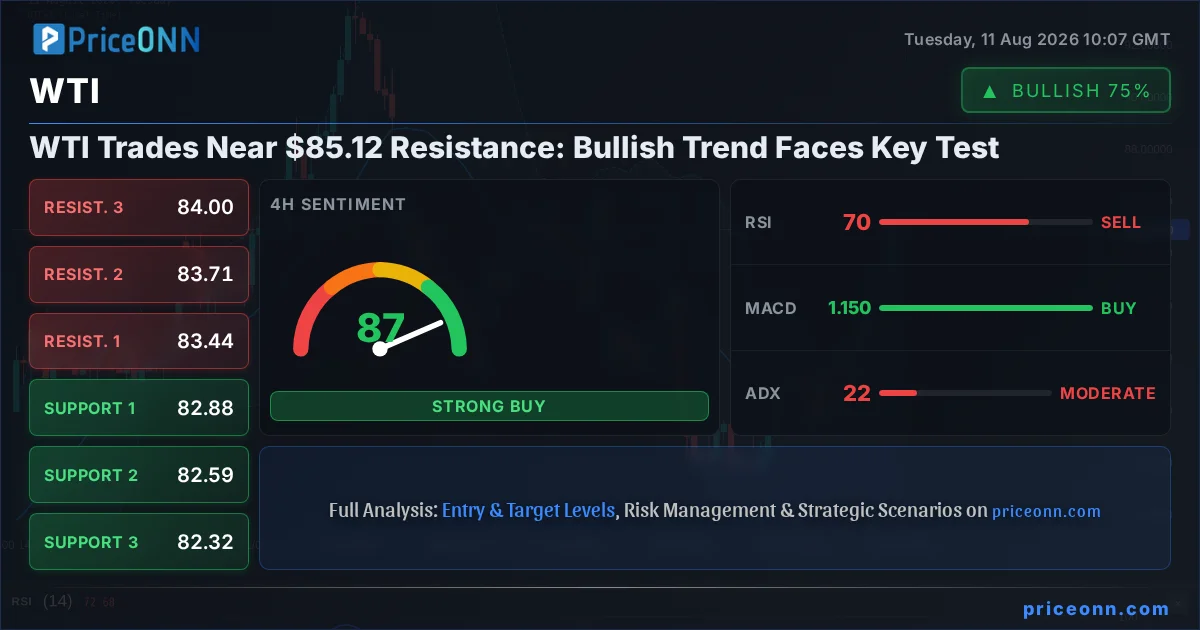
An additional $5 on an $85 barrel represents a noticeable cost increase. Nevertheless, it pales in comparison to the potential price spikes, refinery shortages, and significant lost export revenues that accompany a major supply disruption. During a recent period of regional instability, Saudi exports reportedly decreased by approximately 2.4 million barrels per day year-on-year, while overall Gulf exports plummeted to just 36% of pre-conflict levels. More critically, the risks do not vanish the moment Hormuz and Bab el-Mandeb are officially reopened. Iran can significantly impact shipping through measures short of permanent closure, including the deployment of mines, drone attacks, vessel seizures, or even credible threats that can inflate insurance premiums and deter shipowners.
Similarly, the Houthis have demonstrated their capacity to disrupt Red Sea traffic using relatively low-cost weaponry. Consequently, a reopened chokepoint does not equate to a dependable chokepoint. This distinction fundamentally alters how the current detour should be valued. The expanded routing is analogous to having spare generation capacity within an electricity grid or securing a second supplier for a critical industrial component. It may appear costly when all systems are functioning normally. Its true value, however, becomes evident only when the primary pathway falters.
Saudi Arabia has proactively cultivated this kind of optionality more effectively than many other producers. Despite substantial regional turmoil, Aramco reported an impressive 98.4% supply reliability in the second quarter, bolstered by the East-West Pipeline, strategic storage facilities, alternative terminals, and its extensive international logistics network. The $5 premium is an integral part of the investment required to sustain this remarkable track record. Redundancy is increasingly becoming an embedded feature of the oil barrel itself.
Analyst Takeaways: Beyond the Logistics Premium
The evolving situation highlights a critical shift: Saudi Aramco may need to implement varied pricing structures for the same crude grade, depending on its loading point and ultimate destination. Official Selling Prices (OSPs), which are monthly differentials producers apply relative to regional benchmarks, typically factor in crude quality, prevailing market conditions, and the buyer's location. Introducing a separate pricing formula for crude loaded from Sidi Kerir would explicitly incorporate logistical resilience into the barrel's valuation.
This pricing adjustment may not be a permanent fixture for every shipment. Should the Strait of Hormuz and the Bab el-Mandeb strait regain reliable navigability, the extended route will naturally lose its commercial attractiveness. Asian refiners will logically resist paying millions more for an unnecessary, lengthy voyage. However, the infrastructure developed for this contingency should not be considered obsolete once normal shipping lanes reopen. Saudi Arabia is already contemplating a significant expansion of its East-West pipeline capacity, potentially adding as much as 2 million barrels per day. Yanbu is being strategically repositioned from a secondary export point into a major global hub. The SUMED pipeline, Suez Canal transit capabilities, Mediterranean storage assets, and flexible tanker arrangements further enhance this logistical flexibility.
The key lesson from recent events is that over-reliance on a single, highly efficient route can prove more costly than maintaining multiple, albeit less perfect, pathways. This paradigm is likely to influence investment decisions far beyond the borders of Saudi Arabia. Terminals, pipelines, and storage facilities previously deemed underutilized may soon command a premium for their resilience. Purchasers might accept higher costs for supply contracts that offer genuine routing flexibility. Insurers and financial institutions will increasingly differentiate between producers possessing robust contingency infrastructure and those whose exports are solely dependent on a single, exposed waterway. The consequence is a structural increase in logistics costs for certain crude oil shipments, even if benchmark oil prices experience a decline.
Broader Economic Considerations for the Kingdom
While enhancing export resilience is crucial, it's vital to acknowledge that these logistical improvements do not address Saudi Arabia's larger challenge: the long-term sustainability of global oil demand. Factors such as the accelerating adoption of electric vehicles, advancements in fuel efficiency, the development of alternative energy sources, and stringent climate policies are projected to gradually temper demand growth for crude oil.
Ultimately, the kingdom requires business models that are not predicated on the perpetual increase in crude oil export volumes. Riyadh appears to recognize this imperative. According to its Vision 2030 annual report, non-oil sectors contributed 55% of real GDP in 2025, representing a substantial increase in non-oil government revenue since 2016. Significant investments are being channeled into tourism, logistics, mining, manufacturing, technology, and renewable energy, all aimed at reducing the nation's economic dependence on oil.
It is important to avoid mistaking these initiatives for completed economic diversification. Oil continues to play a central role in the kingdom's exports, fiscal capacity, and the financing of numerous non-oil ventures. Some of the flagship projects are capital-intensive, and transitioning state-led expenditures into self-sustaining private enterprises remains an ongoing challenge. Nevertheless, this is not an exclusive choice. Saudi Arabia must simultaneously safeguard its current oil revenues while leveraging those earnings to foster an economy that will eventually require less crude. The enhanced flexibility in export infrastructure directly supports the former objective. Vision 2030 is designed to achieve the latter.
The extended Cape route may add a visible $5 per barrel cost. However, the less apparent, yet invaluable, benefit is Saudi Arabia's continued ability to market its oil even when the most direct routes become impassable. In an oil market increasingly shaped by geopolitical tensions, sophisticated weaponry, and critical maritime chokepoints, redundancy in infrastructure is no longer a superfluous expense. It has become an intrinsic component of the product offering.
Track markets in real-time
Empower your investment decisions with AI-powered analysis, technical indicators and real-time price data.
Join Our Telegram Channel
Get breaking market news, AI analysis and trading signals delivered instantly to your Telegram.
Join Channel PriceONN News
A drone has struck a power station at the Zawiya oil export terminal in Libya, suggesting continued attacks on one of the country’s main oil hubs. The power plant is in close proximity to the largest oil refinery in Libya, the AP noted in a report on the news. The attack follows earlier ones that caused an explosion at an oil storage tank. No one has claimed responsibility for the drone attacks, the AP also reported. The tank, according to the company operating the facility, had 4.5 million...
PriceONN News
Whatever officially occurs next in the on-again/off-again negotiations towards a peace deal between the U.S. and Iran, unofficially Tehran knows that it has established de facto control over both the world’s two key maritime energy transit routes -- the Strait of Hormuz and the Bab el-Mandeb Strait -- for at least as long as the Islamic regime remains in place in Iran. Washington, London, Brussels, Beijing, and Moscow know it too. The Strait of Hormuz remains effectively controlled by vast...
PriceONN News
Ukraine’s military claimed another drone attack on an oil refinery in Russia in the early hours on Tuesday as Ukrainian forces continue to target Russia’s energy producing and exporting infrastructure in an escalation of drone attacks at key oil refining hubs. The Ukrainian military on Tuesday said it had struck the Orsknefteorgsintez oil refinery in Orsk, in the Orenburg region. Orsk is about 1,500 kilometers (930 miles) from the frontline. “Fire was recorded. Damages are being ascertained,”...
PriceONN News
Norwegian aluminum producer Norsk Hydro's Alunorte plant in Brazil, one of the world's largest alumina refineries, reduced output by 50% following disruptions to natural gas availability. Bloomberg reports that disruptions to NatGas availability at Alunorte forced a 50% reduction in output and sent aluminum prices in London to a seven-week high. Hydro said production would return to full capacity once gas supplies normalize. Aluminum rose nearly 2% in London and traded at $3,373 a metric ton....
PriceONN News
Indian state-controlled oil refiners continue to search the market for spot crude supply as term deliveries are constrained by the ongoing crisis in the Middle East and its key oil chokepoint, the Strait of Hormuz. Mangalore Refinery and Petrochemicals Limited (MRPL) and Hindustan Petroleum Corporation Limited (HPCL) are looking to buy a combined 6 million barrels of crude oil via spot tenders, Reuters reported on Wednesday, citing tender documents it has seen. HPCL is seeking up to 4 million...
PriceONN News
The IEA has slashed its 2026 global oil supply forecast, with output now expected to plunge 4.3 million barrels per day this year as the failure to reopen the Strait of Hormuz pushes the market deeper into deficit. The latest forecast is considerably worse than the 3.7-million-bpd decline the agency projected just last month and would leave global supply at 102.02 million bpd, its lowest forecast for 2026 yet. Supply is now expected to fall 1.27 million bpd short of demand for the year,...
PriceONN News
The UK could see a power supply margin shortfall during the solar eclipse on Wednesday amid high demand in the new heatwave that is sweeping through Britain and the rest of Europe this week. There is no risk to customer supplies, but a notice has been issued to the market and power generators as the eclipse will block sunlight between 6 p.m. and 8 p.m. local time on Wednesday evening. The National Energy System Operator issued a notice today to encourage market actions to increase system...
PriceONN News
Brent Crude oil prices rose above $89 per barrel in early trade in Europe on Wednesday as Iran and the United States offered contrasting claims about who controls the Strait of Hormuz. Brent Crude prices were up by 0.64% at $89.60 in the morning in Europe, and WTI Crude was rising by 0.94% at $83.90, amid persistent supply concerns and risks despite claims from the U.S. that traffic at Hormuz had normalized. Iran, for its part, said on Tuesday that the Strait of Hormuz will remain closed unless...
PriceONN News
Oil flows from the Middle East have normalized, with Sunday traffic alone above pre-conflict averages, U.S. Secretary of Energy Chris Wright said on Tuesday in a claim that appears not to be backed by ship-tracking data. On Tuesday, Secretary Wright posted on X that “Thanks to the coordinated efforts of the U.S. military and our gulf allies, the seven-day average for oil leaving the Strait of Hormuz is currently up to almost 9 million barrels per day.” He went on to add that “When combined with...
PriceONN News
The Middle East conflict and the heightened threats to shipping in the Red Sea have prompted China to boost the use of the Arctic to move containers from the Chinese east coast to Europe. The fast-melting Arctic ice offers an alternative shipping route in the summer as the Houthi threats to shipping in the Red Sea and the Bab el-Mandeb Strait make cargo operators more cautious in transiting the key chokepoints in the Middle East. Shipping through the Arctic is not something new, but this time...
PriceONN News
(RTTNews) - Crude oil prices have surged on Tuesday, extending the gains from the two previous sessions as the U.S.-Iran stalemate over new demands for compensation for war-related damages continued, diminishing the expectations of an early reopening of the Strait of Hormuz.
PriceONN News
Five months after the U.S. and Israel opened a war with Iran, global fuel markets still haven't settled down, and the latest IEA data prove it. The IEA's monthly end-use price tracker, updated Aug. 7 and covering prices through July, shows the average per-liter cost of automotive diesel across the countries it tracks sitting near $1.94 in U.S. dollar terms. That's roughly 14% above where it stood in February, before the war started, and it's actually higher than June, even as crude oil kept...