
Silver surges past $91 as hot PPI, tariffs stoke inflation fears
 PriceONN Editorial Desk
Multi-source verification
PriceONN Editorial Desk
Multi-source verification
Silver's Ascent Explained
Silver, a highly liquid precious metal, remains a favored asset among investors. Historically, it has functioned as both a store of value and a medium for transactions. While not as widely embraced as gold, silver serves as a strategic tool for portfolio diversification, capitalizing on its inherent worth and acting as a hedge against escalating inflationary pressures. Investors engage with silver through physical holdings like coins and bars, or via Exchange Traded Funds (ETFs) that mirror its performance on global markets.
The recent surge in silver prices can be attributed to a confluence of factors. A hotter-than-expected Producer Price Index (PPI) reading stoked concerns about persistent inflation, driving investors towards safe-haven assets. Furthermore, the potential impact of new tariffs on imported goods adds another layer of uncertainty, further fueling demand for silver. The XAG/USD pair is currently trading near $91.39, reflecting an increase of approximately 3%.
Key Price Drivers
A multitude of elements influence silver's price trajectory. Geopolitical volatility and the specter of economic recession often trigger price increases, driven by its safe-haven appeal, albeit to a lesser degree than gold. As an asset that does not generate yield, silver typically benefits from lower interest rate environments. Furthermore, its price is inversely correlated with the strength of the US Dollar (USD); a robust Dollar tends to suppress silver prices, while a weaker Dollar typically propels them higher.
Other supply and demand dynamics also play a crucial role. Investment demand, mining production levels (silver is significantly more abundant than gold), and recycling rates all contribute to price fluctuations. Silver's extensive industrial applications, particularly in electronics and solar energy due to its exceptional electrical conductivity, further impact its valuation. Increased industrial demand can drive prices upward, while reduced demand can lead to price declines. Economic trends in the US, China, and India also exert considerable influence. The substantial industrial sectors in the US and China utilize silver in various manufacturing processes, while Indian consumer demand for silver jewelry significantly impacts global prices.
Gold-Silver Dynamics
Silver prices generally mirror the movements of gold. When gold prices increase, silver typically follows, reflecting their shared safe-haven status. The gold/silver ratio, representing the number of silver ounces required to equal the value of one gold ounce, provides insights into their relative valuations. A high ratio may suggest that silver is undervalued, or gold is overvalued, prompting investors to consider silver as a potentially attractive investment. Conversely, a low ratio might indicate that gold is undervalued relative to silver.
The current market environment, characterized by persistent inflation concerns and geopolitical uncertainties, continues to support both gold and silver prices. Investors seeking to mitigate risk and preserve capital are increasingly turning to these precious metals as a safe haven. As long as these conditions persist, both metals are likely to maintain their upward momentum.
Track markets in real-time
Empower your investment decisions with AI-powered analysis, technical indicators and real-time price data.
Join Our Telegram Channel
Get breaking market news, AI analysis and trading signals delivered instantly to your Telegram.
Join Channel PriceONN News
The metal prices retreated from a seven-week high as traders lock in gains before US inflation data comes out.
PriceONN News
Readings for July on the prices consumers pay for goods and services came in pretty much on target.
PriceONN News
The consumer price index was expected to increase 0.1% in July, with an annual rate of 3.4%.
PriceONN News
Tech leaders say AI will drive down costs. But slow corporate adoption and the data center buildout create inflation pressures that complicate the Fed’s job.
PriceONN News
The consumer price index is expected to show only a modest increase for July.
PriceONN News
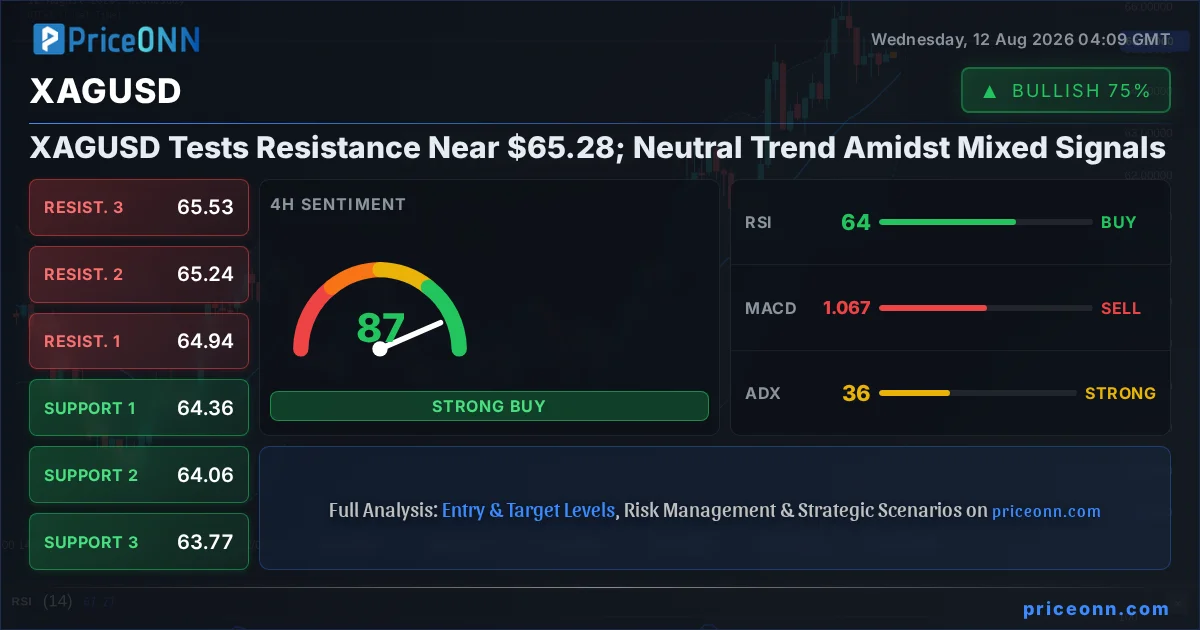
Gold pushed toward $4,450 an ounce Tuesday, its best level in about two months, as a stalled U.S.-Iran deal to reopen the Strait of Hormuz kept oil elevated and traders braced for a Wednesday inflation report that could decide whether a September Fed rate hike is really off the table. Silver pushed above $65 for a second straight session, extending its climb to a seven-week high. The rally traces back to Friday's jobs report, which showed the U.S. economy shed 23,000 positions in July. That...
PriceONN News
This year’s heat waves and related productivity declines and lower agricultural output could erase as much as 1% of the gross domestic product of the European Union, wiping out most of the EU’s economic growth expected for 2026, according to Dutch bank Triodos. The bank and wealth manager, which focuses on financing environmentally and socially sustainable projects, expects labor productivity losses due to the extreme heat waves to reduce the European Union’s GDP by some 0.6% this year....
PriceONN News
Nonfarm payrolls in the U.S. unexpectedly declined in July, but so did the unemployment rate, leaving investors with mixed signals.
PriceONN News
Nonfarm payrolls were projected to increase by 83,000 in July while the unemployment rate held steady at 4.2%, according to the Dow Jones consensus.
PriceONN News
Nonfarm payrolls are expected to post a gain of just 83,000 with an unchanged unemployment rate at 4.2%.
PriceONN News
Uzbekistan, one of Central Asia’s economic drivers, is experiencing a significant expansion of Chinese economic influence. Bilateral trade during the first half of 2026 grew to $7.7 billion, according to official Uzbek government data, making China by far Uzbekistan’s largest trade partner. Beijing’s official statistics, meanwhile, put the number even higher – at $8.9 billion. Russia, Uzbekistan’s erstwhile overlord, lags far behind with bilateral trade turnover amounting to $5.8 billion. The...
PriceONN News
Severe drought is disrupting energy and freight across Europe as low Rhine and Danube levels raise risks for supply chains and economic growth.