
Skyrocketing Gas Prices Threaten Political Order Across the Globe
 PriceONN Editorial Desk
Multi-source verification
PriceONN Editorial Desk
Multi-source verification
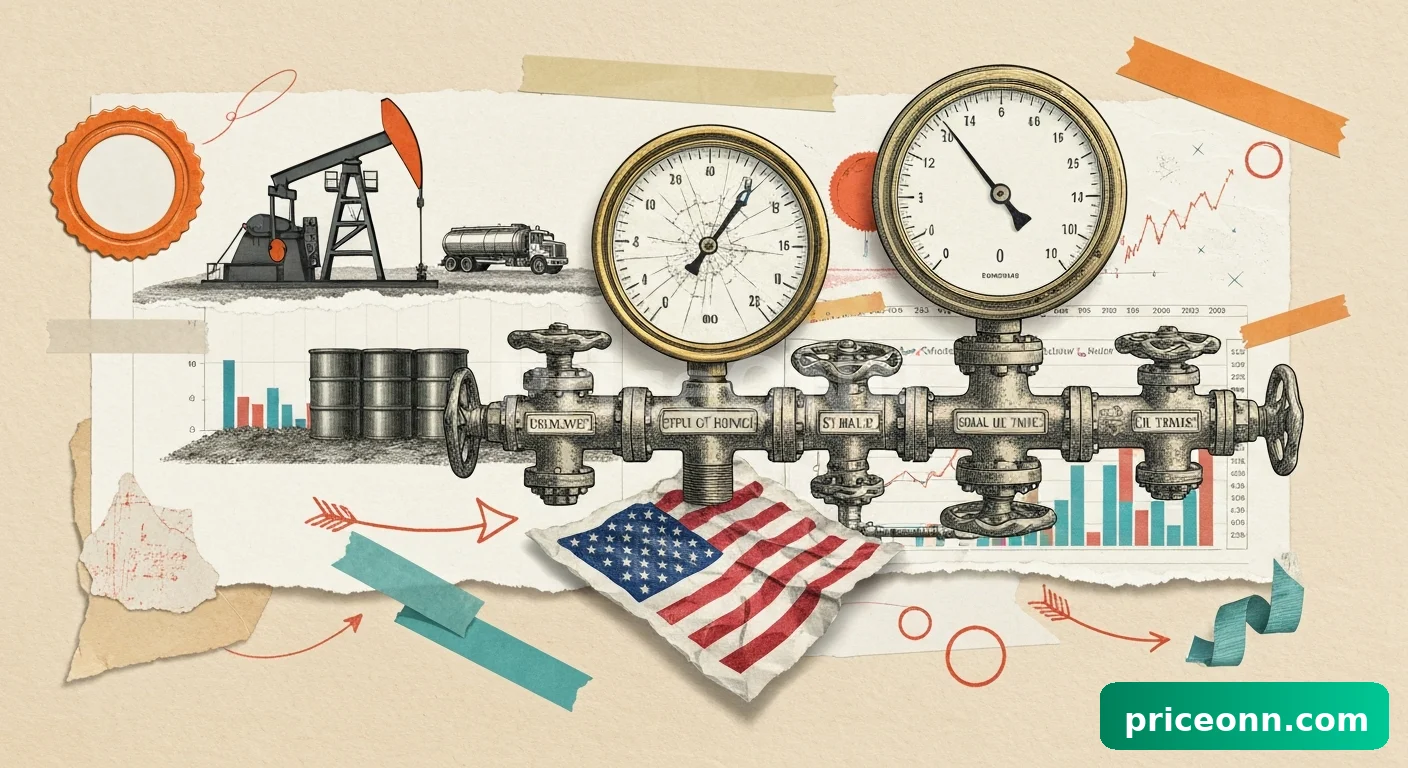
Global Energy Lifeline Severed
While February saw a temporary lull in energy price volatility, the underlying trend reveals a significant upward trajectory predating recent geopolitical escalations. The Strait of Hormuz, a linchpin of international oil commerce, has now endured three weeks under a de facto blockade, marking the most profound disruption to global energy flows in recorded history. This sustained disruption signals an imminent surge in energy costs, with economists and analysts predicting a ripple effect of political unrest that could far outlast the immediate crisis.
The confrontation, initiated by military actions against Iran, has led to the strategic closure of the waterway. Iranian Foreign Minister Abbas Araghchi stated that the Strait remains accessible, but only to those not perceived as aggressors. This vital artery normally accommodates approximately 20% of the world’s daily oil and gas shipments, a volume now critically threatened. The situation is far from typical, with global powers navigating uncharted territory.
International Response Falls Flat
Efforts by the United States to rally international support for a joint operation to forcibly reopen the Strait have met with considerable apathy from key allies in Europe and NATO. These traditional partners have demonstrated a distinct lack of enthusiasm for military intervention. Even overtures to China’s leadership have yielded little immediate commitment. Beijing, uniquely positioned with substantial energy reserves and established alternative supply routes, appears poised to weather the storm with relative ease, continuing to secure oil shipments despite the ongoing conflict.
The reluctance of global powers to engage militarily highlights a complex geopolitical landscape, where economic interests and risk assessments diverge significantly. This hesitant response underscores the delicate balance of international relations in the face of a major energy crisis.
Oil's Enduring Geopolitical Clout
Historical data consistently demonstrates the powerful influence of energy prices on electoral outcomes and public sentiment towards incumbent governments. The current events in the Persian Gulf serve as a stark reminder that oil remains a paramount factor in geopolitical power dynamics. As one energy policy expert noted, the transition away from fossil fuels is a distant prospect, with the world still heavily reliant on oil in the early to middle stages of this generational shift.
The capacity of energy supplies to function as both a weapon and a political lever is undeniable. This month’s escalating energy crisis has already unleashed a wave of global political turbulence, the consequences of which will likely unfold over the coming years. For administrations like that of the United States, which have championed domestic fossil fuel production, the surge in consumer energy costs presents a significant political liability, particularly with crucial elections on the horizon.
The administration’s foreign policy decisions appear to be in direct conflict with its economic messaging, creating a challenging narrative for domestic audiences. The ramifications extend far beyond a single nation's borders. Disruptions in the Strait of Hormuz create global challenges, impacting leaders worldwide.
Nations already grappling with inflation and facing upcoming elections, such as Brazil, Nigeria, and France, find themselves exposed to increased political risk due to this international energy shock. European economies, still recovering from a previous energy crisis linked to regional conflicts and sanctions, are now confronting renewed budget pressures. Despite assurances from some quarters that prices will stabilize, even high-ranking energy officials acknowledge the uncertainty, admitting there are “no guarantees” of a swift resolution.
Trader Takeaways
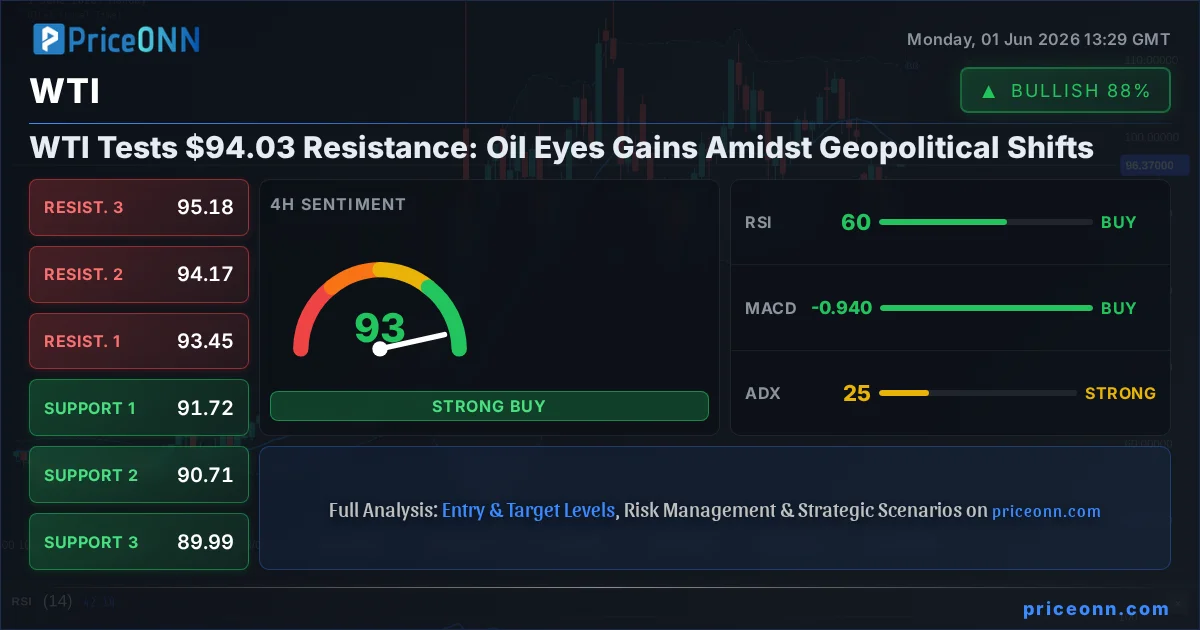
The escalating tensions surrounding the Strait of Hormuz and the subsequent threat to global oil supply represent a critical juncture for energy markets and broader financial sentiment. Traders should brace for heightened volatility in the coming weeks and months. The immediate impact is a clear upward pressure on crude oil benchmarks like Brent and WTI, which are likely to see significant price appreciation as supply fears intensify.
Beyond commodities, this geopolitical risk premium could spill over into currency markets. The US Dollar Index (DXY) might find support if the crisis is perceived as increasing global uncertainty, prompting a flight to safety. Conversely, currencies of nations heavily reliant on energy imports or those with upcoming elections, such as the Brazilian Real (BRL) or the Nigerian Naira (NGN), could face depreciation due to heightened economic vulnerability.
Equity markets may experience a drag, particularly sectors sensitive to energy costs, such as transportation and manufacturing. Investors should closely monitor key levels in oil prices and watch for any signs of de-escalation or further military action, which will dictate the market's immediate direction. The current environment demands a cautious approach, with a focus on risk management and defensive positioning.
Track markets in real-time
Empower your investment decisions with AI-powered analysis, technical indicators and real-time price data.
Join Our Telegram Channel
Get breaking market news, AI analysis and trading signals delivered instantly to your Telegram.
Join Channel PriceONN News
The Iran war suddenly turned what had started as a year of oversupply in global oil and LNG markets into the worst oil and gas supply disruption in history. Three months after the U.S.-Israeli strikes on Iran began on February 28, the world has already lost 1 billion barrels of crude oil supply, oil and gas prices have found a new, much higher floor, and whipsaw with violent volatility nearly every day, trade routes have shifted, and tanker rates have spiked. Actual supply shortages are...
PriceONN News
The Iran war has handed the United States a rare opportunity: a new dawn of energy dominance in an increasingly fractured world. With coordinated US-Israeli strikes disrupting the Strait of Hormuz from late February, roughly 20% of global LNG supply has been stripped from the market since early March. Prices have surged across Asia and Europe. And into that vacuum, American gas has flowed. The numbers speak for themselves. US LNG exports to Asia jumped sharply in April, with nearly a quarter of...
PriceONN News
Crude oil prices experienced a significant drop, with WTI futures falling over 1.8% to $87.25, as optimism grew for a U.S.-Iran deal potentially reopening the Strait of Hormuz.
PriceONN News
Crude oil prices experienced a significant downturn as market sentiment shifted towards optimism about a potential US-Iran Memorandum of Understanding that could reopen the Strait of Hormuz. WTI futures fell nearly 2% on the news.
PriceONN News
(RTTNews) - Crude oil prices have tumbled on Friday as expectations of the U.S. and Iran signing a Memorandum of Understanding run high. The MoU would allow for immediate reopening of the Strait of Hormuz and pave the way for the resumption of oil and energy trade.
PriceONN News
Crude oil futures experienced a dramatic intraday reversal on Thursday, soaring overnight on geopolitical fears only to pull back significantly as reports of a potential diplomatic understanding between the U.S. and Iran emerged.
PriceONN News
Crude oil futures experienced a dramatic intraday reversal, soaring to $92.52 before pulling back significantly on Thursday. The volatile session was driven by shifting geopolitical narratives and U.S. inventory data.
PriceONN News
Brent crude prices surged towards the mid-$90s amid fears of supply disruptions from Middle East tensions, only to pare gains later as whispers of a potential US-Iran diplomatic understanding emerged.
PriceONN News
(RTTNews) - Crude oil futures skyrocketed overnight but have shown a significant pullback over the course of the trading day on Thursday.
PriceONN News
(RTTNews) - A report released by the Energy Information Administration on Thursday showed crude oil inventories in the U.S. decreased by less than expected in the week ended May 22nd.
PriceONN News
The market’s faith in an imminent US-Iran peace breakthrough has clearly weakened today - but it has not disappeared yet. Oil prices jumped again in after fresh military escalation around the Strait of Hormuz reignited fears of prolonged supply disruptions across the Gulf. Brent crude pushed back toward the mid-$90s after new U.S. strikes inside […] The post Brent Oil Holding Below $100 Suggests Markets Still See Room for a US-Iran Deal appeared first on ActionForex.
PriceONN News
(RTTNews) - Extending the losses from yesterday's session, crude oil prices have gone into freefall on Wednesday as investor expectations on a potential U.S.-Iran agreement continue to rise despite the U.S. refusing to ease its demands.