StanChart: Europe’s Gas Prices Could Spike Above $90/MWh By The Summer
Energy Markets Brace for Summer Price Shockwaves
European natural gas futures saw a rebound on Thursday, nearing the €55 per megawatt-hour mark, halting a four-day slide. This shift comes amid escalating uncertainty surrounding a potential Middle East ceasefire and persistent threats to vital energy infrastructure. Initial optimism for a de-escalation in the region evaporated quickly as Iran reportedly rejected a peace proposal, instead articulating its own demands. The impact on energy supply chains has been severe, with approximately 40 energy installations across the Gulf region subjected to attacks. This disruption has effectively curtailed the flow through the Strait of Hormuz, a critical chokepoint for global energy trade. The consequences include a significant reduction in available Liquefied Natural Gas (LNG) and heightened competition with Asian markets for alternative fuel sources.
The damage extends to major hubs, with Qatar’s Ras Laffan gas facility sustaining damage to two of its 14 LNG production trains and one of its two gas-to-liquids (GTL) units. QatarEnergy LNG has confirmed that a substantial 17% of the nation’s LNG output, equating to 12.8 million tons annually, will be offline for an estimated three to five years. This follows an earlier declaration of force majeure by QatarEnergy on its total LNG production before subsequent attacks inflicted further devastation.
These developments lend credence to recent projections from energy analysts at Standard Chartered. The firm previously anticipated prolonged high oil prices due to Middle East disruptions and structural market constraints, revising its 2026 Brent crude forecast upwards by 35% to $85.50 per barrel. Now, their energy experts are signaling a similarly upward trajectory for European gas benchmarks.
According to Standard Chartered's outlook, the Dutch Title Transfer Facility (TTF) gas prices could breach the €80 per megawatt-hour threshold (approximately $92.40 per megawatt-hour). This level, last seen in the tumultuous period following Russia’s invasion of Ukraine in 2022, is a distinct possibility if the US-Iran conflict remains unresolved as Europe enters its summer storage replenishment period. The consultancy further suggests that elevated prices may persist further out on the curve, potentially extending into 2028, indicating a prolonged period of high energy costs for the continent.
Continental Europe's Precarious Energy Position
The geopolitical turmoil is not the sole contributor to Europe's strained energy situation. The continent's natural gas reserves are critically depleted, currently standing at a mere 28% of total capacity. This represents the lowest level recorded since 2022. A particularly harsh winter across continental Europe drove up heating demand significantly, rapidly diminishing the reserves that had been meticulously built up in the preceding year. Compounding this issue, unfavorable seasonal gas price spreads in early 2026 made it economically unviable for market participants to purchase gas and store it, leading to delays in refilling storage facilities.
The situation is particularly acute in the Netherlands. The progressive phase-out of the Groningen gas field, coupled with the closure of related trading operations, has led to historically low local storage levels, now dipping below 6%. Despite these concerning figures, Standard Chartered maintains that gas prices are unlikely to replicate the extreme highs witnessed in 2022, when they surpassed €300 per megawatt-hour (around $346 per megawatt-hour). This is attributed to the substantial expansion of global LNG capacity and Europe’s ongoing diversification efforts, particularly its significant investments in renewable energy sources.
The global LNG market is experiencing unprecedented expansion. Projections indicate massive capacity additions through 2030, primarily driven by developments in the United States and Qatar. The International Energy Agency (IEA) anticipates nearly 300 billion cubic meters of new annual LNG export capacity coming online by 2030, based on projects already greenlit or under construction. Over the last three years, the U.S. has dominated new LNG project approvals, accounting for almost three-quarters of global final investment decisions (FIDs). The nation is solidifying its status as the world's leading exporter, with capacity expected to grow by approximately 60% from 2024 levels, bolstered by projects like Plaquemines LNG, Corpus Christi Stage 3, and Golden Pass.
Qatar’s North Field expansion projects are also set to dramatically boost its production capacity, reinforcing its position as a cost-competitive supplier. Meanwhile, Africa is emerging as a significant force in the global LNG surge. The continent is expected to contribute around 93 million tons per annum (Mtpa), or roughly 20%, of new global capacity by 2030. Sub-Saharan Africa alone is projected to approve 74 Mtpa of new LNG export capacity, driven by major undertakings in Mozambique, Tanzania, and Nigeria. The $42 billion Tanzania LNG deal and the $20 billion Mozambique LNG project, recently revived by TotalEnergies, are prime examples, with the latter expected to commence production in 2029.
Market Ripple Effects
The confluence of geopolitical instability in the Middle East and Europe's depleted gas reserves presents a complex risk landscape. The potential for natural gas prices to surge above €80/MWh by summer, as forecasted by Standard Chartered, carries significant implications beyond the immediate energy market. Traders and investors should monitor several key areas.
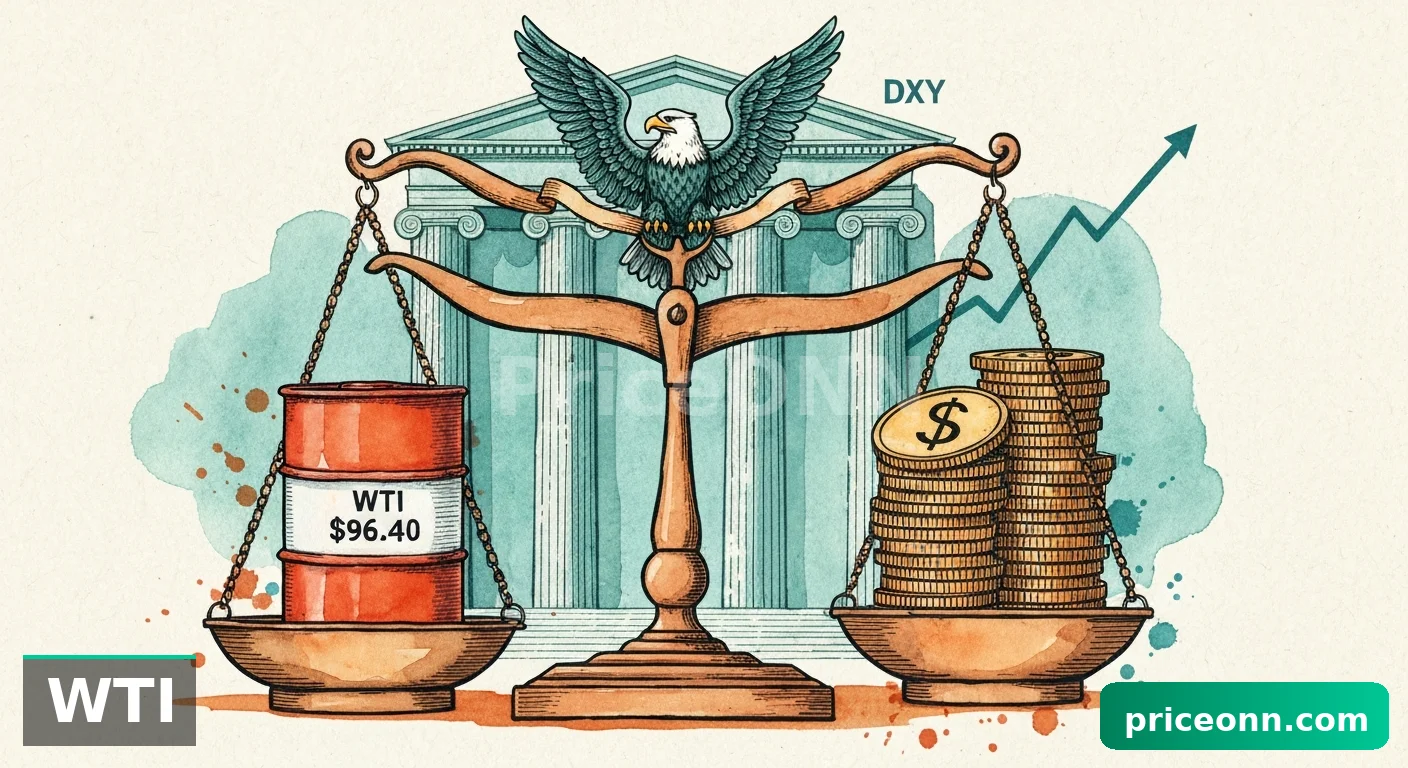
Firstly, the US Dollar Index (DXY) could see upward pressure if global risk aversion intensifies, prompting a flight to safety. Conversely, the Euro may face headwinds as higher energy import costs strain the bloc's trade balance. Secondly, energy-intensive industries within Europe, such as chemicals and manufacturing, will face increased operational costs. This could translate into reduced corporate earnings and potentially impact European equity indices like the Euro Stoxx 50. Thirdly, elevated energy prices can contribute to broader inflationary pressures, potentially influencing the European Central Bank’s (ECB) monetary policy decisions and impacting bond yields across the Eurozone. Finally, the ongoing expansion of global LNG capacity, particularly from the US and Qatar, presents a long-term structural shift. While this offers diversification, it also highlights the interconnectedness of global energy markets and the potential for regional conflicts to have far-reaching consequences. Investors should closely watch inventory levels in Europe and developments surrounding the Strait of Hormuz for short-term price direction.
Track markets in real-time
Empower your investment decisions with AI-powered analysis, technical indicators and real-time price data.
Join Our Telegram Channel
Get breaking market news, AI analysis and trading signals delivered instantly to your Telegram.
Join Channel