
Could Oil Prices Skyrocket to $200 Amid Escalating Geopolitical Tensions?
Crude oil prices are under intense scrutiny as the U.S. federal government begins modeling a severe scenario where prices could reach $200 per barrel. This stress test aims to understand the potential economic ramifications of such an extreme surge, driven by escalating global conflict risks.
Market Context
The prospect of Brent crude reaching such stratospheric levels was initially discussed by analysts in early March, gaining traction as it became apparent that the conflict involving Iran was unlikely to be resolved quickly. While current prices are far below this hypothetical peak, the underlying geopolitical instability is already exerting pressure on energy markets. Analysts note that even with Brent crude trading significantly lower than $200, the impact on global economies is substantial.
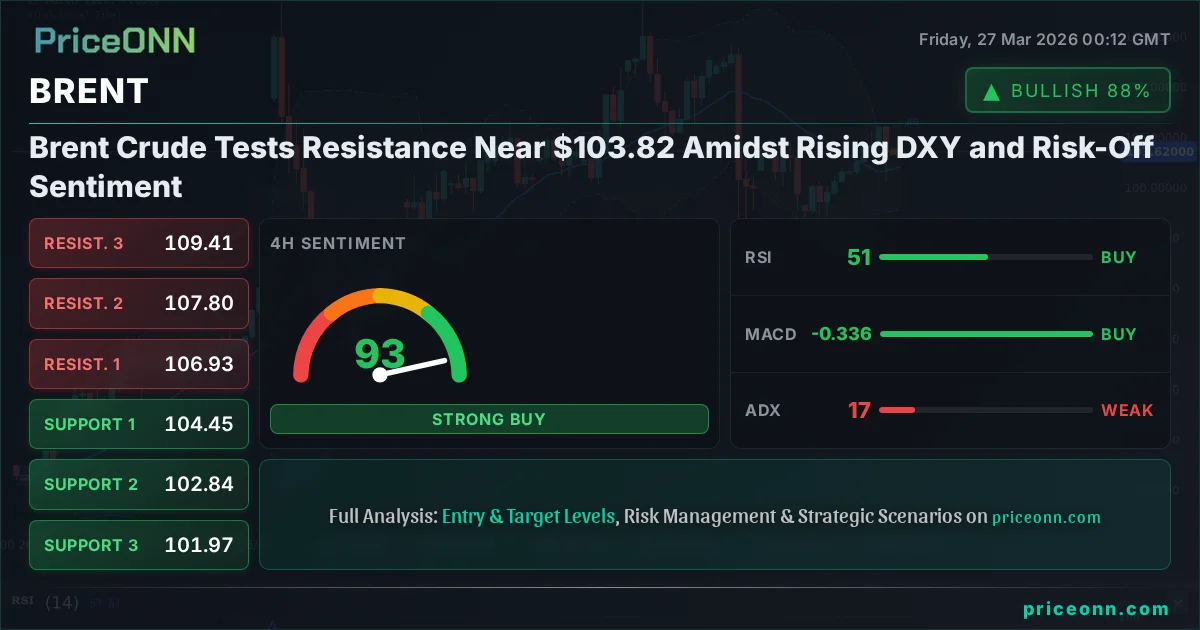
Europe, in particular, continues to grapple with the aftermath of its previous energy crisis. Import expenditures for energy have risen considerably since 2022, constraining the European Union's financial flexibility and leading to significant economic strain. For instance, with Brent crude hovering around $100 per barrel, European nations are already experiencing considerable economic headwinds.
The United States, benefiting from robust domestic oil and gas production, exhibits greater resilience. However, it is not immune to the inflationary pressures stemming from higher energy costs. Data from AAA on March 25th shows the national average gasoline price at $3.982 per gallon, a notable 30% increase from the $3.139 per gallon average recorded a year prior. This surge in fuel costs serves as a fundamental driver for broader inflation across nearly all goods and services.
Analysis & Drivers
The primary driver behind the elevated risk of extreme price movements is the heightened geopolitical uncertainty. The ongoing conflict in the Middle East, coupled with broader global instability, creates a volatile environment for oil supply and demand dynamics. Market participants are closely watching diplomatic efforts and military developments, as any significant escalation could trigger supply disruptions or further inflame market fears.
Furthermore, the U.S. government's decision to model a $200 per barrel scenario suggests a high level of concern within official circles regarding the potential for a severe energy shock. This proactive stress-testing indicates a recognition that existing market conditions, while not yet at crisis levels, carry substantial downside risks. The effectiveness of international sanctions, the stability of key oil-producing regions, and the strategic petroleum reserves of major economies will all play critical roles in determining the market's response to any future supply-side shocks.
Trader Implications
For traders, the current environment calls for heightened vigilance and a focus on risk management. The potential for extreme price swings necessitates careful position sizing and a clear understanding of support and resistance levels. Key price levels to watch include the recent highs reached during periods of heightened tension, as well as critical psychological barriers.
Traders should monitor geopolitical developments closely, as these are likely to be the primary catalysts for significant price movements. A sudden escalation in the Middle East could see prices rapidly test higher resistance levels, potentially targeting the $100-$110 range for Brent crude in the short term, with the $200 scenario representing a severe tail risk. Conversely, a de-escalation or a breakthrough in ceasefire talks could lead to a swift price correction, with traders looking to defend support around the $90-$95 level.
The inflationary impact of higher oil prices also has broader implications for other markets, including currency and equity trading. Traders should consider how sustained high energy costs might influence central bank policy and consumer spending, which could affect a wide array of assets.
Outlook
The outlook for oil prices remains highly uncertain, largely dependent on the trajectory of geopolitical events. While a $200 per barrel price point represents an extreme scenario, the underlying risks suggest that volatility is likely to persist. Traders should prepare for continued choppiness, with prices sensitive to news flow from conflict zones and major economic data releases. Upcoming economic indicators, particularly inflation and manufacturing data from key economies, will provide further clues on the broader economic impact and potential central bank responses.
Frequently Asked Questions
What is the U.S. government modeling regarding oil prices?
The U.S. federal government is conducting a stress test to assess the economic impact of crude oil prices reaching $200 per barrel. This scenario analysis is driven by increasing global conflict risks.
How are current oil prices affected by geopolitical tensions?
Even at current levels, geopolitical tensions are driving up prices. The national average gasoline price in the U.S. is $3.982 per gallon as of March 25th, a significant increase from a year ago, contributing to broader inflation.
What should traders watch for in the coming weeks?
Traders should closely monitor geopolitical developments in the Middle East, as escalations could push Brent crude towards $100-$110. Conversely, signs of de-escalation might see prices retrace towards the $90-$95 support area.
Track markets in real-time
Empower your investment decisions with AI-powered analysis, technical indicators and real-time price data.
Join Our Telegram Channel
Get breaking market news, AI analysis and trading signals delivered instantly to your Telegram.
Join Channel
PriceONN