Washington Stress-Tests $200 Oil as War Risk Mounts
Economic Shockwaves: A $200 Oil Future Looms
Imagine crude oil prices rocketing to an unprecedented $200 per barrel. This isn't mere speculation; it's a scenario the U.S. federal government is actively modeling to gauge the potential economic fallout. This critical assessment comes as global conflict risks appear to be accelerating, casting a long shadow over energy markets.
The prospect of Brent crude hitting such stratospheric levels was first floated by analysts in early March. This concern solidified as it became evident that the conflict involving Iran was unlikely to be resolved swiftly. Such a worst-case energy crisis would undoubtedly deliver a devastating blow to the global economy. Developing nations, with their more limited financial buffers, would face the most severe repercussions. However, even developed economies are not immune to significant pain should oil prices surge dramatically.
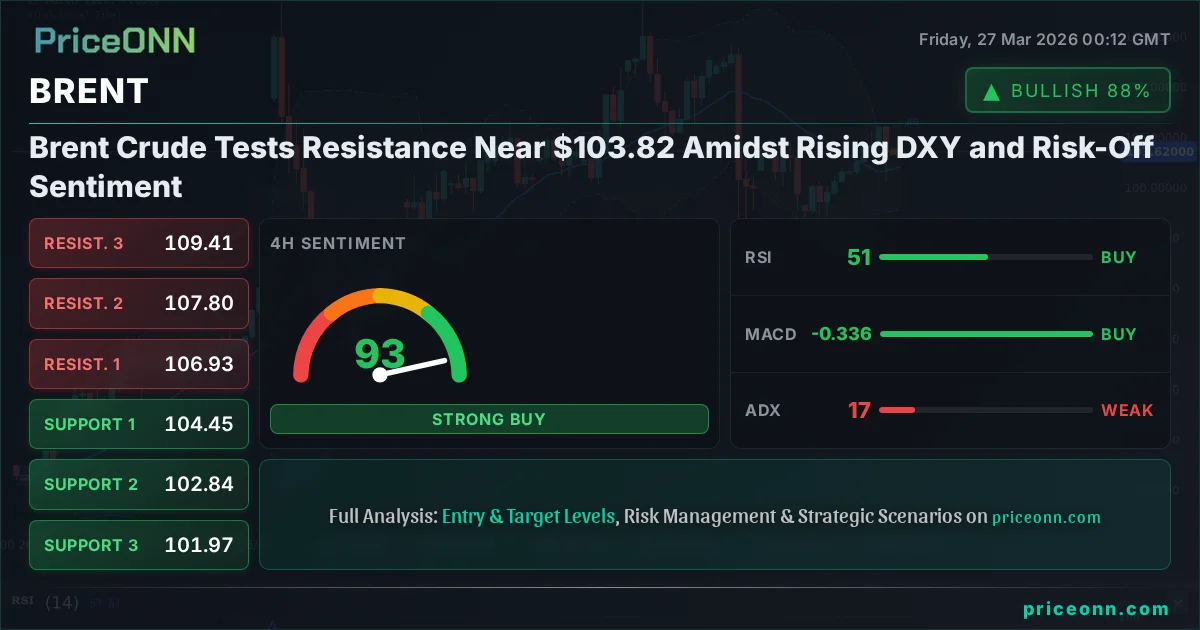
The sting of higher energy costs is already being felt across the globe, even with Brent crude trading far below the $200 mark. Europe, in particular, has struggled to rebound from its previous energy crisis. Its import expenditures for energy have climbed significantly since 2022, severely curtailing the European Union's financial flexibility. Consequently, European nations are experiencing considerable economic strain with Brent at approximately $100 per barrel. The United States, while more resilient due to its robust domestic oil and gas production, is also feeling the pinch.
Fueling Inflation: The Pump Price Reality
In the U.S. the impact is directly visible at the gasoline pump. Average prices have climbed roughly 30% since the onset of heightened geopolitical instability. Data from AAA on March 25th indicated a national average of $3.982 per gallon, a notable increase from the $3.139 per gallon average recorded a year prior. This fuel inflation acts as a foundational driver for broader price increases across virtually all goods and services, making it a central factor in navigating an energy crisis.
So far, the U.S. central bank has not signaled an immediate need to alter monetary policy in response to these energy price pressures. Federal Reserve Chair Jerome Powell has suggested that the war's effect on the U.S. economy would likely prove to be temporary. However, Powell's past downplaying of the pandemic's economic impact, which later proved more prolonged, lends weight to his current cautious stance. He has hedged his outlook by stating, "we just don't know" how the situation will ultimately unfold.
Meanwhile, across the Atlantic, the European Central Bank president has indicated a potential interest rate hike could be on the table if the conflict persists, even if the resulting inflation is "not too persistent." This divergence in policy signaling adds to market uncertainty.
Conflicting Signals and Escalating Tensions
Adding to the market's volatility are the mixed messages emanating from the White House. President Trump's public statements have frequently triggered market fluctuations. Recent communications have included reports of a ceasefire plan and negotiations with Iran-a claim Iran has denied-alongside indications of increased U.S. military deployments in the Middle East. These latter signals suggest preparations for a protracted conflict, potentially including a ground offensive.
Ultimately, the scale of the economic repercussions hinges on the duration of the conflict and the continued vulnerability of energy infrastructure in the Persian Gulf to targeted attacks. The longer these hostilities continue, the more severe the global economic impact will become.
Market Ripple Effects
This heightened geopolitical tension and the potential for extreme oil price volatility have significant implications for a range of assets. Traders will be closely monitoring energy benchmarks like Brent Crude and WTI Crude for directional cues. The U.S. Dollar Index (DXY) could see fluctuations as safe-haven demand ebbs and flows with perceived de-escalation or escalation. Furthermore, currency pairs such as USD/CAD are sensitive to oil price movements, given Canada's status as a major oil exporter. Equity markets, particularly the energy sector and companies with significant transportation costs, will also be under scrutiny. Investors should prepare for increased choppiness across markets as the situation develops.
Track markets in real-time
Empower your investment decisions with AI-powered analysis, technical indicators and real-time price data.
Join Our Telegram Channel
Get breaking market news, AI analysis and trading signals delivered instantly to your Telegram.
Join Channel