
Why Is WTI Crude Oil Trading Around $92 Despite Stronger Dollar?
West Texas Intermediate (WTI) crude oil is currently navigating a complex market environment, trading around the $92.05 mark. This level represents a 1.73% increase on the day, suggesting underlying strength. However, the advance is occurring without the overwhelming conviction typically seen in a strong bull run, indicating that upside potential might be capped by competing market forces.
Market Context
The benchmark’s resilience can be attributed to a confluence of factors. Heightened geopolitical tensions in the Middle East continue to cast a shadow, creating a baseline level of supply disruption risk. This underlying unease provides a floor for oil prices, preventing significant pullbacks. Simultaneously, the US Dollar has been exhibiting considerable strength. As oil is predominantly priced in dollars, a robust dollar typically makes the commodity more expensive for holders of other currencies. This dynamic acts as a natural headwind, limiting how high WTI prices can climb, even in the face of supply-side concerns.
Industry reports indicate that Saudi crude oil exports to its two biggest clients, India and China, are on course to decline in April due to production disruptions in the Middle East. Traders are observing that Saudi oil exports to the Chinese market are seen at approximately 40 million barrels for April, down from 48 million barrels shipped in February. Shipments to India are projected to be around 23 million barrels, a notable decrease. Saudi Aramco has reportedly notified customers of term supply in Asia that they would receive only the flagship Arab Light grade loaded at the Yanbu export port on the Red Sea for April. This follows a significant drop in overall Saudi exports, averaging around 4.355 million barrels per day in March, well below the 7.1 million bpd seen in February, suggesting that rerouting efforts have not fully offset disruptions.
Analysis & Drivers
The interplay between these two powerful forces-geopolitical risk premium and currency valuation-is creating a delicate balance in the oil market. The ongoing conflict and related disruptions in the Middle East are a primary driver, instilling a fear premium into oil prices. This is exacerbated by the fact that key supply routes and production facilities are under threat or have been impacted, leading major producers like Saudi Arabia to curtail exports to crucial Asian markets. The reduction in Saudi shipments to China and India, two of the world's largest oil consumers, is a significant development that is tightening available supply for these regions, forcing them to seek alternatives, potentially at higher costs.
Conversely, the persistent strength of the US Dollar acts as a strong counter-force. As WTI is denominated in USD, a stronger dollar inherently increases the cost of oil for international buyers. This can dampen demand, especially if economic growth in importing nations is already sluggish. Market data shows that the dollar index has been on an upward trend, reflecting factors such as expectations around interest rate policy and broader safe-haven flows. The current market sentiment is one of cautious optimism for oil bulls, where supply concerns are battling against currency headwinds and potential demand destruction.
Trader Implications
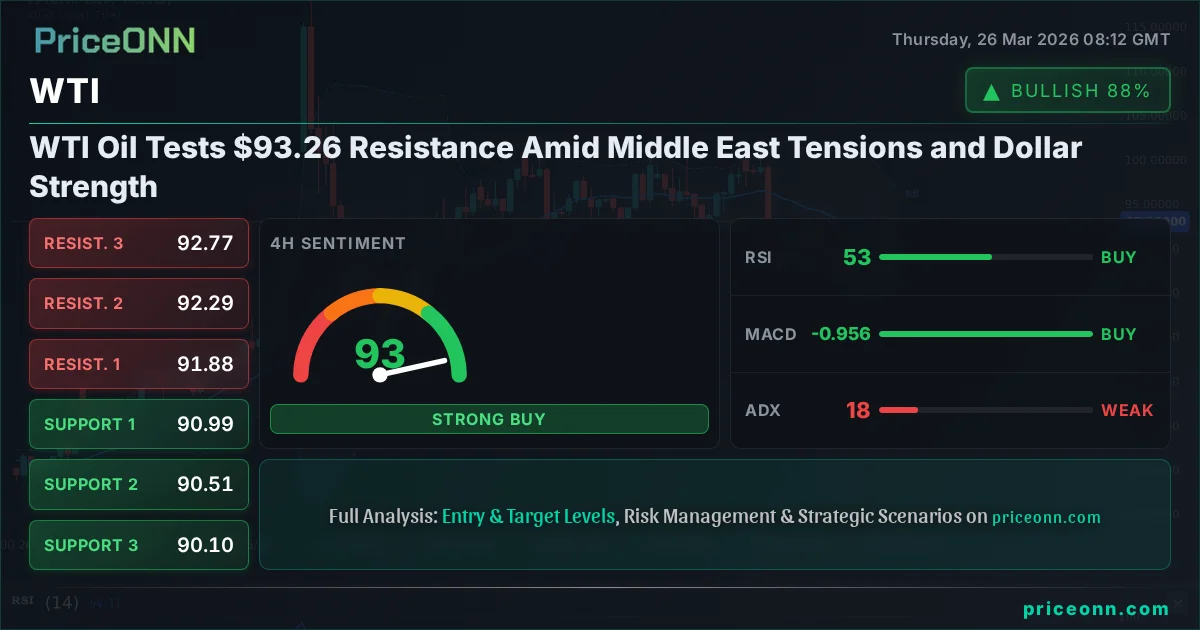
Traders should closely monitor the evolving geopolitical situation in the Middle East for any escalations or de-escalations, as this will directly impact the supply-side risk premium. Key indicators to watch include reports of further shipment disruptions, refinery outages, or diplomatic breakthroughs. On the currency front, the strength of the US Dollar remains a critical factor. A sustained rally in the dollar could put a ceiling on WTI’s gains, even if Middle Eastern tensions persist. Traders should also be aware of the upcoming economic data releases from major economies, particularly China and India, as these will influence their oil demand outlook. Key technical levels for WTI include immediate resistance around the $93-$94 range, with support found near $90. A decisive break above $94 could signal further upside, while a fall below $90 might indicate a shift in sentiment.
Outlook
Looking ahead, WTI crude oil prices are likely to remain volatile, caught between persistent geopolitical supply risks and the dampening effect of a strong US Dollar. While Middle Eastern tensions and reduced Saudi exports provide a bullish undertone, the robust dollar may limit significant upward momentum. Traders should remain vigilant for shifts in either of these dominant narratives. Upcoming economic data and statements from central banks, particularly the US Federal Reserve, will be crucial in shaping both currency movements and global demand expectations for energy commodities.
Frequently Asked Questions
What is causing WTI crude oil to remain firm around $92?
WTI crude oil is trading near $92.05 due to a combination of heightened geopolitical tensions in the Middle East and significant reductions in Saudi oil exports to major Asian markets like China and India. These factors create supply disruption fears that support prices, overriding the headwinds from a stronger US Dollar.
How are Saudi export cuts impacting the oil market?
Saudi Arabia's planned reduction in crude exports to China (to an estimated 40 million barrels in April) and India (to around 23 million barrels) signals a tightening of supply for these key consumers. This forces them to seek alternative, potentially more expensive, sources and contributes to upward pressure on global oil prices.
What are the key risks for WTI crude oil traders in the near term?
The primary risks for traders include further escalation of Middle East conflicts, which could drive prices higher, and continued strength in the US Dollar, which acts as a ceiling on gains. A sustained dollar rally above recent highs could pressure WTI below its support at $90, while a significant geopolitical event could push it towards $94 and beyond.
Track markets in real-time
Empower your investment decisions with AI-powered analysis, technical indicators and real-time price data.
Join Our Telegram Channel
Get breaking market news, AI analysis and trading signals delivered instantly to your Telegram.
Join Channel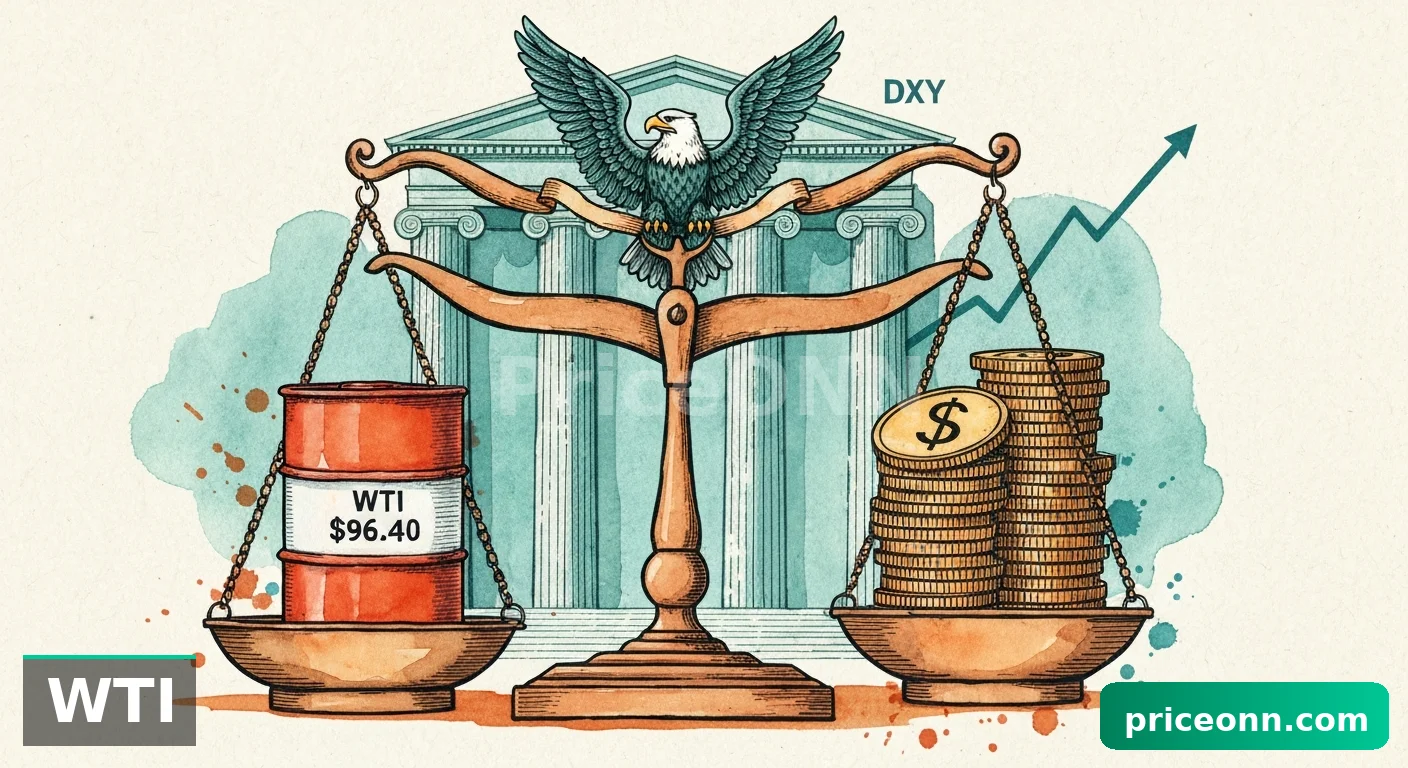
PriceONN