
Why Did Crude Oil Tumble 2.4% Today?
Crude oil prices experienced a sharp decline on Wednesday, with West Texas Intermediate (WTI) Crude Oil futures for May delivery settling down by $2.22, or 2.40%, at $90.13 per barrel. This downward movement was primarily triggered by news that the United States has presented a 15-point peace proposal to Iran aimed at de-escalating the ongoing gulf war. The prospect of a diplomatic resolution has significantly alleviated anxieties surrounding the security of oil transit through the vital Strait of Hormuz.
Market Context
The market's reaction underscores how swiftly geopolitical risks, particularly those impacting energy supply chains, can influence price action. Traders are now pricing in a higher probability of smoother passage for oil tankers through a chokepoint that has been a source of considerable tension since the commencement of the gulf conflict on February 28. Reports suggest that Iranian forces had previously restricted passage, leading to disruptions and stranded vessels. The potential for unimpeded transit through the Strait of Hormuz would directly translate to more secure and predictable global energy flows.
Analysis & Drivers
While the immediate catalyst for the oil price slump was the diplomatic breakthrough, broader supply and demand dynamics continue to shape the energy landscape. In a stark display of its complex energy position, Australia, despite being a domestic crude producer at around 320,000 barrels per day, faces a severe refined fuel crisis. By 2025, the nation was projected to import approximately 850,000 barrels per day of refined products to meet a total demand of around 1.1 million barrels per day, indicating an 80% to 90% reliance on external sources. This dependence has been exacerbated by disruptions in regional supply chains and export restrictions from key Asian hubs, including South Korea, a major supplier of diesel. Meanwhile, Venezuela is showing signs of recovery, with crude output climbing to an average of 1.1 million barrels per day this month, up from 942,000 barrels per day in February, following a partial lifting of U.S. sanctions. This resurgence is supported by new legislation capping royalty rates and attracting international investment. Separately, Canada's Alberta is seeking Asian capital for a proposed 1 million barrel per day pipeline to Asian markets, aiming to reduce its over-reliance on the U.S. market, which currently takes 95% to 97% of its oil.
Trader Implications
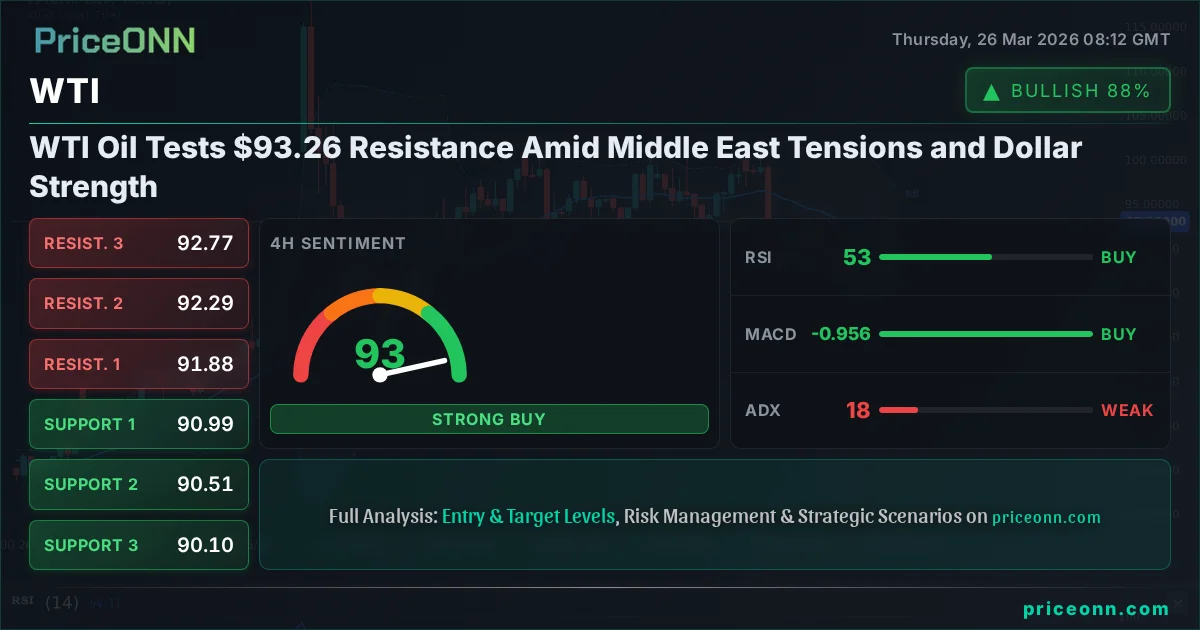
The immediate price action suggests a short-term bearish sentiment for crude oil, driven by receding geopolitical risk premiums. Traders should monitor the progress of the US-Iran peace talks closely; any indication of breakdown could see prices rebound swiftly. Key support for WTI crude is now eyed around the $90 per barrel level, with resistance around the recent highs. The ongoing supply-side developments in Australia and Venezuela, while significant for regional markets, may have a more muted impact on global benchmarks in the short term compared to the geopolitical headlines. However, the structural shift in Australia's import needs and Venezuela's production recovery are factors to watch for longer-term supply considerations. For Canadian oil, the success of the new pipeline project hinges on navigating significant political and environmental challenges, particularly Indigenous opposition and the existing oil tanker moratorium.
Outlook
The outlook for crude oil remains sensitive to geopolitical developments and the pace of global economic recovery. While the easing of tensions in the Strait of Hormuz provides immediate relief, the fundamental supply and demand picture, coupled with the ongoing strategic shifts in energy production and export routes by major players, will dictate medium-term price trends. Traders should remain vigilant for any renewed escalations or significant shifts in global demand forecasts. The successful execution of large-scale infrastructure projects like Alberta's pipeline will also play a crucial role in rebalancing global oil trade flows over the coming years.
Frequently Asked Questions
What caused the immediate drop in crude oil prices?
Crude oil prices, specifically WTI futures for May delivery, tumbled by 2.40% to $90.13 per barrel due to a U.S. peace proposal to Iran. This eased concerns about potential disruptions to oil transit through the critical Strait of Hormuz.
How are other global oil markets reacting to these developments?
While global headlines focused on the Strait of Hormuz, Australia is facing a severe refined fuel shortage despite producing 320,000 bpd of crude, relying on imports for 80-90% of its needs. Venezuela's output has risen to 1.1 million bpd, and Alberta is pursuing new export pipelines.
What are the key levels traders should watch for WTI crude?
Traders should watch the $90 per barrel level as key support following the recent price drop. Resistance is expected around recent highs. Market sentiment remains highly sensitive to geopolitical news and updates on the peace talks.
Track markets in real-time
Empower your investment decisions with AI-powered analysis, technical indicators and real-time price data.
Join Our Telegram Channel
Get breaking market news, AI analysis and trading signals delivered instantly to your Telegram.
Join Channel


PriceONN