
US Dollar Gains Traction as Oil Prices Surge and Eurozone Woes Persist

The US Dollar Index (DXY) has seen a notable uptick, trading near the 99.50 mark. This strengthening is underpinned by a confluence of factors, including rising United States Treasury yields and persistent expectations of a hawkish stance from the Federal Reserve. These dynamics are currently overshadowing mixed risk sentiment in the broader market.
Market Context
The surge in oil prices, with West Texas Intermediate (WTI) crude benchmarks playing a significant role, is a key driver. WTI, a high-quality crude sourced in the US and distributed via the Cushing hub, is sensitive to global growth, geopolitical events, and OPEC production decisions. The current upward pressure on oil prices exacerbates inflation concerns, which in turn supports the US Dollar as investors seek safe-haven assets and anticipate tighter monetary policy.
Conversely, recent Purchasing Managers' Index (PMI) data from the Eurozone has painted a less optimistic picture, with figures indicating a slowdown in economic activity. This divergence in economic outlook between the US and the Eurozone is contributing to the Dollar's relative strength against the Euro and other major currencies. Market data shows the US Dollar was the strongest performer against the New Zealand Dollar today.
Analysis & Drivers
The interplay between rising Treasury yields and the prospect of further interest rate hikes by the Federal Reserve is a primary catalyst for the Dollar's advance. Higher yields make US debt more attractive to foreign investors, increasing demand for dollars. Simultaneously, hawkish rhetoric from Fed officials, even if not explicitly signaling immediate policy changes, keeps the market on alert for a tighter monetary environment, which typically benefits the Greenback.
The impact of oil prices on inflation cannot be overstated. As oil is predominantly priced in US Dollars, a weaker dollar can make oil more affordable, and vice versa. The current scenario of rising oil prices, coupled with a firming dollar, suggests a complex inflationary environment. Weekly oil inventory reports from the American Petroleum Institute (API) and the Energy Information Agency (EIA) are closely watched. A drop in inventories, signaling increased demand, typically pushes oil prices higher, while rising inventories can indicate oversupply and lead to price declines. The EIA data, being from a government agency, is generally considered more reliable.
Geopolitical tensions and supply chain disruptions remain background risks that could further influence oil prices and, consequently, currency markets. Any unexpected shifts in OPEC+ production strategies or significant political instability in oil-producing regions could lead to price volatility.
Trader Implications
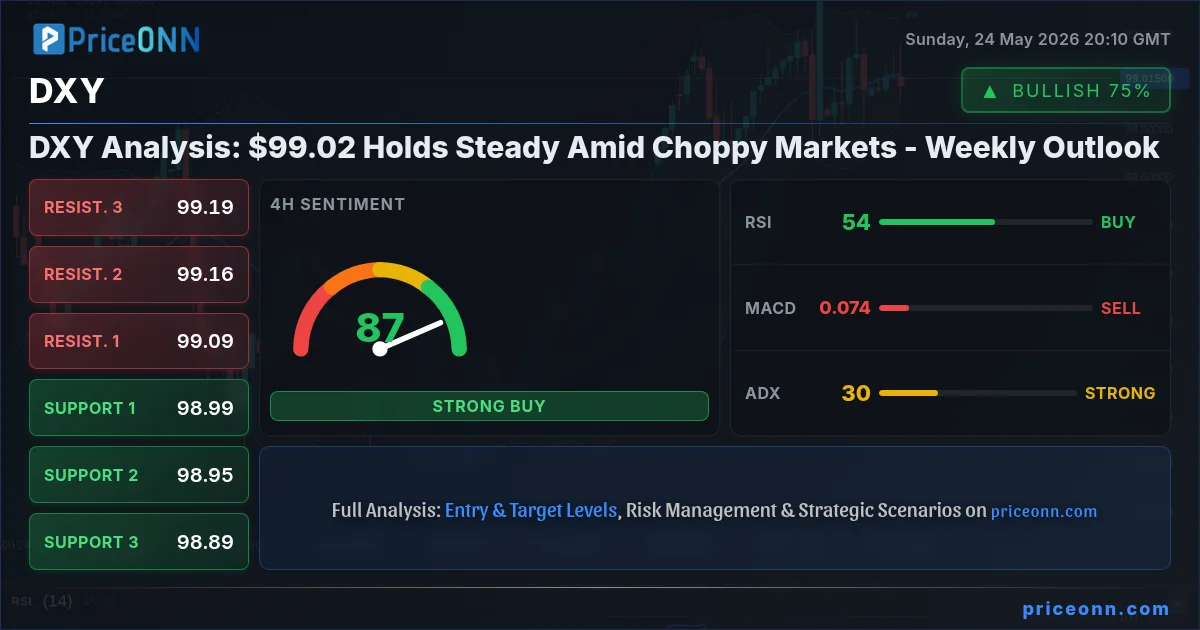
Traders should monitor the US Dollar Index (DXY) for continued strength, with 99.50 serving as a key psychological level. A sustained move above this point could signal further upside potential, targeting resistance levels around 100.00. Key support is seen at 99.00.
For currency pairs, this suggests potential weakness in EUR/USD, with a break below 1.0700 potentially opening the door for a test of 1.0650. Conversely, USD/JPY may find upward momentum, with traders watching for a clear break above 145.00.
Key factors to watch include upcoming US inflation data (CPI and PPI), Federal Reserve speeches for further clues on monetary policy, and the weekly oil inventory reports. Significant deviations in these data points from expectations could trigger sharp market movements. Traders should maintain a focus on risk management, especially given the elevated oil price environment and potential for geopolitical surprises.
Outlook
The immediate outlook suggests that the US Dollar is likely to maintain its firming trend, supported by higher yields and hawkish Fed expectations, especially if Eurozone economic data continues to disappoint. However, sustained high oil prices could become a double-edged sword, potentially forcing the Fed to adopt an even more aggressive stance, which could eventually dampen economic growth and challenge the Dollar's ascent. Investors and traders will be closely watching the correlation between oil prices, inflation expectations, and central bank policy responses in the coming weeks.
Frequently Asked Questions
What is the current trading level for the US Dollar Index (DXY)?
The US Dollar Index (DXY) is currently trading around the 99.50 level. This marks a relative strengthening, influenced by rising US Treasury yields and hawkish Federal Reserve sentiment.
How are rising oil prices impacting the US Dollar?
Rising oil prices contribute to inflation concerns, which typically supports the US Dollar. Higher oil prices can increase demand for dollars as oil is predominantly traded in USD, and they also fuel expectations of tighter monetary policy from the Federal Reserve.
What are the key levels to watch for EUR/USD?
Traders should watch the 1.0700 level for EUR/USD. A break below this support could signal further downside, potentially targeting 1.0650, reflecting the Dollar's broader strength.
Track markets in real-time
Empower your investment decisions with AI-powered analysis, technical indicators and real-time price data.
Join Our Telegram Channel
Get breaking market news, AI analysis and trading signals delivered instantly to your Telegram.
Join Channel PriceONN News
The US Dollar experienced a notable dip as a renewed ceasefire between the US and Iran spurred a rally in global equities, particularly in tech stocks. However, persistent core PCE inflation at 3.3% YoY continues to fuel 'higher for longer' rate expectations.
PriceONN News
The EUR/USD faces headwinds as core US PCE inflation unexpectedly rose to 3.3% year-over-year, reinforcing a 'higher for longer' interest rate narrative. Meanwhile, a US-Iran ceasefire extension boosted global risk appetite, potentially drawing capital away from safe-haven currencies.
PriceONN News
Markets are pricing in a potential de-escalation in the US-Iran conflict, leading to a significant drop in crude oil prices and a weakening US Dollar as diplomatic efforts appear to be gaining traction.
PriceONN News
USD/CAD faces pressure as Canada's economy shows signs of stalling, with Q1 GDP contracting 0.1% and domestic demand weakening. This comes as trade negotiations and geopolitical shifts add layers of uncertainty.
PriceONN News
USD/JPY is testing the critical 160 level as stalled US-Iran negotiations and hawkish Federal Reserve rhetoric fuel inflation concerns and a potential for further rate hikes. Traders are closely watching upcoming US Non-Farm Payrolls and Eurozone CPI data for direction.
PriceONN News
The USD/JPY pair is flirting with the 160 level as stalled US-Iran negotiations and hawkish Federal Reserve rhetoric fuel inflation concerns. Traders are closely watching upcoming US Non-Farm Payrolls and Eurozone CPI data.
PriceONN News
EUR/USD stalled below 1.1660 as the US Dollar defied expectations, refusing to weaken despite reports of a US-Iran ceasefire extension. Market participants remain cautious, awaiting concrete confirmation and assessing lingering inflationary pressures.
PriceONN News
The Japanese Yen is showing signs of renewed pressure, with USD/JPY approaching the psychologically significant 160 level. This comes as traders brace for key US jobs data and Eurozone inflation figures, all while lingering US-Iran tensions add a layer of uncertainty to market sentiment.
PriceONN News
EUR/USD closed at 1.1640, showing resilience amid mixed signals. Easing US-Iran tensions initially pressured the dollar, but persistent inflation concerns and political ratification hurdles are keeping the greenback surprisingly steady.
PriceONN News
EUR/USD stabilized around 1.1640 as reports of a US-Iran ceasefire extension and potential Strait of Hormuz reopening eased inflation fears. However, the US Dollar's resilience suggests lingering caution among forex traders.
PriceONN News
USDJPY has returned to the area of previous interventions. The ECB is moving towards a rate hike in June. The US dollar retreated on Friday amid new record highs for stock indices and rumours of amendments to the US-Iran agreement. However, tit-for-tat exchanges between the adversaries pushed the dollar index back into the support zone […] The post Yen Braces for a New Storm appeared first on ActionForex.
PriceONN News
The US Dollar experienced a notable decline last week as markets priced in a potential diplomatic resolution to the US-Iran conflict, leading to a drop in oil prices and Treasury yields. This shift in sentiment suggests a move away from stagflation fears towards a more stable economic outlook.