
Is the US Dollar's Rally Over as Geopolitical Tensions Spike and Fed Looms?

The US Dollar has reversed a four-day winning streak, as market participants re-evaluate risk exposure amid heightened geopolitical tensions in the Persian Gulf and ahead of crucial central bank policy announcements. The Dollar's pause has allowed the Euro to reclaim some ground, with EUR/USD rebounding from recent seven-month lows.
Market Context
On Monday, the US Dollar experienced a notable pullback, ending its recent positive momentum. This shift occurred as traders assessed the implications of a United States strike on Iran’s Kharg Island, a critical oil export hub. The situation was further complicated by reports of retaliation from Tehran, which has escalated anxieties surrounding naval activity in the Strait of Hormuz and broader energy supply stability. This geopolitical uncertainty has coincided with market anticipation for upcoming monetary policy decisions from both the Federal Reserve and the European Central Bank, creating a complex trading environment.
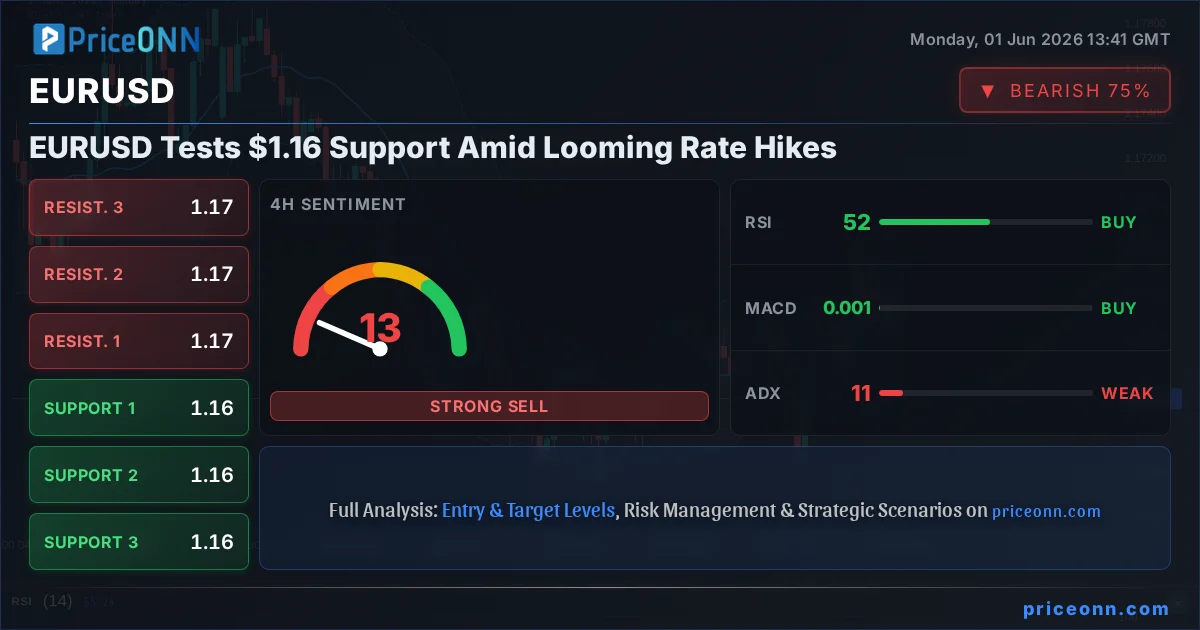
The EUR/USD pair has seen a modest recovery, moving back towards the 1.1500 level after touching fresh seven-month lows. This rebound is primarily driven by the greenback's temporary retreat rather than a substantial strengthening of the Euro. Meanwhile, other major currencies have also seen mixed performance against the Dollar, with the Canadian Dollar being the weakest performer against the USD in early trading.
Analysis & Drivers
The recent geopolitical developments in the Middle East are a significant driver of market sentiment. The US strike on Kharg Island and subsequent Iranian actions have heightened concerns over oil supply disruptions. This has contributed to a rise in crude oil prices, with West Texas Intermediate (WTI) crude fluctuating near the $100 per barrel mark. The ongoing conflict, now in its third week, shows no clear signs of de-escalation, creating persistent volatility.
However, despite the typical safe-haven appeal of gold during times of geopolitical turmoil, the precious metal has been under pressure. Gold prices have fallen to approximately $5,023 per ounce, extending losses over the past two weeks and reaching monthly lows not seen since late February. This counter-intuitive move for gold is largely attributed to the persistent rise in oil prices, which is stoking inflation concerns. Analysts note that elevated inflation expectations are reinforcing the view that central banks, particularly the Federal Reserve, will maintain higher interest rates for an extended period.
The prospect of prolonged higher interest rates diminishes the attractiveness of non-yielding assets like gold. Investors are increasingly favoring interest-bearing assets, such as US Treasuries, which offer a more compelling yield in the current environment. The rising yields on US government bonds further underscore this shift, increasing the opportunity cost of holding gold. Market data indicates that core inflation, a key metric for central banks, remains a focus, with the target rate typically around 2%.
Trader Implications
Traders are closely watching the unfolding geopolitical situation in the Middle East for any signs of further escalation or de-escalation, which could significantly impact oil and gold prices. The upcoming Federal Reserve and ECB monetary policy meetings are also critical events. While the Fed is widely expected to hold rates steady, market participants will be scrutinizing statements for forward guidance on future policy path. Any indication of a more hawkish stance could further support the US Dollar, while dovish signals might weigh on it.
Key technical levels to monitor for EUR/USD include resistance around 1.1500 and potential support levels below the recent lows. For gold, the $5,023 per ounce level is a key point, with a break below potentially opening the door for further declines. Conversely, a sustained move above $5,250 would be needed to signal a potential reversal. Oil prices remain highly sensitive to supply-side news, with the $100 mark for WTI a significant psychological and technical level.
Risk factors include unexpected policy shifts from central banks, further geopolitical flare-ups in the Middle East, or significant shifts in economic data. Traders should be prepared for continued volatility, especially around the central bank announcements. The interplay between inflation, interest rates, and geopolitical risk will likely dictate market direction in the near term.
Outlook
The immediate outlook suggests continued uncertainty, with the US Dollar's direction hinging on central bank rhetoric and the trajectory of Middle East tensions. While the Dollar has paused its advance, a hawkish leaning from the Fed could reignite its strength. Conversely, any signs of easing geopolitical conflict might lead to a broader risk-on sentiment, potentially benefiting riskier assets. Gold's path will likely remain tied to inflation expectations and interest rate outlooks, while oil prices will continue to be heavily influenced by supply-side risks stemming from the Middle East conflict.
Frequently Asked Questions
Will the US Dollar continue to weaken after its recent pullback?
The Dollar's short-term direction is uncertain. While geopolitical events and upcoming central bank meetings create headwinds, a hawkish stance from the Federal Reserve could support a renewed advance. Market data suggests the Dollar's strength is contingent on interest rate differentials and global risk sentiment.
Why is gold falling despite geopolitical tensions?
Gold prices have fallen to approximately $5,023 per ounce, extending a two-week decline. This occurs because rising oil prices are fueling inflation concerns, leading to expectations of sustained high interest rates. Higher rates increase the opportunity cost of holding non-yielding gold, making interest-bearing assets more attractive.
What is the outlook for WTI Crude Oil prices?
WTI Crude Oil prices are fluctuating near $100 per barrel, driven by ongoing geopolitical risks in the Middle East and concerns over supply disruptions. Continued military conflict or significant supply shocks could push prices higher, while any de-escalation might lead to some price moderation.
Track markets in real-time
Empower your investment decisions with AI-powered analysis, technical indicators and real-time price data.
Join Our Telegram Channel
Get breaking market news, AI analysis and trading signals delivered instantly to your Telegram.
Join Channel PriceONN News
Markets are pricing in a potential de-escalation in the US-Iran conflict, leading to a significant drop in crude oil prices and a weakening US Dollar as diplomatic efforts appear to be gaining traction.
PriceONN News
EUR/USD stalled below 1.1660 as the US Dollar defied expectations, refusing to weaken despite reports of a US-Iran ceasefire extension. Market participants remain cautious, awaiting concrete confirmation and assessing lingering inflationary pressures.
PriceONN News
EUR/USD closed at 1.1640, showing resilience amid mixed signals. Easing US-Iran tensions initially pressured the dollar, but persistent inflation concerns and political ratification hurdles are keeping the greenback surprisingly steady.
PriceONN News
The EUR/USD faces headwinds as core US PCE inflation unexpectedly rose to 3.3% year-over-year, reinforcing a 'higher for longer' interest rate narrative. Meanwhile, a US-Iran ceasefire extension boosted global risk appetite, potentially drawing capital away from safe-haven currencies.
PriceONN News
EUR/USD stabilized around 1.1640 as reports of a US-Iran ceasefire extension and potential Strait of Hormuz reopening eased inflation fears. However, the US Dollar's resilience suggests lingering caution among forex traders.
PriceONN News
USDJPY has returned to the area of previous interventions. The ECB is moving towards a rate hike in June. The US dollar retreated on Friday amid new record highs for stock indices and rumours of amendments to the US-Iran agreement. However, tit-for-tat exchanges between the adversaries pushed the dollar index back into the support zone […] The post Yen Braces for a New Storm appeared first on ActionForex.
PriceONN News
The US Dollar experienced a notable decline last week as markets priced in a potential diplomatic resolution to the US-Iran conflict, leading to a drop in oil prices and Treasury yields. This shift in sentiment suggests a move away from stagflation fears towards a more stable economic outlook.
PriceONN News
USD/JPY is testing the critical 160 level as stalled US-Iran negotiations and hawkish Federal Reserve rhetoric fuel inflation concerns and a potential for further rate hikes. Traders are closely watching upcoming US Non-Farm Payrolls and Eurozone CPI data for direction.
PriceONN News
The USD/JPY pair is flirting with the 160 level as stalled US-Iran negotiations and hawkish Federal Reserve rhetoric fuel inflation concerns. Traders are closely watching upcoming US Non-Farm Payrolls and Eurozone CPI data.
PriceONN News
The US Dollar experienced a notable dip as a renewed ceasefire between the US and Iran spurred a rally in global equities, particularly in tech stocks. However, persistent core PCE inflation at 3.3% YoY continues to fuel 'higher for longer' rate expectations.
PriceONN News
Canada's labor market is showing signs of stabilization, with analysts predicting a dip in the unemployment rate to 6.8% in May, driven by an expected 25,000 new jobs. This follows a period of sluggish GDP growth and rising joblessness earlier in the year.
PriceONN News
Canada's economy showed signs of a slowdown in early 2026, but upcoming May jobs data is expected to reveal a modest uplift. Analysts anticipate the unemployment rate to fall to 6.8%.