USD/INR gains as US-Iran divide over Middle East talks keeps investors on edge
Dollar's Grip Tightens on Emerging Markets
The Indian Rupee kicked off Friday's trading session with a notable dip versus the US Dollar. This depreciation follows a period of closure for Indian markets observing the Ram Navami holiday, leaving the currency to catch up with overnight international market movements. The rupee's sensitivity to global currents is well documented, making its performance a crucial barometer for broader economic sentiment.
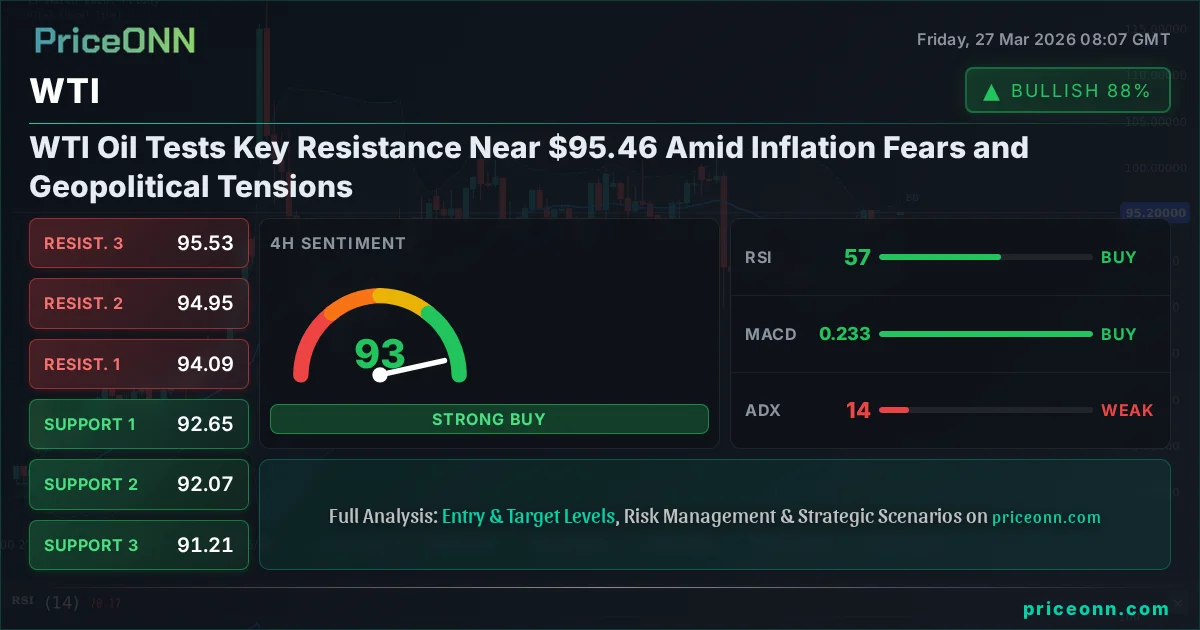
Several external forces consistently shape the rupee's trajectory. The price fluctuations of Crude Oil, a vital import for India, exert significant pressure. Similarly, the ubiquitous US Dollar, the primary currency for most international trade transactions, plays a pivotal role. Furthermore, the flow of foreign investment into the country acts as a critical determinant of the rupee's strength.
Beyond these external variables, the Reserve Bank of India (RBI) wields considerable influence. The central bank actively engages in foreign exchange markets, intervening to smooth out excessive volatility and ensure a stable environment conducive to trade. This direct action is a cornerstone of its monetary policy toolkit.
RBI's Balancing Act: Rates, Inflation, and Investment
The RBI's mandate extends to maintaining price stability, with a specific target of keeping inflation around 4%. To achieve this, the bank strategically adjusts key interest rates. A fundamental principle in currency markets suggests that higher interest rates typically bolster a currency. This phenomenon is partly driven by the 'carry trade', where investors seek to capitalize on interest rate differentials by borrowing in low-yield economies and investing in those offering higher returns.
India's macroeconomic landscape provides a complex backdrop for the rupee. Key indicators such as the inflation rate, interest rate levels, the pace of economic expansion (GDP growth), the trade balance, and the volume of foreign investment inflows all contribute to the rupee's valuation. A robust economic growth rate often attracts greater foreign capital, thereby increasing demand for the rupee.
A narrowing trade deficit, meaning exports grow faster than imports or imports shrink, generally translates into a stronger rupee over time. Similarly, elevated interest rates, particularly real rates (adjusted for inflation), are viewed favorably by the market and tend to support the currency. A 'risk-on' environment, characterized by investor optimism and a willingness to embrace higher-risk assets, can spur significant inflows of both Foreign Direct Investment (FDI) and Foreign Institutional Investment (FII), providing a substantial lift to the rupee.
However, the dynamics of inflation present a dual-edged sword. High inflation, especially when it outpaces that of trading partners, can be detrimental. It erodes the purchasing power of the currency and makes Indian exports more expensive, potentially leading to increased demand for foreign currency to pay for imports. paradoxically, high inflation often prompts the RBI to raise interest rates, which, as noted, can attract foreign capital and strengthen the rupee. Conversely, low inflation generally exerts downward pressure on the currency.
Market Ripple Effects
The current market environment, marked by geopolitical tensions and a strengthening US Dollar, presents a challenging scenario for emerging market currencies like the Indian Rupee. The divide between the US and Iran over Middle East talks is creating a palpable sense of unease among investors, prompting a flight to perceived safe havens, predominantly the US Dollar. This dynamic is directly impacting the USD/INR pair.
The implications extend beyond just the INR. A stronger dollar can put pressure on other Asian currencies and could lead to capital outflows from emerging markets as investors reallocate funds towards US assets. Consequently, traders should monitor not only the USD/INR cross but also broader risk sentiment indicators and the performance of other emerging market currencies. The trajectory of crude oil prices remains a critical variable; any escalation in Middle East tensions could send oil prices soaring, further pressuring the rupee and potentially contributing to imported inflation in India.
For traders, the current setup suggests caution. Key levels to watch on the USD/INR pair include immediate resistance points that, if broken, could signal further upside potential. Conversely, any signs of stabilization or a reversal in the dollar's strength could offer relief to the rupee. The RBI's policy stance and any potential intervention will also be closely scrutinized. The interplay between geopolitical risk, oil prices, and central bank actions will dictate the near-term direction.
Track markets in real-time
Empower your investment decisions with AI-powered analysis, technical indicators and real-time price data.
Join Our Telegram Channel
Get breaking market news, AI analysis and trading signals delivered instantly to your Telegram.
Join Channel