
War Could Soon Force Oil Prices To Catch Up with the Massive Supply Loss
 PriceONN Editorial Desk
Multi-source verification
PriceONN Editorial Desk
Multi-source verification
Global Oil Flow Disrupted by Strategic Chokepoint
The global oil market appears to be drifting towards a substantial price escalation, driven by the ongoing closure of the Strait of Hormuz, a vital artery for Middle Eastern energy exports. This critical disruption, extending beyond March, has already sent shockwaves through Asian economies. Nations heavily reliant on oil and gas from the Gulf are now implementing emergency measures, including fuel rationing and export bans, while scrambling to secure alternative crude supplies at significantly inflated prices. The specific grades trapped by this de facto blockade are the sour varieties, essential for many regional refineries.
Traders and speculators, those who have navigated the extreme volatility characterizing crude futures recently, are closely monitoring geopolitical pronouncements. However, the communication from key international players has been notably erratic, oscillating between aggressive posturing and overtures of diplomacy. This uncertainty has injected significant choppiness into oil prices, triggering sharp, albeit temporary, market reversals.
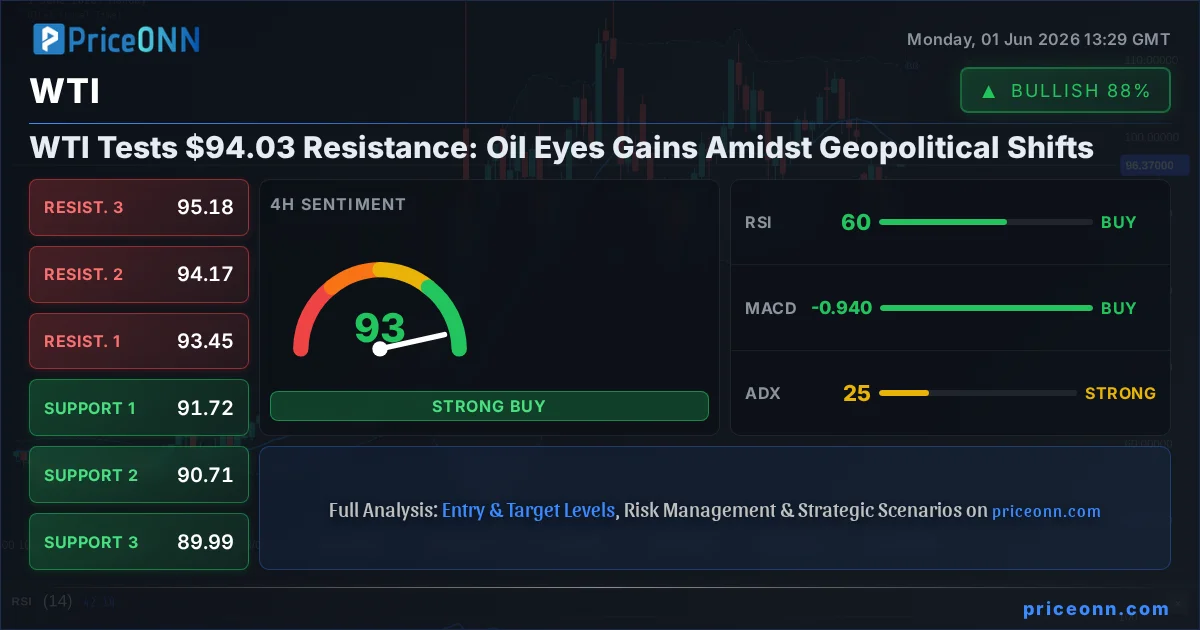
Between Monday and Wednesday, a notable 10% price slide occurred, fueled by market optimism that diplomatic channels might be opening and yielding de-escalation. Yet, the underlying physical supply realities paint a starkly different picture than what futures contracts might suggest.
The Unseen Strain on Physical Supply
Millions of barrels of crude oil daily are effectively landlocked in the Middle East. Producers are compelled to curtail output not by choice, but by the sheer impossibility of moving product out of the region. This supply crunch, already acutely felt in Asia, is poised to spread its influence across European markets in the near future.
The paper market, however, seems largely detached from this unfolding crisis, perhaps because the most direct impact will be felt furthest from the United States. This divergence is evident in the widening gap between the U.S. benchmark, WTI Crude, and the international benchmark, Brent Crude. The discount for WTI has stretched to over $10 per barrel, a disparity not witnessed in many years. Asian refiners, in particular, are ill-equipped to process the light, sweet crude abundant from U.S. shale fields. Their historical reliance has been on the heavier, sour grades sourced from the Middle East, which are now inaccessible.
Consequently, WTI may continue to trade at a substantial discount, while Brent and Middle Eastern crude benchmarks are positioned for significant upward movement. The prolonged closure of the Strait of Hormuz directly correlates with intensifying upward pressure on these key benchmarks. One analyst noted, "You’ve seen Asia absolutely fighting for every barrel there is in the world." Projections indicate that if the Strait remains impassable for a few more weeks, Brent Crude prices could surge dramatically, potentially reaching $150 per barrel or more if the regional conflict persists through late March, according to recent assessments.
Emerging Shortages and Economic Repercussions
As of March 20, over 130 million barrels of crude oil have already been lost from Middle Eastern supplies. Projections suggest cumulative disruptions could surpass 250 million barrels by the end of March, escalating to 400 million by mid-April, and potentially 600 million by the close of April if export flows do not resume. These figures highlight a growing structural deficit that short-term measures, such as strategic reserve releases or sanctions adjustments, are unlikely to fully offset.
The production cuts are not solely due to export limitations. Several refineries in the region, including facilities in Saudi Arabia and Bahrain, have been impacted, forcing shutdowns or reduced operational rates. This stranded supply is compelling Asian refiners to pay unprecedented premiums for replacement crudes. For instance, Norway's Johan Sverdrup grade, a suitable alternative, is commanding record double-digit premiums over Dated Brent.
The repercussions are tangible: Asian refiners are cutting processing volumes, fuel prices are soaring, and governments are instituting energy-saving initiatives like four-day work weeks and encouraging remote work. Furthermore, widespread bans on fuel exports from many Asian nations are creating ripple effects across global fuel markets, particularly impacting jet fuel and diesel supplies. Shell's CEO recently cautioned that Europe could face energy shortages before the end of April, observing a progression of these impacts from South to Southeast, Northeast Asia, and then into Europe.
Reading Between the Lines
The persistent closure of the Strait of Hormuz amplifies the crisis. Regardless of diplomatic narratives, Iran holds significant strategic leverage through its control of this waterway. This allows for sustained economic pressure on global powers and the international economy. The physical market's distress, characterized by actual shortages and soaring premiums for available barrels, contrasts sharply with the more placid futures market. This disconnect suggests a latent risk of a sharp price correction upwards once the broader market fully internalizes the severity of the supply shortfall. Traders should focus on the physical supply constraints and their downstream effects rather than solely on geopolitical rhetoric. The widening WTI Brent spread highlights the regional nature of the immediate crisis, with Brent and Middle Eastern grades likely to lead any price surge.
Track markets in real-time
Empower your investment decisions with AI-powered analysis, technical indicators and real-time price data.
Join Our Telegram Channel
Get breaking market news, AI analysis and trading signals delivered instantly to your Telegram.
Join Channel PriceONN News
Crude oil benchmarks experienced a sharp decline of over 5% this week, driven by renewed optimism surrounding U.S.-Iran peace talks and a potential easing of Middle East tensions. Both Brent and WTI futures saw significant drops as market sentiment shifted towards de-escalation.
PriceONN News
Iran's oil exports fell to their lowest level in at least six years in May as the U.S. naval blockade continued to choke off crude shipments and leave tens of millions of barrels stranded at sea. According to shipping data from Vortexa, Iran exported just 209,000 barrels per day (bpd) of crude oil and condensate in May, down from 1.34 million bpd in April and nearly 1.9 million bpd in March. Kpler had estimated May exports slightly higher at 260,000 bpd, but still the lowest level since the...
PriceONN News
The Iran war suddenly turned what had started as a year of oversupply in global oil and LNG markets into the worst oil and gas supply disruption in history. Three months after the U.S.-Israeli strikes on Iran began on February 28, the world has already lost 1 billion barrels of crude oil supply, oil and gas prices have found a new, much higher floor, and whipsaw with violent volatility nearly every day, trade routes have shifted, and tanker rates have spiked. Actual supply shortages are...
PriceONN News
Crude oil prices experienced a significant drop, with WTI futures falling over 1.8% to $87.25, as optimism grew for a U.S.-Iran deal potentially reopening the Strait of Hormuz.
PriceONN News
Crude oil prices experienced a significant downturn as market sentiment shifted towards optimism about a potential US-Iran Memorandum of Understanding that could reopen the Strait of Hormuz. WTI futures fell nearly 2% on the news.
PriceONN News
(RTTNews) - Crude oil prices have tumbled on Friday as expectations of the U.S. and Iran signing a Memorandum of Understanding run high. The MoU would allow for immediate reopening of the Strait of Hormuz and pave the way for the resumption of oil and energy trade.
PriceONN News
Crude oil futures experienced a dramatic intraday reversal on Thursday, soaring overnight on geopolitical fears only to pull back significantly as reports of a potential diplomatic understanding between the U.S. and Iran emerged.
PriceONN News
Crude oil futures experienced a dramatic intraday reversal, soaring to $92.52 before pulling back significantly on Thursday. The volatile session was driven by shifting geopolitical narratives and U.S. inventory data.
PriceONN News
Brent crude prices surged towards the mid-$90s amid fears of supply disruptions from Middle East tensions, only to pare gains later as whispers of a potential US-Iran diplomatic understanding emerged.
PriceONN News
Crude oil futures experienced a dramatic reversal, soaring overnight to $92.52 before plummeting nearly 6% to $89 a barrel. This volatility was driven by escalating US-Iran tensions followed by reports of a potential preliminary diplomatic understanding.
PriceONN News
(RTTNews) - Crude oil futures skyrocketed overnight but have shown a significant pullback over the course of the trading day on Thursday.
PriceONN News
(RTTNews) - A report released by the Energy Information Administration on Thursday showed crude oil inventories in the U.S. decreased by less than expected in the week ended May 22nd.