
What's Driving the Dollar's Rebound as Oil Prices Skyrocket and Inflation Fears Mount?
The US Dollar reversed earlier subdued trading to stage a significant rally, accompanied by a broad selloff in equity futures and a marked decline in risk appetite. This abrupt shift occurred as markets grappled with a dual shock: a dramatic surge in oil prices driven by escalating Middle East tensions and unexpectedly strong US Producer Price Index (PPI) data, both arriving just hours before the Federal Reserve's critical policy decision.
Market Context: A Sudden Shift in Sentiment
Throughout much of the trading day, market participants had maintained a cautious stance, largely awaiting the Federal Reserve's interest rate decision. However, the calm was shattered during the US session. Reports of Israeli and US air strikes targeting Iran’s South Pars gas field and the Asaluyeh energy complex in Bushehr Province sent crude oil prices soaring. Simultaneously, US PPI figures for February revealed a substantial acceleration in inflationary pressures, reinforcing concerns that inflation may be proving more persistent than anticipated.
The attack on Iran’s energy infrastructure marks a critical escalation. Previously, markets had operated under the assumption that vital global energy assets would be spared to prevent a wider economic shock. This assumption has now been broken, with the targeting of Asaluyeh moving the conflict beyond proxy skirmishes to direct strikes on economic arteries. Analysts note that this development increases the probability of broader supply disruptions if other key energy assets in the region, including those in Saudi Arabia and the UAE, become targets.
Analysis & Drivers: Geopolitics and Inflation Converge
The surge in oil prices is directly linked to the geopolitical events unfolding in the Middle East. The strike on the South Pars gas field, which accounts for approximately 70% of Iran’s domestic gas supply, has significant implications. Disrupting this key resource during a period of conflict could intensify internal pressures on the Iranian regime, historically a factor that has led to more aggressive external responses, including threats to crucial shipping lanes.
Compounding the geopolitical shock, the US PPI data painted a concerning picture for inflation. The monthly PPI rose by 0.7% in February, more than double the expected increase. On an annual basis, inflation at the producer level accelerated to 3.4% year-over-year, the highest pace seen in a year. This data suggests that upstream price pressures are building, which could eventually translate into higher consumer prices, further complicating the Federal Reserve's task of managing inflation.
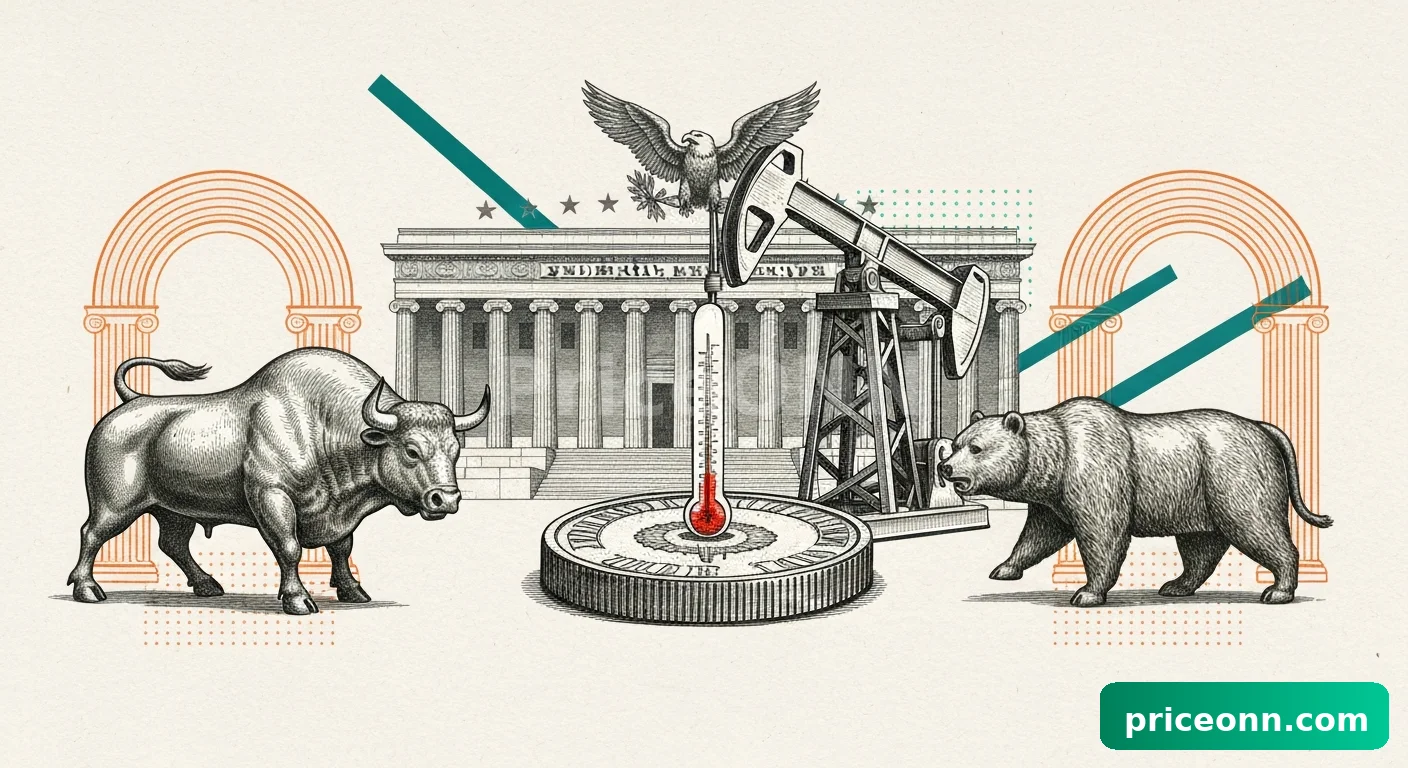
The combination of these factors – a potential supply shock from the Middle East and resurgent inflation signals from the US economy – created a potent cocktail for market upheaval. It triggered a flight to safety, bolstering the US Dollar and leading investors to shed riskier assets like equities.
Trader Implications: Navigating Volatility Ahead of the Fed
Traders are now faced with heightened volatility across multiple asset classes. The immediate focus will be on how the Federal Reserve responds to these developments. Markets will be scrutinizing the Fed's statement and subsequent press conference for any indication that the recent inflation data or geopolitical events might alter their planned monetary policy path.
Key levels to watch include the US Dollar Index (DXY), which could see further upside if risk aversion persists. For crude oil, the $85 per barrel mark for Brent crude and $80 per barrel for West Texas Intermediate (WTI) are critical psychological and technical levels to monitor following the recent spike. Equity markets may remain under pressure as long as inflation fears and geopolitical uncertainty linger.
Traders should brace for potential whipsaw price action. A more hawkish tone from the Fed, or further escalation in the Middle East, could exacerbate the current risk-off sentiment. Conversely, a surprisingly dovish Fed or de-escalation in the Middle East could lead to a swift reversal. Given the confluence of critical events, maintaining strict risk management protocols is paramount.
Outlook: Uncertainty Reigns
The outlook remains highly uncertain as markets digest the implications of the Middle East strikes and the US inflation data, all while awaiting the Federal Reserve’s guidance. The potential for sustained higher energy prices and persistent inflation could force central banks to reconsider their easing timelines. Geopolitical developments will continue to be a key driver of energy prices and broader market sentiment in the short term. Investors and traders will be closely watching for any signs of de-escalation in the Middle East and further inflation indicators to gauge the path forward for global markets and currency pairs.
Frequently Asked Questions
What caused the US Dollar to rebound sharply?
The US Dollar rebounded due to a sudden deterioration in global risk sentiment. This was triggered by a surge in oil prices following geopolitical events in the Middle East and stronger-than-expected US PPI data, which reignited inflation concerns and prompted a flight to safety.
How did the US PPI data impact inflation expectations?
The US PPI for February rose 0.7% month-over-month and accelerated to 3.4% year-over-year, significantly exceeding forecasts. This indicates building upstream price pressures, suggesting inflation may be more persistent, potentially impacting future consumer price levels.
What are the key levels traders should watch following these events?
Traders should monitor the US Dollar Index (DXY) for potential further gains. Key oil price levels include $85 for Brent crude and $80 for WTI. Equity markets may face continued pressure amid lingering inflation and geopolitical worries.
Track markets in real-time
Empower your investment decisions with AI-powered analysis, technical indicators and real-time price data.
Join Our Telegram Channel
Get breaking market news, AI analysis and trading signals delivered instantly to your Telegram.
Join Channel
PriceONN