
Will Higher Oil Prices Force a Hawkish Fed Stance Despite Geopolitical Tensions?

The US Dollar Index (DXY) saw a slight correction, easing from recent highs as markets digested escalating geopolitical tensions in the Middle East. Brent crude oil prices hovered near the $100 per barrel mark, a level that could become a short-term anchor, while US Treasury yields experienced mixed movements. The upcoming Federal Reserve FOMC meeting is the focal point for traders, with expectations that the central bank might adopt a more cautious, or hawkish, tone due to inflationary pressures stemming from energy shocks.
Market Context: Geopolitics and Oil Prices Dictate Sentiment
Overnight trading saw limited 'real' market-moving news emerge from the Middle East conflict, despite significant events. Reports indicated that Iran launched missile strikes on Tel Aviv following the killing of a key security chief, with Iranian officials reiterating demands for compensation and rejecting ceasefire proposals. The lack of clear strategies to secure passage through the Strait of Hormuz and the absence of a visible end to the conflict continue to cloud market sentiment. The primary economic fallout from these events is the surge in crude oil prices. Analysts suggest that oil prices around $100-$105 per barrel might represent a new short-term normal, a scenario largely priced in by markets. This elevated energy cost environment is a critical factor influencing central bank policy decisions.
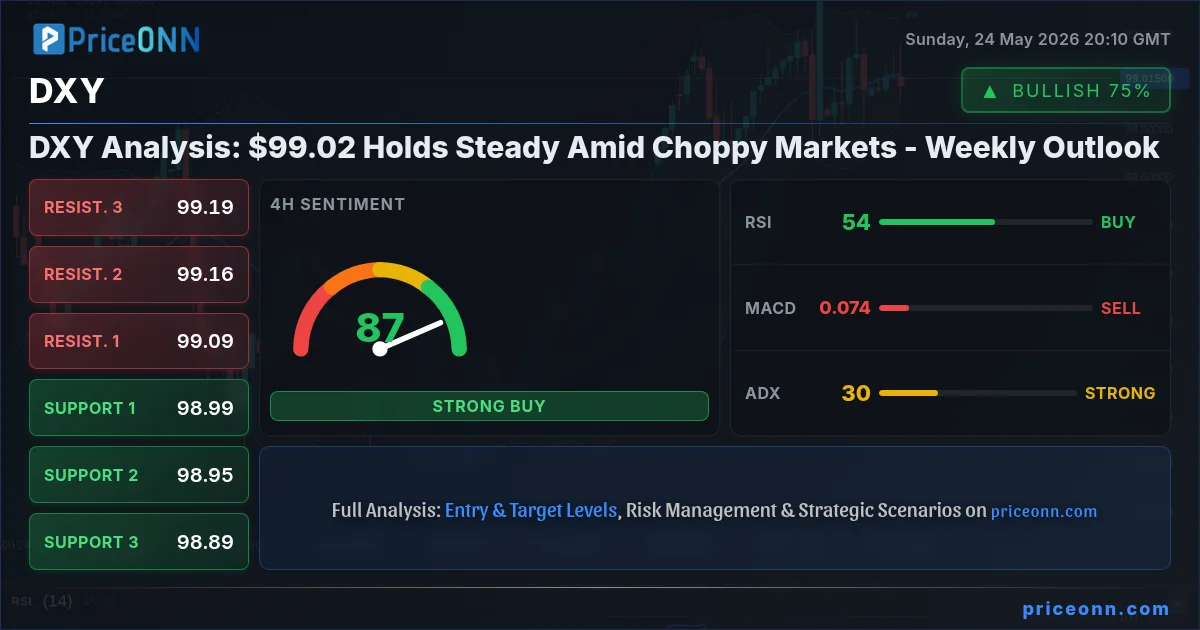
In equity markets, US yields showed no clear directional trend, with the 2-year yield fluctuating and the 30-year yield seeing a slight decline. German yields, conversely, ceded ground across the curve. The market's reaction function remains complex, but a tentative easing of stress was observed as bond markets reacted to inflation and fiscal risk premia. This coincided with modest gains in equities, such as the S&P 500 rising 0.25% and the Euro Stoxx 50 gaining 0.53%. The US Dollar Index (DXY) corrected slightly, moving from 99.87 to 99.58, while EUR/USD climbed from 1.1505 to 1.1540, and USD/JPY saw a marginal decrease to 159.
Analysis & Drivers: Inflationary Pressures and the Fed's Dilemma
The central driver of market concern is the potential impact of higher energy prices on inflation. Recent developments, including the geopolitical events and their effect on oil supply, could push US inflation measures like the Personal Consumption Expenditures (PCE) and Consumer Price Index (CPI) towards the 3.5%+ area. This inflationary threat poses a significant challenge for the Federal Reserve as it prepares for its FOMC meeting. While market participants widely expect no change to the current policy rate, the accompanying statement, updated economic projections (dot plot), and comments from Fed Chair Powell will be scrutinized for any hints of a shift towards a more hawkish stance. Some analysts believe the risk is that the Fed's guidance could be perceived as more hawkish than anticipated, particularly if inflation concerns are amplified.
Furthermore, the economic outlook remains clouded by the Middle East situation. The ongoing conflict and its potential to disrupt energy supply chains create a volatile backdrop. Data releases, such as the US February PPI ahead of the FOMC decision, and the Bank of Canada's interim meeting, where the policy rate is expected to remain unchanged at 2.25%, will provide additional context. However, the Fed's forward guidance is likely to be heavily influenced by the evolving energy price scenario and its implications for inflation trajectory. The market is currently pricing in one more rate cut later in the year, but the possibility of the Fed signalling fewer cuts or maintaining a higher-for-longer interest rate policy cannot be dismissed given the inflationary risks.
Trader Implications: Watching the Fed and Oil Prices
Traders should closely monitor the Federal Reserve's post-meeting press conference for any shifts in tone regarding inflation and future monetary policy. Key levels to watch include the US Dollar Index (DXY), which may see renewed strength if the Fed adopts a hawkish stance, potentially pushing it back towards the 100 level. Conversely, a more dovish-than-expected outlook could lead to further downside. EUR/USD will be sensitive to these shifts, with levels around 1.1500 acting as a potential psychological support or resistance.
The price of Brent crude oil remains a critical indicator. Sustained prices above $100 per barrel will continue to fuel inflation concerns and could reinforce a hawkish bias from the Fed. Traders should also keep an eye on US Treasury yields; a significant rise could signal increasing inflation expectations and a more aggressive Fed. The Bank of Canada's decision, while expected to be a non-event for rates, could offer insights into forward guidance from other major central banks facing similar inflationary pressures. The interplay between geopolitical risks, energy prices, and central bank policy will likely dominate market movements in the near term.
Outlook
The immediate outlook for forex markets hinges on the Federal Reserve's policy decision and communication. While no immediate rate changes are anticipated, any indication of a more hawkish bias due to rising energy prices could support the US dollar. The ongoing geopolitical situation in the Middle East remains a wild card, capable of triggering further volatility in oil markets and influencing risk sentiment across global assets. Traders should prepare for continued uncertainty, with key economic data releases and central bank commentary providing crucial directional cues. The potential for oil prices to remain elevated presents a persistent upside risk to inflation, which the Fed will be keen to manage.
Frequently Asked Questions
What is the current price range for Brent crude oil?
Brent crude oil prices are currently hovering in the vicinity of $100-$105 per barrel, a level that some analysts believe may represent a new short-term norm due to ongoing geopolitical events.
What are the expectations for the Federal Reserve's upcoming meeting?
Market consensus expects the Federal Reserve to keep interest rates unchanged at their upcoming meeting. However, traders will be closely watching the Fed's statement and Chair Powell's press conference for any signals of a more hawkish stance due to rising inflation concerns.
How might higher oil prices affect the US Dollar?
Higher oil prices can contribute to increased inflation, potentially prompting the Federal Reserve to adopt a more hawkish monetary policy. This could lead to a stronger US Dollar, with the DXY index potentially testing the 100 level if such a scenario materializes.
Track markets in real-time
Empower your investment decisions with AI-powered analysis, technical indicators and real-time price data.
Join Our Telegram Channel
Get breaking market news, AI analysis and trading signals delivered instantly to your Telegram.
Join Channel PriceONN News
Markets are pricing in a potential de-escalation in the US-Iran conflict, leading to a significant drop in crude oil prices and a weakening US Dollar as diplomatic efforts appear to be gaining traction.
PriceONN News
USDJPY has returned to the area of previous interventions. The ECB is moving towards a rate hike in June. The US dollar retreated on Friday amid new record highs for stock indices and rumours of amendments to the US-Iran agreement. However, tit-for-tat exchanges between the adversaries pushed the dollar index back into the support zone […] The post Yen Braces for a New Storm appeared first on ActionForex.
PriceONN News
The USD/JPY pair is flirting with the 160 level as stalled US-Iran negotiations and hawkish Federal Reserve rhetoric fuel inflation concerns. Traders are closely watching upcoming US Non-Farm Payrolls and Eurozone CPI data.
PriceONN News
EUR/USD stalled below 1.1660 as the US Dollar defied expectations, refusing to weaken despite reports of a US-Iran ceasefire extension. Market participants remain cautious, awaiting concrete confirmation and assessing lingering inflationary pressures.
PriceONN News
EUR/USD closed at 1.1640, showing resilience amid mixed signals. Easing US-Iran tensions initially pressured the dollar, but persistent inflation concerns and political ratification hurdles are keeping the greenback surprisingly steady.
PriceONN News
The EUR/USD faces headwinds as core US PCE inflation unexpectedly rose to 3.3% year-over-year, reinforcing a 'higher for longer' interest rate narrative. Meanwhile, a US-Iran ceasefire extension boosted global risk appetite, potentially drawing capital away from safe-haven currencies.
PriceONN News
EUR/USD stabilized around 1.1640 as reports of a US-Iran ceasefire extension and potential Strait of Hormuz reopening eased inflation fears. However, the US Dollar's resilience suggests lingering caution among forex traders.
PriceONN News
The US Dollar experienced a notable decline last week as markets priced in a potential diplomatic resolution to the US-Iran conflict, leading to a drop in oil prices and Treasury yields. This shift in sentiment suggests a move away from stagflation fears towards a more stable economic outlook.
PriceONN News
USD/CAD faces pressure as Canada's economy shows signs of stalling, with Q1 GDP contracting 0.1% and domestic demand weakening. This comes as trade negotiations and geopolitical shifts add layers of uncertainty.
PriceONN News
AUD/USD’s late break of 0.7183 resistance suggests that pullback from 0.7277 has already completed at 0.7076, after defending 55 D EMA. Initial bias is back on the upside this week for retesting 0.7277 high first. Firm break there will resume larger up trend. For now, risk will stay on the upside as long as 0.7076 […] The post AUD/USD Weekly Report appeared first on ActionForex.
PriceONN News
USD/CAD is showing signs of potential upward movement as Canada's economy grapples with a significant slowdown, marked by weak domestic demand and stalled investment, while trade negotiations loom large.
PriceONN News
USD/JPY is testing the critical 160 level as stalled US-Iran negotiations and hawkish Federal Reserve rhetoric fuel inflation concerns and a potential for further rate hikes. Traders are closely watching upcoming US Non-Farm Payrolls and Eurozone CPI data for direction.