
Will the Fed Stick to a 'Hawkish Hold' Amid Rising Inflation and Geopolitical Tensions?
The Federal Reserve is widely anticipated to maintain its current interest rate policy, a move analysts are terming a 'hawkish hold,' at its upcoming Federal Open Market Committee (FOMC) meeting on March 18, 2026. This decision comes amidst a complex economic backdrop characterized by rising inflation forecasts and persistent geopolitical uncertainties, particularly stemming from the Middle East conflict. Market data indicates that the Summary of Economic Projections (SEP) may reveal elevated inflation expectations, potentially pushing the single anticipated rate cut for 2026 into 2027.
Market Context
The economic narrative has shifted significantly. What began 2026 with expectations of monetary policy normalization has evolved into a more cautious 'wait-and-see' approach for policymakers. Fed Chair Jerome Powell faces a delicate balancing act: a cooling labor market, evidenced by a February jobs report showing a contraction of approximately 92,000 payrolls and an unemployment rate climbing to 4.4%, contrasts sharply with resurging inflation. This inflation surge is partly driven by energy prices, which have climbed due to escalating Middle East tensions, making the Fed hesitant to implement rate cuts that could unanchor inflation expectations. Core Personal Consumption Expenditures (PCE) inflation remains stubbornly near 3%.
Analysis & Drivers
Several factors are contributing to the Fed's cautious stance. The conflict in the Middle East has not only impacted energy markets but also has ripple effects on food and manufactured goods prices. Fertilizer costs, linked to the geopolitical situation, are expected to drive up food prices, while manufactured goods are experiencing 'downstream' price increases. Furthermore, inflation expectations, which had been relatively stable, are now showing signs of an 'uptick.' This renewed inflationary pressure, coupled with a labor market that, while showing some signs of cooling, is not yet in a state that warrants immediate easing, presents a formidable challenge for the FOMC. The market is closely watching the SEP for any revised inflation projections and updated expectations for the timing of potential rate reductions.
Trader Implications
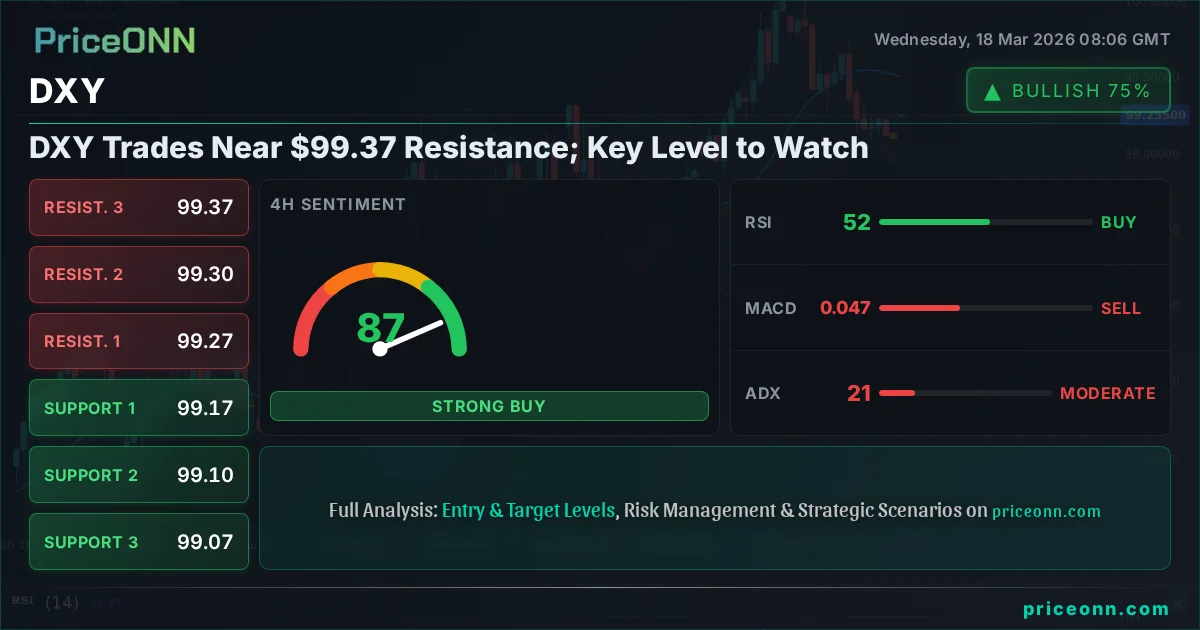
The prospect of a 'hawkish hold' carries significant implications for currency markets, particularly for the US Dollar Index (DXY). An extended period of higher interest rates in the U.S. relative to other major economies could bolster the dollar. Traders will be scrutinizing statements from Fed officials for any clues regarding future policy direction. Key levels to watch for the DXY will be its ability to maintain momentum above recent highs. For equity markets, such as the Dow Jones Industrial Average, elevated yields, potential margin squeezes from rising oil prices, and geopolitical uncertainty could create a 'risk triangle,' suggesting a period of heightened volatility. Investors and traders should consider hedging strategies against potential downside risks in equities while looking for opportunities in a strengthening dollar environment.
Outlook
Looking ahead, the Fed's commitment to its price stability mandate will be paramount. If inflation continues to prove persistent, the possibility of rate cuts being deferred beyond 2026, potentially into 2027, becomes more probable. This scenario would likely reinforce a stronger dollar and could exert further pressure on risk assets. Traders should remain vigilant for any shifts in inflation data and geopolitical developments, as these will be the primary determinants of the Fed's policy path and, consequently, market direction in the coming months.
Frequently Asked Questions
What is a 'hawkish hold' by the Federal Reserve?
A 'hawkish hold' refers to the Federal Reserve keeping interest rates unchanged while signaling a bias towards maintaining higher rates for longer due to inflation concerns, rather than a focus on economic growth or easing financial conditions. This implies a reluctance to cut rates even if some economic indicators suggest weakness.
How might the Fed's 'hawkish hold' affect the US Dollar Index (DXY)?
A 'hawkish hold' typically strengthens the US Dollar Index (DXY) as it suggests that U.S. interest rates will remain relatively higher compared to other major economies for an extended period. This makes dollar-denominated assets more attractive to investors seeking higher yields, increasing demand for the dollar.
What are the main risks contributing to the Fed's current stance?
The primary risks are a resurgence of inflation, driven by energy price shocks from geopolitical events and rising food and manufactured goods costs, and the potential for inflation expectations to become unanchored. These factors outweigh the current signals of a cooling labor market, prompting the Fed to err on the side of caution.
Track markets in real-time
Empower your investment decisions with AI-powered analysis, technical indicators and real-time price data.
Join Our Telegram Channel
Get breaking market news, AI analysis and trading signals delivered instantly to your Telegram.
Join Channel
PriceONN