
Why Is the Australian Dollar Struggling After Softening Manufacturing Data?

The Australian Dollar (AUD) is under pressure as recent data indicates a significant cooling in the nation's manufacturing sector. The preliminary S&P Global Manufacturing Purchasing Managers' Index (PMI) for March fell to 50.1, down from 51.0 in February, according to figures released by S&P Global. This reading hovers precariously close to the 50-point threshold that separates economic expansion from contraction, suggesting that growth momentum in the industrial sector is fading rapidly as the first quarter concludes.
Market Context
A PMI reading just above 50 signifies that the manufacturing sector is technically still expanding, but the slight decline from the previous month and its proximity to contraction territory are concerning for market participants. This slowdown could be attributed to a variety of factors, including weakening global demand for Australian exports, rising input costs, or a cautious approach by businesses regarding new orders and employment. The Australian Dollar, often sensitive to commodity prices and the nation's economic health, tends to react negatively to such indications of slowing industrial activity. The previous month's reading of 51.0 already pointed to moderating growth, and the March figure exacerbates these concerns, potentially impacting investor sentiment towards the AUD.
Analysis & Drivers
While the manufacturing PMI offers a snapshot of industrial performance, the Australian Dollar's trajectory is influenced by a complex interplay of domestic and international factors. The Reserve Bank of Australia's (RBA) monetary policy remains a primary driver. Any hints of a less hawkish stance or a potential shift towards interest rate cuts could weigh on the AUD. Furthermore, Australia's economic relationship with China, its largest trading partner, is critical. A slowdown in Chinese manufacturing or consumer demand can directly reduce demand for Australian commodities like iron ore and coal, impacting export revenues and the currency. In this context, the softening manufacturing PMI could be an early indicator of broader economic headwinds affecting the nation's export capacity and overall growth prospects. The persistent, albeit decelerating, inflation in Japan, with its national CPI at 1.3% year-on-year in February, also adds a layer of complexity, highlighting divergent economic trends across the Asia-Pacific region.
Trader Implications
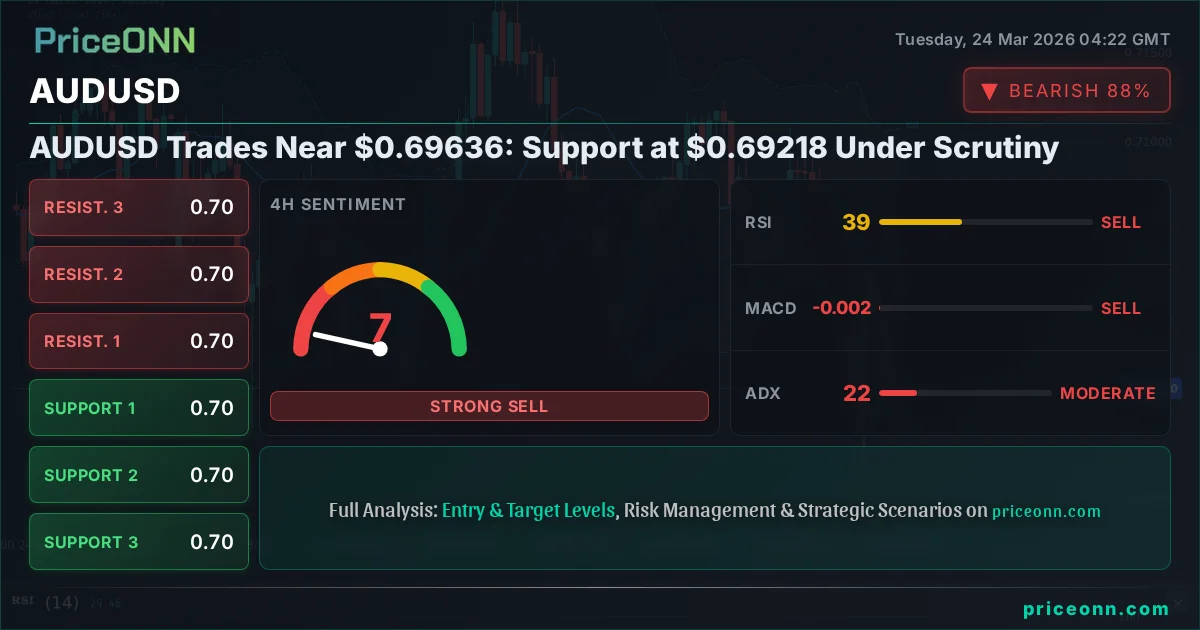
Traders will be closely monitoring the Australian Dollar for further downside potential following this manufacturing data. Key levels to watch include the 0.6500 support level for AUD/USD. A sustained break below this psychological mark could trigger further selling pressure, with the next significant support seen around 0.6450. On the upside, resistance is likely to emerge around 0.6550. Market sentiment will also be influenced by upcoming RBA commentary and any further economic data releases from China. A cautious approach is warranted, with traders looking for confirmation of a downtrend before initiating short positions. Conversely, any unexpected positive economic news or a hawkish shift from the RBA could provide a temporary reprieve for the currency.
Outlook
The outlook for the Australian Dollar appears cautious in the short term, given the weakening manufacturing sentiment. While the PMI is still in expansionary territory, the trend suggests a loss of momentum that could spill over into other sectors. Investors will be looking for signs of stabilization or improvement in upcoming data, alongside clear signals from the RBA regarding its policy path. Until then, the AUD may remain vulnerable to further declines, especially if global economic conditions continue to soften or if China's economic recovery falters.
Frequently Asked Questions
What is the significance of the Australian Manufacturing PMI falling to 50.1?
A reading of 50.1 indicates that Australia's manufacturing sector is barely expanding, a sharp slowdown from previous months. This proximity to 50, the threshold for contraction, suggests weakening growth momentum and could signal broader economic challenges ahead.
How does this data impact the Australian Dollar (AUD)?
The softening manufacturing data typically puts downward pressure on the AUD. Traders interpret this as a sign of potential economic weakness, which can reduce foreign investment and demand for the currency. AUD/USD may face challenges holding above the 0.6500 level.
What should traders watch for in the Australian Dollar next?
Traders should monitor Reserve Bank of Australia (RBA) statements for any hints on interest rate policy and watch key support levels around 0.6500 and 0.6450 for AUD/USD. Any further negative economic data from China could also exacerbate AUD weakness.
Track markets in real-time
Empower your investment decisions with AI-powered analysis, technical indicators and real-time price data.
Join Our Telegram Channel
Get breaking market news, AI analysis and trading signals delivered instantly to your Telegram.
Join Channel


PriceONN