Forex Today: Risk rally loses momentum as Iran denies dialogue with US
Global Sentiment Shifts as Geopolitical Clouds Gather
A notable cooling has swept across global financial markets, interrupting a recent upswing in investor confidence. This shift appears directly linked to Iran’s categorical denial of any ongoing dialogue with the United States. The ripple effect has been swift, prompting a reassessment of risk appetites among traders worldwide.
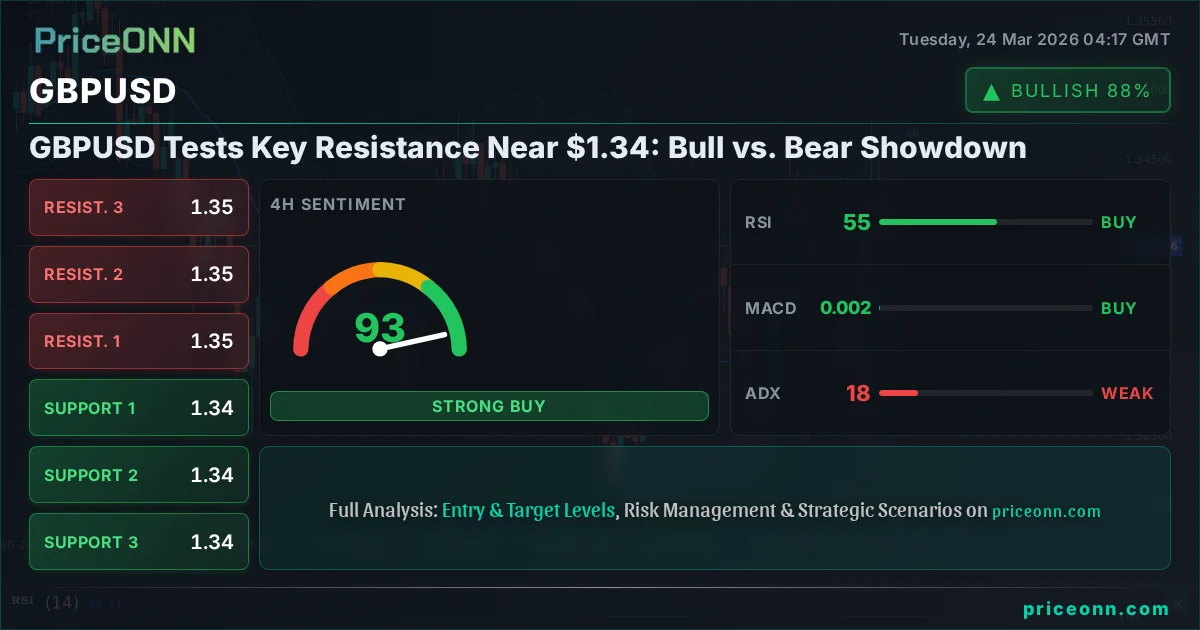
The US Dollar, often a barometer for global risk sentiment, has experienced a significant downdraft this week. Market data shows it trading weaker against a basket of major currencies, with the British Pound demonstrating particular strength. This dynamic highlights a broader move away from perceived safe havens as geopolitical tensions re-emerge.
Understanding Market Risk Appetites
The financial world frequently categorizes market behavior into two distinct phases: “risk-on” and “risk-off.” These terms are shorthand for the prevailing investor sentiment regarding potential future economic conditions and their willingness to embrace volatility for higher returns.
During a risk-on environment, optimism reigns. Investors feel secure enough to pour capital into assets carrying higher degrees of uncertainty, anticipating robust economic growth. This typically fuels rallies in equity markets, boosts the value of most commodities (with the notable exception of gold, which often acts as a counter-cyclical hedge), and strengthens the currencies of nations heavily reliant on commodity exports. Cryptocurrencies also tend to flourish in such periods, reflecting a general appetite for speculative growth.
Conversely, a risk-off scenario emerges when apprehension takes hold. Fears about future economic stability or geopolitical instability cause investors to retreat from riskier ventures. The focus shifts to capital preservation, driving demand for assets perceived as safe. This often translates to rising prices for government bonds, particularly those issued by major economies considered highly creditworthy. Gold, the traditional safe haven, typically shines during these times. Currencies associated with stability, such as the Japanese Yen, the Swiss Franc, and indeed the US Dollar itself, tend to attract inflows.
Currencies Caught in the Crossfire
The ebb and flow of risk sentiment have distinct impacts on various currency blocs. Commodity-linked currencies like the Australian Dollar (AUD), the Canadian Dollar (CAD), and the New Zealand Dollar (NZD) often mirror commodity price movements. Their economies are deeply intertwined with global demand for raw materials, meaning their value tends to rise when economic activity forecasts are positive and commodity prices climb.
Minor currencies, including the Russian Ruble (RUB) and the South African Rand (ZAR), also exhibit sensitivity to global risk appetite for similar reasons. Their export-driven economies are particularly vulnerable to shifts in global demand and commodity cycles.
On the other side of the ledger, the US Dollar’s safe-haven status is multifaceted. As the world's primary reserve currency, its demand swells during crises as global entities seek stability. Furthermore, the perceived safety of U.S. Treasury debt, backed by the planet's largest economy, draws significant capital during periods of uncertainty, reinforcing the dollar's strength.
The Japanese Yen benefits from a similar dynamic, partly due to the high proportion of Japanese government bonds held by domestic investors who are less likely to liquidate them even under duress. The Swiss Franc's appeal is bolstered by Switzerland's long-standing reputation for financial privacy and robust capital protection measures, making it a sanctuary for assets seeking security.
Market Ripple Effects
The recent geopolitical development, specifically Iran’s denial of dialogue with the US, has injected a dose of caution into markets that were previously embracing risk. This abrupt shift suggests that underlying geopolitical fragilities remain a potent force, capable of quickly overshadowing economic fundamentals. The impact is not confined to currency markets; it influences broader asset allocation strategies. Investors are now recalibrating their portfolios, potentially reducing exposure to growth-sensitive assets and increasing allocations to traditional safe havens.
The immediate aftermath sees a bid for traditional safe-haven assets like US Treasuries and gold, while riskier equities and emerging market currencies face headwinds. The strength seen in the British Pound against the dollar could indicate specific UK economic factors at play or a broader rotation out of the dollar irrespective of the Iran news, suggesting that the greenback's recent trajectory might be influenced by more than just global risk sentiment alone. Traders will be closely monitoring upcoming economic data releases and further geopolitical developments for confirmation of the prevailing trend.
Track markets in real-time
Empower your investment decisions with AI-powered analysis, technical indicators and real-time price data.
Join Our Telegram Channel
Get breaking market news, AI analysis and trading signals delivered instantly to your Telegram.
Join Channel