
Why Big Oil Is Shifting Away From Renewables Amid Geopolitical Tensions


Major oil and gas conglomerates have dramatically scaled back their financial commitments to renewable energy projects, marking the first annual decline in such spending since 2017. This strategic pivot back towards traditional oil and gas operations comes as profitability in these sectors outweighs renewables and as escalating geopolitical instability in critical Middle Eastern shipping routes poses a significant threat to global energy supply.
Market Context
In 2025, the world's largest oil and gas firms collectively slashed their investments in low-carbon energy solutions by over one-third, dropping from $38.2 billion in 2024 to $25.7 billion. This marks a significant reversal from the early 2020s when many of these 'supermajors' pledged to gradually reduce fossil fuel production and channeled billions into green initiatives. Companies like BP and Shell, which had previously committed to reducing oil and gas output by the end of the decade, have now reversed these pledges. This shift reflects a realization that the energy transition is proving more challenging and less profitable than anticipated, especially in light of the 2022 energy crisis which highlighted vulnerabilities in conventional energy supply.
Analysis & Drivers
Several key factors are driving this change in investment strategy. Firstly, the core oil and gas business currently offers more attractive profit margins and shareholder returns compared to renewable energy ventures. The recent significant reduction in green energy spending, by more than 33% year-on-year, underscores this prioritization. Secondly, regulatory headwinds, such as opposition to offshore wind projects in the United States, have dampened enthusiasm for certain green energy sectors. Moreover, geopolitical developments are adding a new layer of risk and urgency. The effective closure of the Strait of Hormuz by Iran, a critical chokepoint connecting the Persian Gulf to global markets, has sent shockwaves through energy markets and sent oil prices soaring. Analysts warn that any disruption to the Bab al-Mandab Strait, another vital shipping route controlling passage to the Red Sea, could exacerbate market volatility. This strait accounts for approximately 6% of the world's seaborne traded oil, and the potential involvement of Houthi rebels, backed by Iran, in disrupting traffic poses a substantial threat.
Trader Implications
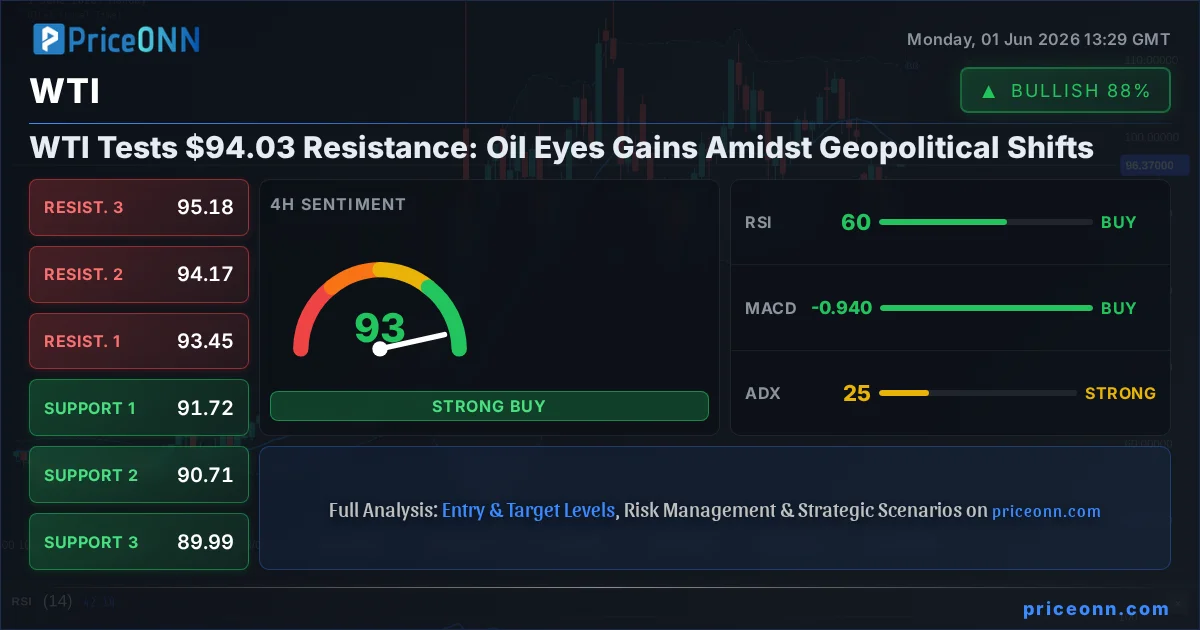
For traders, the confluence of reduced green investment and heightened geopolitical risk in the Middle East presents a complex trading environment. The renewed focus on oil and gas exploration and production by major energy companies suggests a potential increase in the supply of fossil fuels over the medium term, which could cap upside price potential if geopolitical tensions de-escalate. However, the immediate threat to shipping routes, particularly the Bab al-Mandab Strait and Saudi Arabia's Red Sea port of Yanbu, creates significant upside risk for crude oil prices. Traders should closely monitor developments in the Red Sea and the Persian Gulf. Key technical levels to watch for Brent crude include resistance around the $90 per barrel mark and support near $80 per barrel, with any sustained disruption in shipping lanes potentially pushing prices sharply higher, possibly towards $100 per barrel if supply is severely curtailed. The redirection of millions of barrels of Saudi oil via its East-West pipeline to the Red Sea offers a partial buffer, but a direct attack on the Yanbu terminal could disrupt up to 7 million barrels per day, according to market analysts.
Outlook
The energy landscape is at a critical juncture. The retreat from green investments by major oil firms, coupled with escalating geopolitical tensions, points towards a period of heightened volatility in oil markets. While the long-term energy transition remains a global objective, the immediate future appears anchored in traditional energy sources, making supply disruptions a primary concern for traders and policymakers. Upcoming economic data releases and any further escalation or de-escalation in the Middle East will be crucial in shaping market sentiment and price direction in the coming weeks and months.
Frequently Asked Questions
What is the main reason for Big Oil's reduced investment in green energy?
The primary drivers are the higher profitability of core oil and gas operations compared to renewables, and the increasing realization that the energy transition faces significant hurdles. In 2025, investments fell to $25.7 billion from $38.2 billion in 2024.
How significant is the risk posed by the Bab al-Mandab Strait disruption?
Disruption to the Bab al-Mandab Strait is highly significant as it accounts for about 6% of global seaborne oil trade. If Houthi rebels successfully disrupt exports from Saudi Arabia's Yanbu terminal, it could affect up to 7 million barrels per day.
What are the key price levels traders should watch for crude oil?
Traders should monitor resistance around $90 per barrel for Brent crude, with potential upside to $100 per barrel if supply routes are severely impacted. Support is currently seen near the $80 per barrel level.
Track markets in real-time
Empower your investment decisions with AI-powered analysis, technical indicators and real-time price data.
Join Our Telegram Channel
Get breaking market news, AI analysis and trading signals delivered instantly to your Telegram.
Join Channel PriceONN News
Crude oil prices experienced a significant drop, with WTI futures falling over 1.8% to $87.25, as optimism grew for a U.S.-Iran deal potentially reopening the Strait of Hormuz.
PriceONN News
(RTTNews) - Crude oil prices have tumbled on Friday as expectations of the U.S. and Iran signing a Memorandum of Understanding run high. The MoU would allow for immediate reopening of the Strait of Hormuz and pave the way for the resumption of oil and energy trade.
PriceONN News
Crude oil futures experienced a dramatic intraday reversal on Thursday, soaring overnight on geopolitical fears only to pull back significantly as reports of a potential diplomatic understanding between the U.S. and Iran emerged.
PriceONN News
Crude oil futures experienced a dramatic intraday reversal, soaring to $92.52 before pulling back significantly on Thursday. The volatile session was driven by shifting geopolitical narratives and U.S. inventory data.
PriceONN News
(RTTNews) - Crude oil futures skyrocketed overnight but have shown a significant pullback over the course of the trading day on Thursday.
PriceONN News
The Iran war suddenly turned what had started as a year of oversupply in global oil and LNG markets into the worst oil and gas supply disruption in history. Three months after the U.S.-Israeli strikes on Iran began on February 28, the world has already lost 1 billion barrels of crude oil supply, oil and gas prices have found a new, much higher floor, and whipsaw with violent volatility nearly every day, trade routes have shifted, and tanker rates have spiked. Actual supply shortages are...
PriceONN News
Crude oil prices experienced a significant downturn as market sentiment shifted towards optimism about a potential US-Iran Memorandum of Understanding that could reopen the Strait of Hormuz. WTI futures fell nearly 2% on the news.
PriceONN News
Brent crude prices surged towards the mid-$90s amid fears of supply disruptions from Middle East tensions, only to pare gains later as whispers of a potential US-Iran diplomatic understanding emerged.
PriceONN News
Crude oil futures experienced a dramatic reversal, soaring overnight to $92.52 before plummeting nearly 6% to $89 a barrel. This volatility was driven by escalating US-Iran tensions followed by reports of a potential preliminary diplomatic understanding.
PriceONN News
The market’s faith in an imminent US-Iran peace breakthrough has clearly weakened today - but it has not disappeared yet. Oil prices jumped again in after fresh military escalation around the Strait of Hormuz reignited fears of prolonged supply disruptions across the Gulf. Brent crude pushed back toward the mid-$90s after new U.S. strikes inside […] The post Brent Oil Holding Below $100 Suggests Markets Still See Room for a US-Iran Deal appeared first on ActionForex.
PriceONN News
(RTTNews) - Extending the losses from yesterday's session, crude oil prices have gone into freefall on Wednesday as investor expectations on a potential U.S.-Iran agreement continue to rise despite the U.S. refusing to ease its demands.
PriceONN News
(RTTNews) - Crude oil prices have tumbled on Tuesday as optimism about a U.S.-Iran peace deal that could lead to reopening of the Strait of Hormuz soon grows despite reports of fresh U.S. strikes on Iran yesterday.