
Why Did Crude Oil Surge Amid Global Growth Fears?


Crude oil prices have experienced a notable upswing, a development that seems counterintuitive given the increasingly precarious state of global economic growth. This surge comes as market participants grapple with an energy crisis described by industry leaders as unprecedented in its severity, potentially eclipsing all previous energy shocks combined.
Market Context
The current energy landscape is characterized by a confluence of factors that are creating significant market volatility. Reports indicate that the global energy crisis is deepening, sending ripples of uncertainty across financial markets and dampening optimism for a robust economic recovery. While the exact impact remains a subject of debate among analysts, with some predicting Asia will face the most severe economic headwinds and others focusing on Europe's vulnerability, the overarching sentiment is one of caution. Despite these warnings, the full gravity of the situation may not have fully permeated decision-making circles. Market data shows that crude oil futures have climbed, with Brent crude recently trading around $85 per barrel and WTI futures approaching $81 per barrel, levels not consistently seen in the past six months. This price action suggests that supply-side concerns are currently outweighing demand-side anxieties, even as global manufacturing indices show signs of contraction.
Analysis & Drivers
The primary catalyst behind the recent oil price rally appears to be the escalating geopolitical tensions in key oil-producing regions, particularly the Middle East. Analysts note that the market is increasingly pricing in the risk of supply disruptions stemming from these conflicts. A senior central banker recently cautioned that the market is underestimating the long-term economic ramifications of these geopolitical events, suggesting that a swift return to pre-crisis normalcy is unlikely once hostilities cease. This perspective implies that the current energy crunch could be more protracted and damaging than initially anticipated. Furthermore, inventory data released this past week revealed a larger-than-expected draw in crude oil stockpiles in major consuming nations, adding another layer of support to prices.
Trader Implications
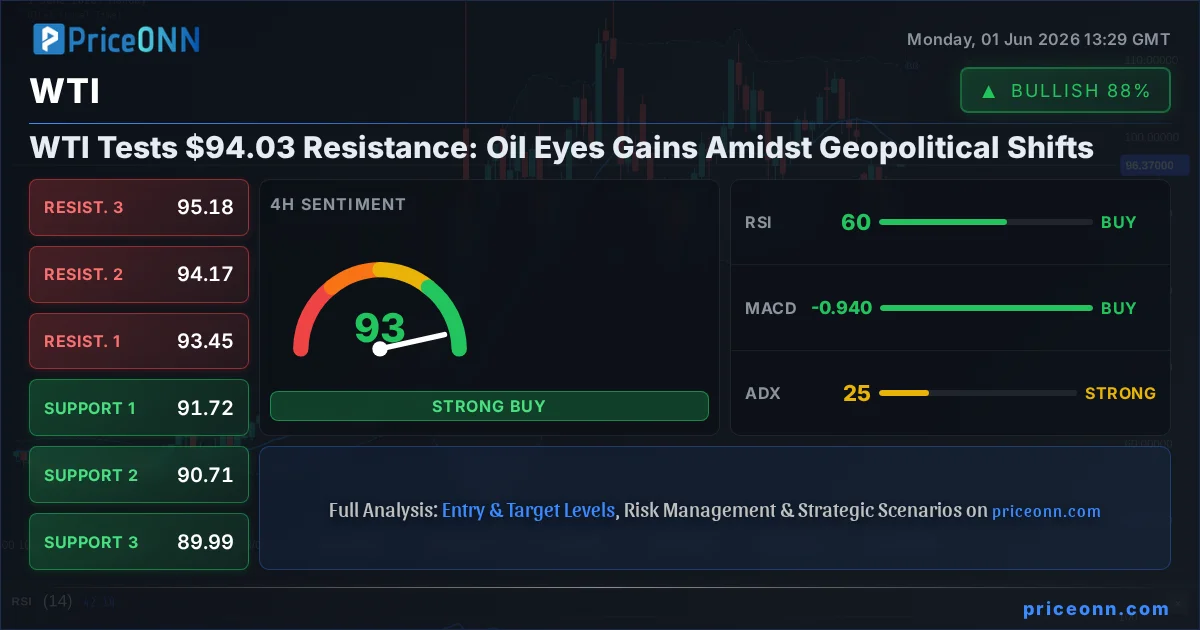
For traders, the current environment presents a complex risk-reward scenario. The upward momentum in crude oil prices suggests potential for further gains, with key resistance levels to watch at $88 for Brent and $83 for WTI. However, the fragile global economic backdrop acts as a significant headwind. A sharper-than-expected slowdown in economic activity, particularly in major economies like China or the Eurozone, could quickly derail the bullish sentiment in the energy markets. Traders should closely monitor economic indicators, geopolitical developments in the Middle East, and statements from central banks for directional cues. A decisive break above the aforementioned resistance levels, supported by robust demand signals or further supply tightening, could signal a continuation of the rally. Conversely, a failure to hold current levels amid weakening economic data could lead to a sharp correction.
Outlook
The outlook for crude oil remains highly uncertain, caught between persistent supply-side risks and growing demand concerns. While geopolitical factors and inventory data are currently supporting prices, the specter of a global economic slowdown looms large. Upcoming economic data releases, including inflation figures and manufacturing surveys from major economies, will be crucial in shaping market sentiment. Traders should remain vigilant, as any significant shift in the geopolitical landscape or economic outlook could trigger substantial price swings in the coming weeks. The potential for a prolonged energy crisis suggests that oil prices may remain elevated, but the pace of any further ascent will be heavily dependent on the broader economic environment.
Frequently Asked Questions
What is driving the current surge in crude oil prices?
The surge is primarily driven by escalating geopolitical tensions in the Middle East, which raise concerns about potential supply disruptions. Additionally, a larger-than-expected draw in crude oil inventories has provided further support for prices, with Brent crude recently trading near $85 per barrel.
Which regions are most at risk from the energy crisis?
Analysts are divided, with some forecasting that Asia will bear the brunt of the economic fallout due to its reliance on energy imports. Others contend that Europe is more vulnerable to the cascading effects of energy shortages and price volatility, with potential impacts on its industrial output and inflation.
What are the key price levels traders should watch for crude oil?
Traders should monitor immediate resistance levels for Brent crude at approximately $88 per barrel and for WTI crude at around $83 per barrel. A sustained move above these levels could indicate further upside, while a fall below recent support points near $80 for WTI could signal a bearish reversal.
Track markets in real-time
Empower your investment decisions with AI-powered analysis, technical indicators and real-time price data.
Join Our Telegram Channel
Get breaking market news, AI analysis and trading signals delivered instantly to your Telegram.
Join Channel PriceONN News
Crude oil prices experienced a significant downturn as market sentiment shifted towards optimism about a potential US-Iran Memorandum of Understanding that could reopen the Strait of Hormuz. WTI futures fell nearly 2% on the news.
PriceONN News
The possibility of Iran developing a nuclear weapon is now higher than it was before the United States and Israel first attacked the country in February, the International Atomic Energy Agency has concluded in a report. The conclusion suggests the war has so far resulted in the opposite of what President Trump set out to do, namely, prevent Iran from developing a nuclear weapon. Bloomberg cited the report, which has restricted access, saying that in it, the IAEA had warned its member states...
PriceONN News
The Iran war suddenly turned what had started as a year of oversupply in global oil and LNG markets into the worst oil and gas supply disruption in history. Three months after the U.S.-Israeli strikes on Iran began on February 28, the world has already lost 1 billion barrels of crude oil supply, oil and gas prices have found a new, much higher floor, and whipsaw with violent volatility nearly every day, trade routes have shifted, and tanker rates have spiked. Actual supply shortages are...
PriceONN News
Crude oil prices experienced a significant drop, with WTI futures falling over 1.8% to $87.25, as optimism grew for a U.S.-Iran deal potentially reopening the Strait of Hormuz.
PriceONN News
(RTTNews) - Crude oil prices have tumbled on Friday as expectations of the U.S. and Iran signing a Memorandum of Understanding run high. The MoU would allow for immediate reopening of the Strait of Hormuz and pave the way for the resumption of oil and energy trade.
PriceONN News
Crude oil futures experienced a dramatic intraday reversal on Thursday, soaring overnight on geopolitical fears only to pull back significantly as reports of a potential diplomatic understanding between the U.S. and Iran emerged.
PriceONN News
Crude oil futures experienced a dramatic intraday reversal, soaring to $92.52 before pulling back significantly on Thursday. The volatile session was driven by shifting geopolitical narratives and U.S. inventory data.
PriceONN News
Crude oil futures experienced a dramatic reversal, soaring overnight to $92.52 before plummeting nearly 6% to $89 a barrel. This volatility was driven by escalating US-Iran tensions followed by reports of a potential preliminary diplomatic understanding.
PriceONN News
(RTTNews) - Crude oil futures skyrocketed overnight but have shown a significant pullback over the course of the trading day on Thursday.
PriceONN News
The market’s faith in an imminent US-Iran peace breakthrough has clearly weakened today - but it has not disappeared yet. Oil prices jumped again in after fresh military escalation around the Strait of Hormuz reignited fears of prolonged supply disruptions across the Gulf. Brent crude pushed back toward the mid-$90s after new U.S. strikes inside […] The post Brent Oil Holding Below $100 Suggests Markets Still See Room for a US-Iran Deal appeared first on ActionForex.
PriceONN News
(RTTNews) - Extending the losses from yesterday's session, crude oil prices have gone into freefall on Wednesday as investor expectations on a potential U.S.-Iran agreement continue to rise despite the U.S. refusing to ease its demands.
PriceONN News
(RTTNews) - Crude oil prices have tumbled on Tuesday as optimism about a U.S.-Iran peace deal that could lead to reopening of the Strait of Hormuz soon grows despite reports of fresh U.S. strikes on Iran yesterday.