
Why Did Crude Oil Surge Past $90 Amid Middle East Conflict and Supply Fears?
Crude oil prices have seen a dramatic ascent, with Brent futures briefly surpassing the $90 per barrel mark, as escalating geopolitical tensions in the Middle East ignite fears of significant supply disruptions. This sharp rise in benchmark crude is translating into palpable increases at the pump for consumers across the globe, from the United States to Asia.
Market Context
The conflict in the Middle East has become the primary catalyst for the recent surge in oil prices. Reports indicate that retail prices for gasoline and diesel have jumped significantly in various nations, with some experiencing increases between 5% and 80%. The Philippines, for instance, has reportedly seen a record 80% surge in fuel costs. This situation is forcing many governments to implement emergency measures, including reducing domestic sales levies and adjusting export policies, in an attempt to mitigate the economic fallout and protect consumers from the full impact of these price shocks.
Analysis & Drivers
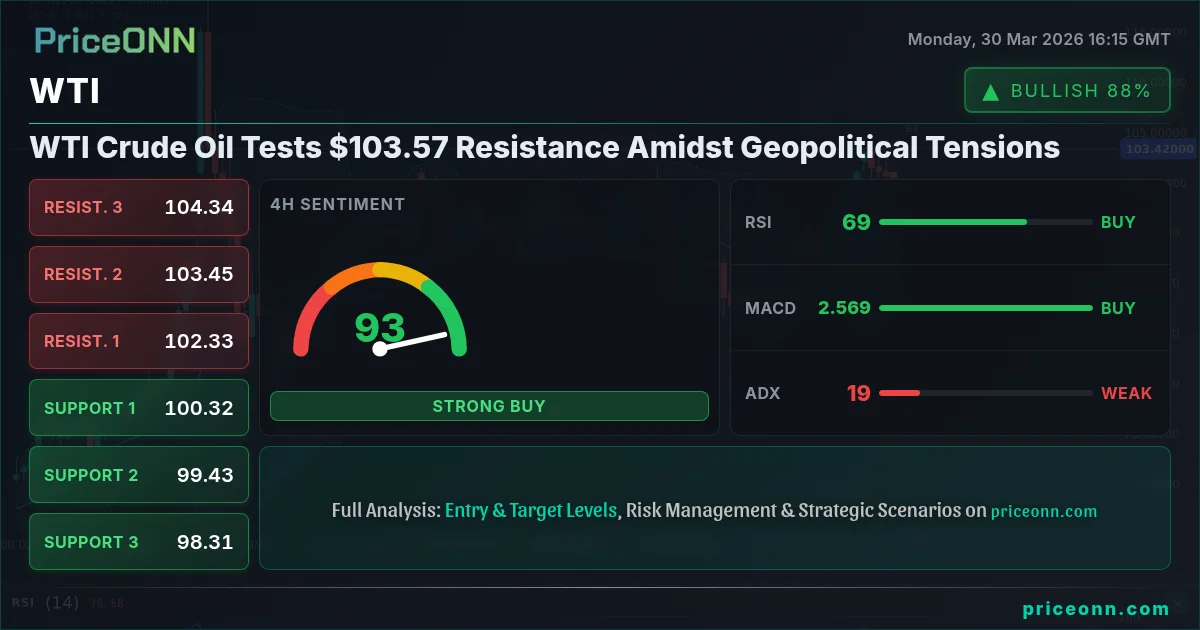
The primary driver behind the current oil price rally is the heightened geopolitical instability stemming from the Middle East conflict. The Strait of Hormuz, a critical chokepoint for global energy trade, remains a focal point of concern. For countries heavily reliant on Middle Eastern crude, such as India which sources about half of its supply from the region, the implications are particularly severe. The conflict also impacts vital energy commodities like liquefied petroleum gas (LPG), essential for domestic use in many countries. In the United States, the average gasoline price saw a notable increase of approximately $1 per gallon within a single month, exacerbated by both the conflict and rising demand during the spring break season. Analysts note that the global supply chain for energy is particularly vulnerable to these regional conflicts, given the concentration of production and transit routes.
Trader Implications
Traders are closely monitoring the evolving situation in the Middle East for potential supply disruptions. Key price levels to watch include the recent highs for Brent crude, with $90 per barrel acting as a significant psychological and technical threshold. Support levels are being tested as market sentiment remains sensitive to any news flow related to the conflict. Investors are also paying attention to central bank actions and government responses, such as fuel tax cuts. For example, Australia has announced a temporary halving of its fuel excise on gasoline and diesel for three months, aiming to reduce the cost of filling a tank by around US$13 (AUS$19). This highlights the diverse strategies being employed to cushion the blow, which can influence regional demand and supply dynamics. The inverse correlation between gold and oil prices is also a factor, with gold often rising as a safe-haven asset during such periods of geopolitical uncertainty. Traders should remain vigilant for any signs of de-escalation or further escalation in the Middle East, as these will be critical in determining the short-to-medium term trajectory of oil prices.
Outlook
The outlook for crude oil prices remains heavily contingent on the duration and intensity of the Middle East conflict. Should tensions persist or escalate, further upward pressure on oil prices is likely, potentially leading to more widespread inflation and economic slowdowns globally. Conversely, any signs of de-escalation could trigger a price correction. Upcoming economic data releases, particularly inflation figures and consumer demand indicators, will also play a crucial role in shaping market sentiment. For now, the market is braced for continued volatility.
Frequently Asked Questions
What is the current price of Brent crude oil?
Brent crude futures have recently surged, briefly surpassing the $90 per barrel mark amid escalating Middle East tensions. The exact real-time price fluctuates based on market trading activity.
How are governments responding to rising fuel prices?
Governments are implementing various measures, such as reducing fuel excise taxes, as seen with Australia's decision to halve it for three months, and lowering domestic levies. Some nations are also releasing strategic fuel reserves to stabilize supply.
What is the main driver behind the current oil price surge?
The primary driver is the escalating geopolitical conflict in the Middle East, which has raised significant concerns about potential disruptions to global oil supply routes, particularly through critical chokepoints like the Strait of Hormuz.
Track markets in real-time
Empower your investment decisions with AI-powered analysis, technical indicators and real-time price data.
Join Our Telegram Channel
Get breaking market news, AI analysis and trading signals delivered instantly to your Telegram.
Join Channel
PriceONN