
Brent Crude Surges Past $116 as Geopolitical Tensions Escalate

Brent Crude prices have surged past the $116 per barrel mark, while West Texas Intermediate (WTI) has climbed to approximately $102.80, as a multi-front geopolitical crisis in the Middle East intensifies. The volatile start to the week saw prices briefly dip to $114 before a sharp rebound, underscoring the market’s sensitivity to escalating military actions and diplomatic breakdowns.
Market Context
The current surge in oil prices is directly linked to a weekend of heightened conflict. An Iranian strike on Prince Sultan Air Base in Saudi Arabia resulted in casualties and damage to critical aerial refueling assets, raising concerns about the Kingdom's ability to defend its energy infrastructure. Simultaneously, Houthi rebels in Yemen formally entered the fray, launching missiles toward Israel and placing the crucial Bab el-Mandeb Strait at potential risk. While the Strait of Hormuz remains the paramount chokepoint, disruptions to the Bab el-Mandeb Strait, which allows Saudi Arabia to reroute oil via its East-West Pipeline, could significantly exacerbate supply concerns.
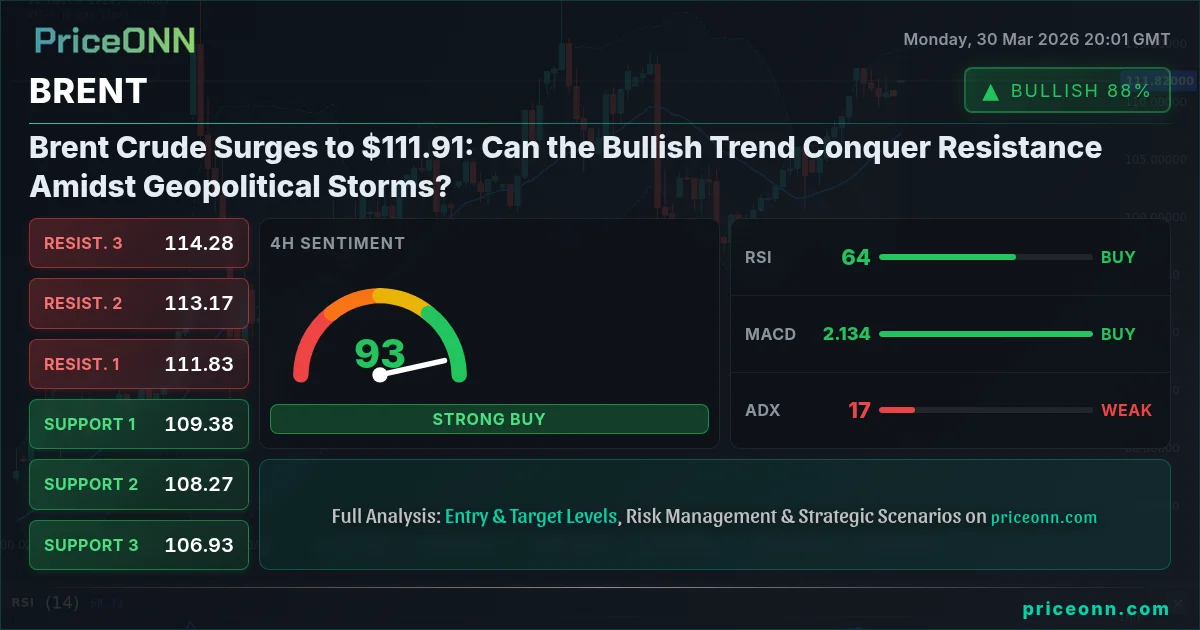
Market data shows Brent Crude trading at $116.69, a 3.66% increase, and WTI at $102.80, up 3.18%. This marks a potential record monthly gain for oil, with Brent set for a 59% rise in March.
Analysis & Drivers
Several key factors are converging to drive oil prices higher. The direct military confrontation involving Iran, coupled with Houthi actions, creates a palpable fear of widespread supply disruption. Analysts note that any threat to major oil transit routes like the Strait of Hormuz or the Bab el-Mandeb Strait immediately impacts global energy flows.
Furthermore, statements from political leaders have added fuel to the fire. President Trump’s remarks about potentially seizing Iranian oil, coupled with threats to obliterate Iranian energy infrastructure, have heightened anxieties. This rhetoric, despite claims of diplomatic progress, injects significant uncertainty into the market. The U.S. military buildup in the region, including the deployment of the 31st Marine Expeditionary Unit, also signals a potential for further direct intervention.
The crisis is also complicating pricing mechanisms for key exporters. Saudi Arabia, preparing to set its official selling prices for May-loading cargoes to Asia, faces pressure from buyers to adopt alternative pricing models. The traditional benchmark, based on Dubai and Oman crude assessments, is becoming unreliable due to distorted physical supply routes and inflated paper benchmarks. Industry reports indicate that the premium for Saudi Arab Light crude could skyrocket to as much as $40 per barrel above the Oman/Dubai average, a stark contrast to the $2.50 premium for April loadings.
Trader Implications
Traders should closely monitor the geopolitical developments in the Middle East, particularly any further actions impacting the Strait of Hormuz and the Bab el-Mandeb Strait. Key price levels to watch include the recent highs around $116.69 for Brent and $102.80 for WTI. A sustained breach of these levels could signal further upward momentum.
Risk factors include potential de-escalation in rhetoric or unexpected diplomatic breakthroughs, which could lead to sharp price corrections. Conversely, any further military escalation or a definitive disruption of oil flows would likely send prices significantly higher. South Korea’s consideration of public driving restrictions if Brent hits $120 per barrel highlights the broader economic implications and potential demand-side reactions to sustained high prices.
Given the current volatility, traders might consider strategies that benefit from upward price trends, such as long positions in crude oil futures or related ETFs, while maintaining strict risk management protocols. Hedging strategies could also be employed to mitigate the impact of sudden price reversals. The potential for Saudi Arabia to shift its pricing mechanism could create arbitrage opportunities but also introduces new layers of complexity.
Outlook
The immediate outlook for oil prices remains heavily dependent on the geopolitical situation. While diplomatic efforts are reportedly underway, the risk of further escalation is significant. If the conflict continues to draw in more regional actors or directly impacts major production or transit hubs, oil prices could see further substantial gains, potentially testing the $120 per barrel level for Brent. Conversely, a swift de-escalation could trigger a significant price pullback, but current market sentiment suggests a bias towards higher prices in the short to medium term.
Frequently Asked Questions
What is the current price of Brent Crude and what is driving its recent surge?
As of the latest market data, Brent Crude is trading around $116.69 per barrel. The price surge is primarily driven by escalating geopolitical tensions in the Middle East, including direct military actions and threats to critical oil transit routes like the Strait of Hormuz and Bab el-Mandeb Strait.
What are the key risks for oil traders in the current market environment?
Key risks include further military escalation, which could drive prices higher, or a sudden diplomatic resolution leading to sharp price declines. Traders must also watch for potential disruptions to major chokepoints and the impact on regional pricing benchmarks, with Brent Crude facing a potential trigger for driving restrictions in South Korea if it reaches $120.
How might Saudi Arabia's pricing for Asian cargoes be affected by the current conflict?
The ongoing conflict is disrupting traditional oil flow benchmarks, pressuring Saudi Arabia to consider alternative pricing for its May-loading cargoes to Asia. The premium for its Arab Light crude could surge to as much as $40 per barrel above the Oman/Dubai average, a dramatic increase from the $2.50 premium seen for April loadings.
Track markets in real-time
Empower your investment decisions with AI-powered analysis, technical indicators and real-time price data.
Join Our Telegram Channel
Get breaking market news, AI analysis and trading signals delivered instantly to your Telegram.
Join Channel

PriceONN