
Why Did Oil Prices Spike Amidst Global Tensions and China's Industrial Boom?

Oil prices have experienced a significant upswing, driven by a confluence of heightened geopolitical instability and unexpectedly strong industrial performance in China. This surge in energy costs presents a dual challenge: it fuels inflationary pressures globally while simultaneously bolstering demand signals from one of the world's largest economies.
Market Context
In the early months of 2026, China's industrial sector demonstrated remarkable resilience, with profits jumping 15.2% year-on-year for January-February. This impressive growth, a substantial acceleration from December's 5.3% rise, was largely powered by a surge in high-tech manufacturing, including semiconductors and unmanned aerial vehicles, alongside strong performances from raw material producers like non-ferrous metals and chemical companies. However, this economic vigor unfolds against a backdrop of escalating global energy supply concerns. Disruptions stemming from heightened geopolitical tensions, particularly in critical shipping lanes, have tightened the global oil market. Analysts note that the Strait of Hormuz closure has significantly impacted energy flows, contributing directly to the upward pressure on crude prices.
Analysis & Drivers
The primary drivers behind the current oil price spike are multifaceted. Geopolitical instability, notably in the Middle East, has created significant supply-side anxieties. The closure of vital shipping chokepoints has not only disrupted immediate deliveries but also stoked fears of prolonged supply shortages, leading to a risk premium being priced into crude benchmarks. Concurrently, China's robust industrial profit growth suggests a stronger-than-anticipated demand picture. The nation's ability to absorb higher energy costs, bolstered by substantial domestic oil reserves and a growing reliance on alternative energy sources, positions it differently from many other economies. Industry reports indicate that while rising global oil prices are beginning to filter into China's domestic economy, potentially leading to adjustments in retail fuel prices, the underlying industrial strength provides a degree of insulation. This dichotomy-supply shock meeting robust demand-is creating a volatile environment for energy markets.
Trader Implications
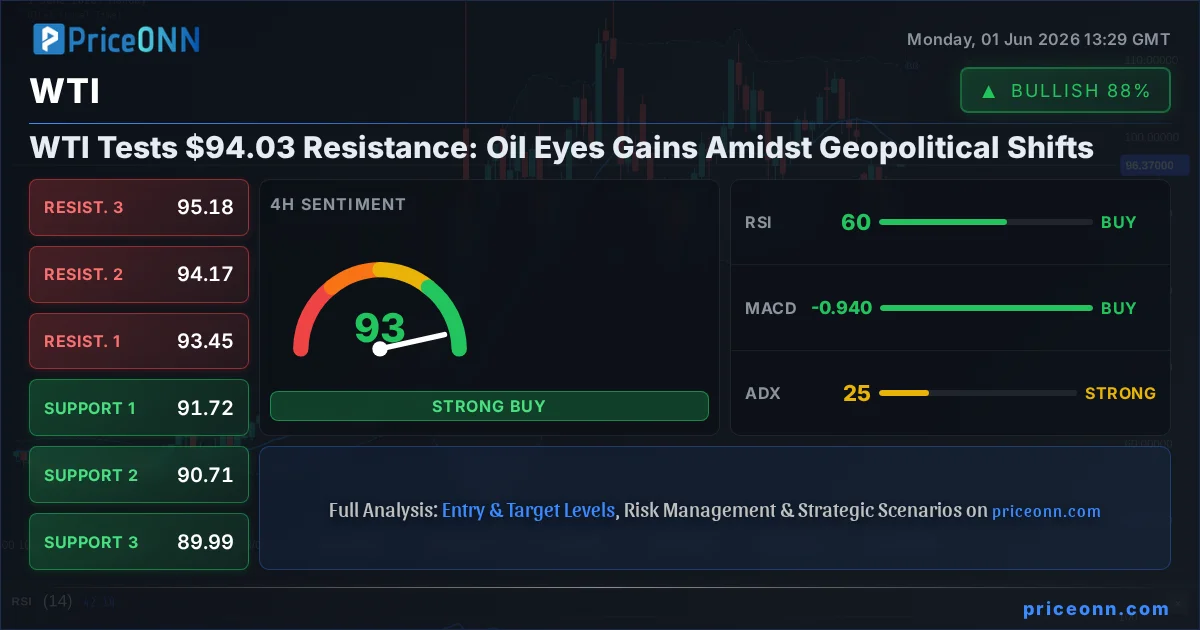
For traders, the current market environment necessitates a careful balance of risk management and strategic positioning. The upward momentum in oil prices, driven by supply constraints and demand strength, suggests potential for further gains, particularly if geopolitical tensions remain elevated. Key technical levels to watch include the recent highs for benchmarks like Brent and WTI crude. Traders should monitor inventory data, geopolitical developments in energy-producing regions, and statements from major oil-consuming nations like China for directional cues. The interplay between energy costs and industrial output in China offers a critical indicator; a sustained increase in oil prices that begins to significantly crimp China's industrial recovery could lead to a shift in market sentiment. Conversely, continued resilience in Chinese demand could further underpin oil prices.
Outlook
The outlook for oil prices remains heavily influenced by the volatile geopolitical landscape and the trajectory of global economic recovery, particularly in China. While China's industrial sector shows promising signs of strength, the persistent threat of supply disruptions due to geopolitical flare-ups continues to cast a shadow. Traders will be closely watching for any de-escalation or further escalation of conflicts, as well as official responses from major economies regarding energy security and strategic reserves. The delicate balance between supply anxieties and demand resilience suggests that oil prices could remain elevated and volatile in the near to medium term.
Frequently Asked Questions
What is the current trend for oil prices?
Oil prices have recently spiked due to escalating geopolitical tensions and strong industrial demand from China. This has pushed benchmarks higher, with traders closely monitoring key resistance levels.
How is China's industrial performance affecting oil prices?
China's industrial profits surged 15.2% in January-February 2026, indicating robust demand for energy. This strong economic activity provides a supportive floor for oil prices amidst supply concerns.
What are the key risks for oil prices moving forward?
The primary risks include further escalation of geopolitical conflicts impacting supply routes and potential negative impacts on industrial output if oil prices rise too sharply. Traders should watch for developments in the Middle East and China's economic data.
Track markets in real-time
Empower your investment decisions with AI-powered analysis, technical indicators and real-time price data.
Join Our Telegram Channel
Get breaking market news, AI analysis and trading signals delivered instantly to your Telegram.
Join Channel PriceONN News
Crude oil prices experienced a significant drop, with WTI futures falling over 1.8% to $87.25, as optimism grew for a U.S.-Iran deal potentially reopening the Strait of Hormuz.
PriceONN News
(RTTNews) - Crude oil prices have tumbled on Friday as expectations of the U.S. and Iran signing a Memorandum of Understanding run high. The MoU would allow for immediate reopening of the Strait of Hormuz and pave the way for the resumption of oil and energy trade.
PriceONN News
Crude oil futures experienced a dramatic intraday reversal on Thursday, soaring overnight on geopolitical fears only to pull back significantly as reports of a potential diplomatic understanding between the U.S. and Iran emerged.
PriceONN News
Crude oil futures experienced a dramatic intraday reversal, soaring to $92.52 before pulling back significantly on Thursday. The volatile session was driven by shifting geopolitical narratives and U.S. inventory data.
PriceONN News
(RTTNews) - Crude oil futures skyrocketed overnight but have shown a significant pullback over the course of the trading day on Thursday.
PriceONN News
Global oil prices are treading water after a significant 5% slump, as market sentiment grapples with cautious optimism over Middle East de-escalation efforts versus lingering geopolitical uncertainties. Brent crude hovers near $104.72 and WTI near $98.07.
PriceONN News
The Iran war suddenly turned what had started as a year of oversupply in global oil and LNG markets into the worst oil and gas supply disruption in history. Three months after the U.S.-Israeli strikes on Iran began on February 28, the world has already lost 1 billion barrels of crude oil supply, oil and gas prices have found a new, much higher floor, and whipsaw with violent volatility nearly every day, trade routes have shifted, and tanker rates have spiked. Actual supply shortages are...
PriceONN News
The Iran war has handed the United States a rare opportunity: a new dawn of energy dominance in an increasingly fractured world. With coordinated US-Israeli strikes disrupting the Strait of Hormuz from late February, roughly 20% of global LNG supply has been stripped from the market since early March. Prices have surged across Asia and Europe. And into that vacuum, American gas has flowed. The numbers speak for themselves. US LNG exports to Asia jumped sharply in April, with nearly a quarter of...
PriceONN News
Crude oil prices experienced a significant downturn as market sentiment shifted towards optimism about a potential US-Iran Memorandum of Understanding that could reopen the Strait of Hormuz. WTI futures fell nearly 2% on the news.
PriceONN News
Brent crude prices surged towards the mid-$90s amid fears of supply disruptions from Middle East tensions, only to pare gains later as whispers of a potential US-Iran diplomatic understanding emerged.
PriceONN News
Crude oil futures experienced a dramatic reversal, soaring overnight to $92.52 before plummeting nearly 6% to $89 a barrel. This volatility was driven by escalating US-Iran tensions followed by reports of a potential preliminary diplomatic understanding.
PriceONN News
The market’s faith in an imminent US-Iran peace breakthrough has clearly weakened today - but it has not disappeared yet. Oil prices jumped again in after fresh military escalation around the Strait of Hormuz reignited fears of prolonged supply disruptions across the Gulf. Brent crude pushed back toward the mid-$90s after new U.S. strikes inside […] The post Brent Oil Holding Below $100 Suggests Markets Still See Room for a US-Iran Deal appeared first on ActionForex.