
Why Did Russian Oil Exports Warn of Force Majeure Amid Ukrainian Drone Strikes?

Russian oil producers are warning international buyers about potential non-delivery of crude from key Baltic Sea ports, citing the threat of force majeure declarations. This serious development follows a sustained campaign of Ukrainian drone strikes that have severely impacted critical export infrastructure.
Market Context
The primary focus of these attacks has been the Ust-Luga terminal, a cornerstone of Russia's oil export network. Loadings at this facility have been completely halted since Wednesday after repeated drone incursions and a subsequent fire. Nearby, the Primorsk port, another vital hub, has also sustained damage, though it has managed to partially resume operations. Together, these Baltic Sea terminals are responsible for a significant portion of Russia's seaborne crude oil and refined product exports. Despite these operational challenges, market data indicates that Russia is currently experiencing a substantial increase in oil revenues. Benchmark Brent crude prices have surged past $100 per barrel, and even Russia's Urals blend is reportedly fetching similar figures amid a global supply crunch.
Analysis & Drivers
The recent escalation in Ukrainian drone activity appears to be a strategic move aimed directly at crippling Russia's export capacity. Analysts note that these strikes are designed to exert sustained pressure on the Kremlin's economic lifeline. The paradox of the situation lies in the simultaneous surge in oil prices. Elevated global energy costs, driven by broader supply-demand imbalances and geopolitical tensions, are providing a financial cushion for Russia, allowing it to weather the immediate impact of infrastructure damage. This windfall has enabled the Russian government to avoid fiscal austerity measures and potentially reallocate funds towards increased military spending. However, the long-term sustainability of this situation remains questionable, as continued disruptions to export terminals could eventually outweigh the benefits of higher prices.
Trader Implications
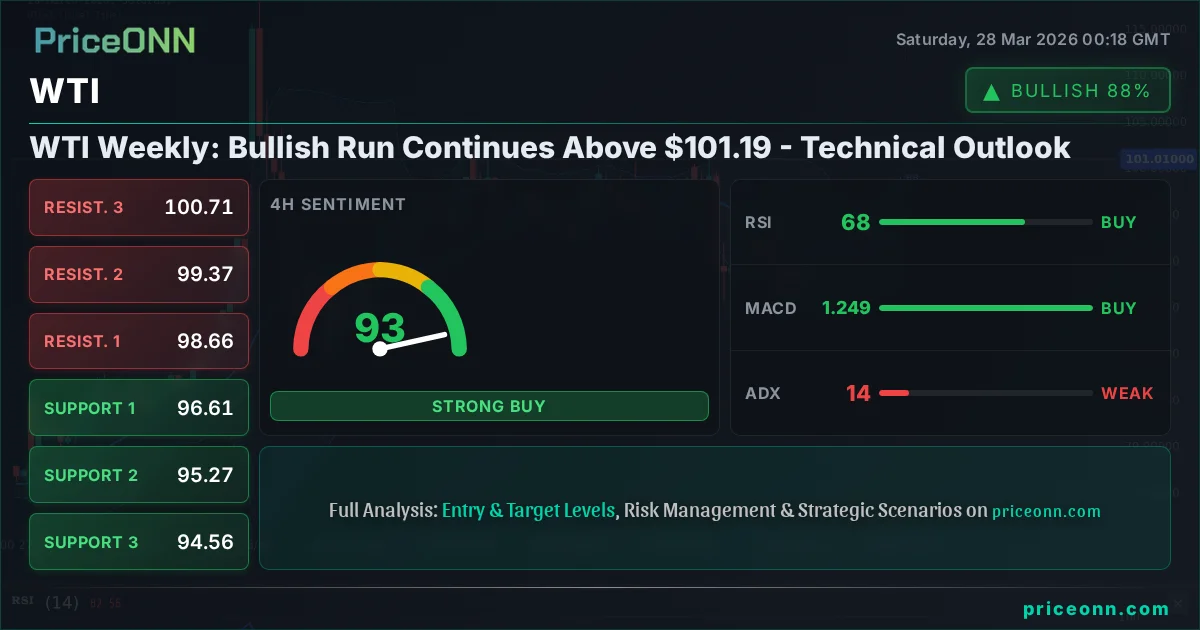
Traders should closely monitor the operational status of Russia's Baltic export terminals. Any further damage or prolonged shutdowns at Ust-Luga and Primorsk could tighten global crude supply, potentially pushing prices higher. Key levels to watch for Brent crude remain above the $100 per barrel mark, with significant upside potential if supply disruptions persist. Conversely, any signs of de-escalation or successful repair efforts could lead to price corrections. Market participants should also be aware of the increasing risk premium associated with Russian oil, which could impact Urals blend differentials. The potential for force majeure declarations adds a layer of uncertainty, making forward contracts more volatile. Traders should consider hedging strategies to mitigate risks associated with supply chain disruptions.
Outlook
Looking ahead, the situation remains tense. Ukraine's stated intent to maintain pressure on Russia's energy infrastructure suggests that drone attacks are likely to continue. The extent to which Russia can repair its damaged terminals and maintain export volumes will be crucial. If disruptions persist and global supply remains tight, oil prices could see further upward pressure. However, market sentiment can shift rapidly based on geopolitical developments and broader economic indicators. The interplay between sustained supply disruptions and global demand will dictate the near-term trajectory for crude oil prices.
Frequently Asked Questions
What is force majeure in the context of Russian oil exports?
Force majeure is a contract clause that frees both parties from liability or obligation when an extraordinary event or circumstance beyond human control, such as a natural disaster or war, prevents one or both parties from fulfilling their obligations. In this case, Russian exporters are warning that drone strikes causing fires and infrastructure damage may prevent them from delivering oil cargoes as contracted.
How significant are the Ust-Luga and Primorsk ports for Russian oil exports?
The Ust-Luga and Primorsk ports are critical export hubs for Russia's seaborne crude oil and refined products. Collectively, they handle a substantial volume of Russia's total oil exports, making any disruption at these terminals highly impactful on global supply dynamics and potentially affecting prices above $100 per barrel for Brent crude.
What is the immediate impact of these disruptions on global oil prices?
While the disruptions create upward pressure on oil prices by tightening supply, the current global market is already characterized by high benchmark prices, with Brent crude trading above $100 per barrel. The ongoing drone strikes and potential force majeure declarations add to market uncertainty and could sustain or further elevate prices if supply issues are prolonged.
Track markets in real-time
Empower your investment decisions with AI-powered analysis, technical indicators and real-time price data.
Join Our Telegram Channel
Get breaking market news, AI analysis and trading signals delivered instantly to your Telegram.
Join Channel

PriceONN