
Why Is Germany Capping Fuel Prices as Oil Prices Soar?

Germany, Europe's largest economy, is implementing new measures to control escalating fuel costs. The government has advanced draft legislation designed to restrict how frequently gas stations can adjust prices, enhancing antitrust oversight in the fuel retail sector.
Market Context
The regulatory intervention is a direct response to significant volatility in oil markets, with Brent crude futures recently trading above $100 per barrel. This surge, driven by ongoing geopolitical conflicts, has translated into sharply higher retail fuel prices across the continent, placing considerable strain on consumers and businesses. In Germany, pump prices have reportedly breached the €2 per liter mark, outpacing the broader European average and sparking public concern.
Analysis & Drivers
The core driver behind this legislative push is the perceived disconnect between global oil prices and the retail fuel costs experienced by German consumers. Officials have questioned whether market dynamics alone adequately explain the rapid price increases. The proposed legislation aims to introduce greater transparency and fairness into the pricing mechanisms at the pump. Key provisions include limiting price adjustments to once per day, specifically at noon, though stations will retain the flexibility to lower prices at any time to maintain competitiveness. Furthermore, the legislation shifts the burden of proof in antitrust investigations, requiring fuel suppliers to demonstrate that their pricing is fair, rather than regulators proving otherwise. This represents a significant strengthening of regulatory power in the face of public outcry over high fuel expenses.
Trader Implications
For energy traders, Germany's intervention signals a potential shift in demand dynamics and a heightened focus on regulatory risk within a major European market. While the immediate impact on global oil benchmarks like Brent may be limited, the move could influence retail margins and competitive strategies of fuel suppliers operating within Germany. Traders should monitor:
- Retail margin pressure: The ability to adjust prices only once daily could compress margins during periods of rapid crude price fluctuation.
- Antitrust scrutiny: The inverted burden of proof may lead to increased investigations and potential fines for fuel companies.
- Consumer demand elasticity: Sustained high prices, even with regulatory caps, could eventually dampen demand.
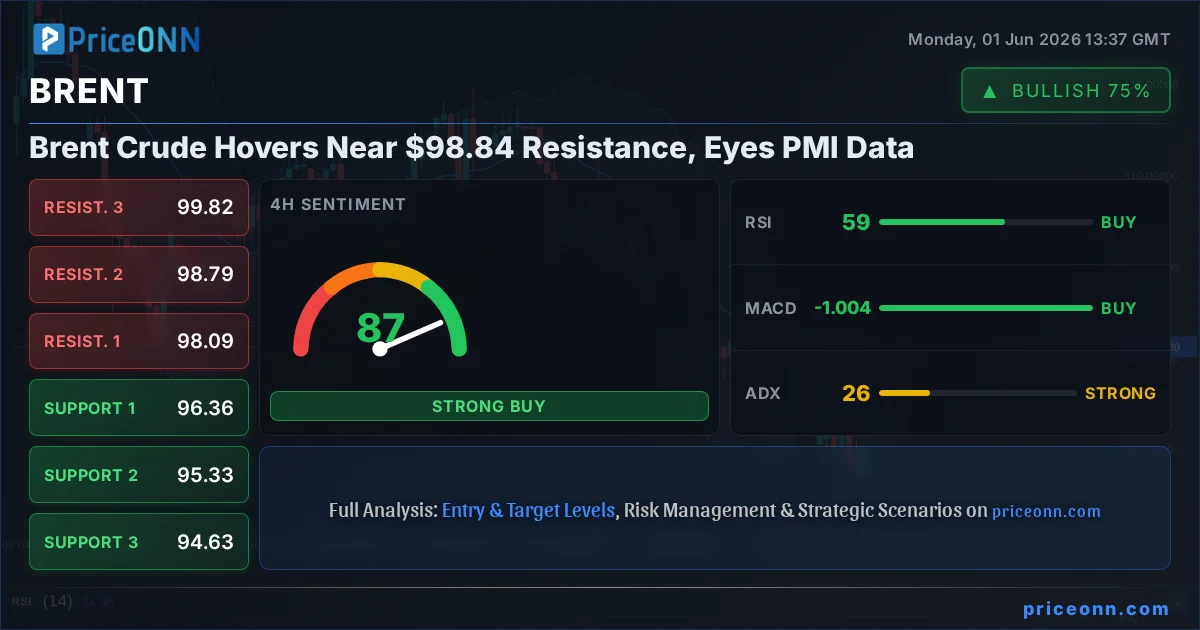
Key price levels to watch for Brent crude remain critical, with the $100 per barrel mark serving as a significant psychological and technical barrier. Any sustained movement below this level could ease pressure on German regulators, while a continued climb might invite further intervention.
Outlook
Germany's proactive stance on fuel price regulation highlights the broader challenges faced by economies grappling with energy market volatility. The success of these measures will depend on their effective implementation and the response of fuel suppliers. As geopolitical tensions persist, the interplay between global commodity prices and national-level regulatory responses will remain a key theme for energy markets. Traders should anticipate continued volatility and increased regulatory oversight in key European economies.
Frequently Asked Questions
What is the main goal of Germany's new fuel price legislation?
The primary goal is to curb excessive daily price hikes at gas stations and increase transparency, providing consumers with more predictable fuel costs. It aims to ensure pricing reflects fair competition rather than opportunistic increases during volatile market periods.
How will the new rules affect gas station operations and traders?
Gas stations will be restricted to one price change per day at noon, potentially impacting their ability to react quickly to market shifts and affecting intraday margins. Traders should be aware of increased regulatory scrutiny and potential shifts in retail market dynamics within Germany.
What is the outlook for fuel prices in Germany following these changes?
While the legislation aims to stabilize prices, the underlying driver of high oil costs (geopolitical tension) remains. Fuel prices will likely remain sensitive to global crude markets, but the new rules should prevent extreme daily spikes at the retail level, with potential fines up to €100,000 for non-compliance.
Track markets in real-time
Empower your investment decisions with AI-powered analysis, technical indicators and real-time price data.
Join Our Telegram Channel
Get breaking market news, AI analysis and trading signals delivered instantly to your Telegram.
Join Channel PriceONN News
Brent crude prices surged towards the mid-$90s amid fears of supply disruptions from Middle East tensions, only to pare gains later as whispers of a potential US-Iran diplomatic understanding emerged.
PriceONN News
Crude oil benchmarks experienced a sharp decline of over 5% this week, driven by renewed optimism surrounding U.S.-Iran peace talks and a potential easing of Middle East tensions. Both Brent and WTI futures saw significant drops as market sentiment shifted towards de-escalation.
PriceONN News
Iran's oil exports fell to their lowest level in at least six years in May as the U.S. naval blockade continued to choke off crude shipments and leave tens of millions of barrels stranded at sea. According to shipping data from Vortexa, Iran exported just 209,000 barrels per day (bpd) of crude oil and condensate in May, down from 1.34 million bpd in April and nearly 1.9 million bpd in March. Kpler had estimated May exports slightly higher at 260,000 bpd, but still the lowest level since the...
PriceONN News
South Korea’s state-run utility Korea Electric Power Corp. (KEPCO) has won a $1.4-billion deal with Saudi oil giant Aramco to build and operate Phase 2 of Saudi Arabia’s Jafurah cogeneration power plant at the major gas project estimated to need $100 billion of total investments. KEPCO’s cogeneration project entails building a 331-MW cogeneration facility capable of producing about 465 tons of steam per hour by June 2029. The plant is expected to supply electricity and steam to Aramco for 17...
PriceONN News
The Iran war suddenly turned what had started as a year of oversupply in global oil and LNG markets into the worst oil and gas supply disruption in history. Three months after the U.S.-Israeli strikes on Iran began on February 28, the world has already lost 1 billion barrels of crude oil supply, oil and gas prices have found a new, much higher floor, and whipsaw with violent volatility nearly every day, trade routes have shifted, and tanker rates have spiked. Actual supply shortages are...
PriceONN News
The Iran war has handed the United States a rare opportunity: a new dawn of energy dominance in an increasingly fractured world. With coordinated US-Israeli strikes disrupting the Strait of Hormuz from late February, roughly 20% of global LNG supply has been stripped from the market since early March. Prices have surged across Asia and Europe. And into that vacuum, American gas has flowed. The numbers speak for themselves. US LNG exports to Asia jumped sharply in April, with nearly a quarter of...
PriceONN News
Crude oil prices experienced a significant drop, with WTI futures falling over 1.8% to $87.25, as optimism grew for a U.S.-Iran deal potentially reopening the Strait of Hormuz.
PriceONN News
Crude oil prices experienced a significant downturn as market sentiment shifted towards optimism about a potential US-Iran Memorandum of Understanding that could reopen the Strait of Hormuz. WTI futures fell nearly 2% on the news.
PriceONN News
(RTTNews) - Crude oil prices have tumbled on Friday as expectations of the U.S. and Iran signing a Memorandum of Understanding run high. The MoU would allow for immediate reopening of the Strait of Hormuz and pave the way for the resumption of oil and energy trade.
PriceONN News
Crude oil futures experienced a dramatic intraday reversal on Thursday, soaring overnight on geopolitical fears only to pull back significantly as reports of a potential diplomatic understanding between the U.S. and Iran emerged.
PriceONN News
Crude oil futures experienced a dramatic intraday reversal, soaring to $92.52 before pulling back significantly on Thursday. The volatile session was driven by shifting geopolitical narratives and U.S. inventory data.
PriceONN News
Crude oil futures experienced a dramatic reversal, soaring overnight to $92.52 before plummeting nearly 6% to $89 a barrel. This volatility was driven by escalating US-Iran tensions followed by reports of a potential preliminary diplomatic understanding.