Why Oil Prices Are Defying Iran Exit Rumors and Staying Above $110
Brent crude oil prices are demonstrating remarkable resilience, holding above the $110 per barrel mark despite recent reports suggesting a potential shift in US strategy regarding Iran. The market's muted reaction underscores deep-seated concerns over ongoing supply disruptions that continue to outweigh speculative geopolitical shifts.
Market Context
The narrative surrounding a possible US exit from the Iran conflict, as suggested by some reports, has failed to significantly dent oil prices. Instead, Brent crude has seen only a shallow dip, indicating that traders are prioritizing the tangible risk of supply shortages over potential diplomatic de-escalation. Asian stock markets, after a brief rally, have also turned lower, reflecting a broader risk-off sentiment that favors commodities seen as safe havens.
The critical factor maintaining upward pressure on oil is the continued effective closure of the Strait of Hormuz. Coupled with an approaching deadline for potential escalation, this situation has amplified fears about global oil supply. Market data shows that while there's speculation about a US pivot towards a "containment" strategy to avoid prolonged conflict, the core risks remain unchanged. Military operations persist, and the vital shipping lane remains largely impassable, creating a tight supply environment.
Analysis & Drivers
The primary driver for oil's stubborn strength is the asymmetric risk profile. Should diplomatic efforts fail to reopen the Strait of Hormuz by the April 6 deadline, the potential for escalation involving critical Iranian infrastructure looms large. Analysts note that such a scenario could trigger a drastic response from Iran, potentially leading to the physical blockage of the Strait with sunken vessels. This would almost certainly send oil prices soaring, creating a significant downside protection for current price levels.
The market's skepticism towards softer geopolitical outcomes is palpable. The persistent closure of the Strait of Hormuz, a critical chokepoint for global oil transit, means that supply remains fundamentally constrained. Even if the US were to reduce direct military engagement, the underlying problem of blocked supply routes would persist, keeping traders on edge. Industry reports indicate that previous damage to Iran's naval and missile capabilities has not been sufficient to guarantee safe passage.
Trader Implications
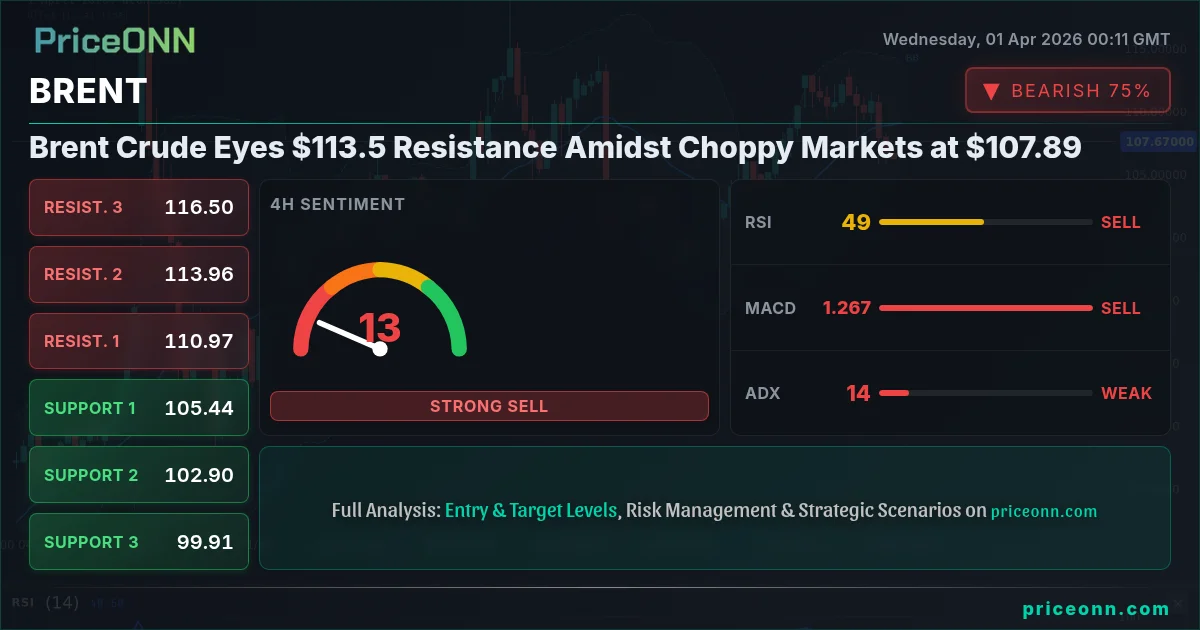
For traders, the current environment presents a clear signal to remain focused on supply-side risks. Key levels to watch for Brent crude include the psychological $120 per barrel mark, which could be retested if supply concerns intensify. The immediate risk lies in the failure to achieve a diplomatic breakthrough by the approaching deadline, which could lead to aggressive price action.
Safe-haven demand in currency markets, particularly for the Japanese Yen, highlights the prevailing risk aversion. Traders should monitor geopolitical developments closely, but prioritize the physical realities of oil supply and the Strait of Hormuz's status. Any indication of further escalation or a complete failure of diplomatic efforts could trigger significant volatility, pushing prices sharply higher. Conversely, a sudden, verifiable reopening of the Strait would be required to break the current bullish sentiment.
Given the tight supply conditions and the potential for a dramatic escalation, traders might consider strategies that benefit from upward price momentum in the energy sector, while maintaining strict risk management protocols. Key support for Brent crude is currently seen around the $105-$108 range, with any sustained break below this potentially signaling a shift in sentiment, though this appears less likely in the current climate.
Outlook
The outlook for oil prices remains heavily skewed to the upside as long as the Strait of Hormuz remains significantly impaired and geopolitical tensions persist. While a de-escalation would be welcomed by broader markets, the immediate focus remains on the tangible threat to global oil supply. Upcoming economic data releases will likely take a backseat to the unfolding situation in the Middle East, suggesting that oil prices could remain elevated or even climb higher in the short to medium term, especially if the April 6 deadline passes without a resolution.
Frequently Asked Questions
What is the current price level for Brent crude oil?
Brent crude oil prices are currently holding firm above $110 per barrel. This level reflects significant market concern over ongoing supply risks rather than geopolitical de-escalation reports.
What is the significance of the Strait of Hormuz closure for oil prices?
The Strait of Hormuz is a critical chokepoint for global oil transit. Its continued effective closure means that global supply remains fundamentally constrained, directly supporting higher oil prices and creating upward pressure.
What is the key risk factor for oil prices in the coming weeks?
The primary risk is the potential for escalation if diplomatic efforts fail to reopen the Strait of Hormuz by the April 6 deadline. This could lead to a drastic response, including physical blockades, sending oil prices sharply higher, potentially retesting levels like $120.
Track markets in real-time
Empower your investment decisions with AI-powered analysis, technical indicators and real-time price data.
Join Our Telegram Channel
Get breaking market news, AI analysis and trading signals delivered instantly to your Telegram.
Join Channel