Why Did Oil Prices Hold Above $110 Despite Reports of a Potential Iran Exit Strategy?

Brent crude oil prices have demonstrated significant resilience, maintaining their position above the $110 per barrel mark. This stability comes despite market data suggesting a potential shift in the United States' strategy concerning Iran. The energy complex appears to be largely discounting reports indicating the exploration of an exit strategy, underscoring the prevailing concerns over supply disruptions.
Market Context: Supply Fears Trump Geopolitical Easing
The global energy market has largely shrugged off indications that the U.S. might be exploring an exit strategy from its current engagement with Iran. Brent oil experienced only a shallow dip, failing to sustain any significant downward momentum, and has held steady above $110. This price action occurred even as Asian stock markets turned negative following a brief recovery bounce.
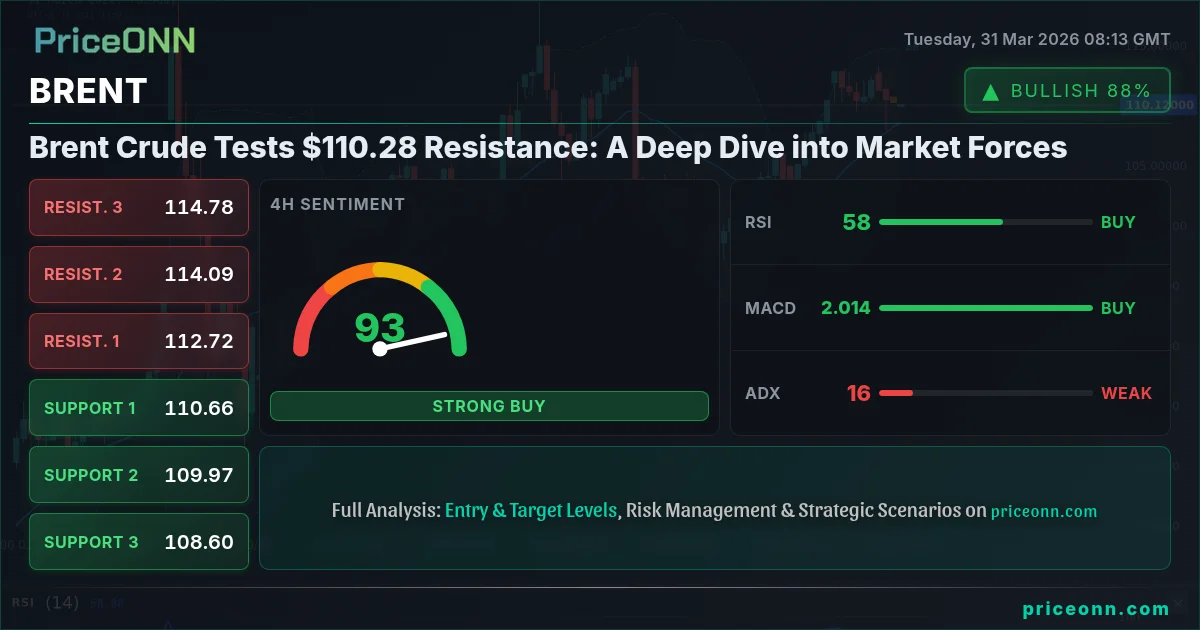
The persistent strength in oil prices is directly linked to ongoing geopolitical tensions and their impact on crucial shipping lanes. With the Strait of Hormuz remaining effectively blocked and an approaching deadline for potential escalation, the market's focus remains firmly on supply risks. Any perceived easing of geopolitical tensions is being overshadowed by the tangible threat to oil supply routes.
Analysis & Drivers: The Strait of Hormuz and Escalation Risks
Analysts note that the core risk factors underpinning current oil prices remain unchanged. Military operations continue, and the Strait of Hormuz, a vital chokepoint for global oil shipments, is still largely impassable. This situation inherently tightens global supply conditions, providing a strong floor for crude prices.
Furthermore, the potential for escalation presents an asymmetric downside scenario for the market. Should diplomatic efforts fail to reopen the Strait by the April 6 deadline, the U.S. might consider targeting critical Iranian infrastructure, such as oil refineries and power grids. Such a move could provoke a severe response from Iran, potentially leading to attempts to physically block the Strait with wreckage. In such a worst-case scenario, oil prices could surge dramatically, pushing well beyond current levels.
The market's reaction, or lack thereof, to the reports of a potential US strategy shift indicates a deep-seated skepticism. Traders are pricing in the immediate physical constraints on supply rather than anticipating a swift de-escalation. The possibility of a prolonged conflict or a further tightening of supply remains the dominant narrative.
Trader Implications: Watching Supply and Escalation Triggers
For traders, the key takeaway is that supply-side risks are currently the primary driver of oil prices. While geopolitical headlines can cause short-term volatility, the underlying fundamentals of tight supply due to the Strait of Hormuz situation are likely to persist.
Key levels to watch include the $110 support for Brent crude. A sustained breach below this level would require a significant shift in geopolitical dynamics or supply expectations. Conversely, any signs of further escalation or a confirmed physical blockage of the Strait could see prices rapidly retest or even surpass the $120 psychological level and move higher.
Traders should remain vigilant for any official statements from the US administration or Iranian authorities regarding the Strait of Hormuz and the April 6 deadline. Developments in regional military activities and tanker traffic will be critical indicators. Given the potential for sharp price movements, risk management through stop-loss orders and position sizing remains paramount.
Outlook: Supply Concerns to Keep Oil Elevated
The outlook for oil prices remains heavily influenced by the ongoing geopolitical standoff and its impact on supply. Unless the Strait of Hormuz is demonstrably reopened and supply routes are secured, Brent crude is likely to remain supported above $110. The market appears to be pricing in a baseline scenario of continued disruption, with a significant upside risk in the event of further escalation. Traders should brace for continued volatility driven by supply-side concerns.
Frequently Asked Questions
What is the current price level for Brent crude oil?
Brent crude oil is currently holding firm above $110 per barrel, demonstrating resilience despite geopolitical uncertainties and reports of potential strategy shifts.
What is the primary driver behind current oil price strength?
The primary driver remains the significant supply risk associated with the ongoing closure of the Strait of Hormuz, a critical global oil transit route, rather than immediate geopolitical de-escalation.
What are the key price levels traders should monitor for Brent crude?
Traders should monitor $110 as a key support level. A break below could signal further downside, while a failure to resolve the Strait of Hormuz situation, coupled with escalation, could push prices back towards or above the $120 level.
Track markets in real-time
Empower your investment decisions with AI-powered analysis, technical indicators and real-time price data.
Join Our Telegram Channel
Get breaking market news, AI analysis and trading signals delivered instantly to your Telegram.
Join Channel