Why Are US Gas Prices Topping $4 and What's Next for Oil?
The national average price for gasoline in the United States has breached the $4 per gallon mark, signaling a significant inflationary pressure on consumers. This surge is directly linked to escalating geopolitical conflicts in the Middle East, which are severely disrupting the flow of crude oil and refined products through critical chokepoints.
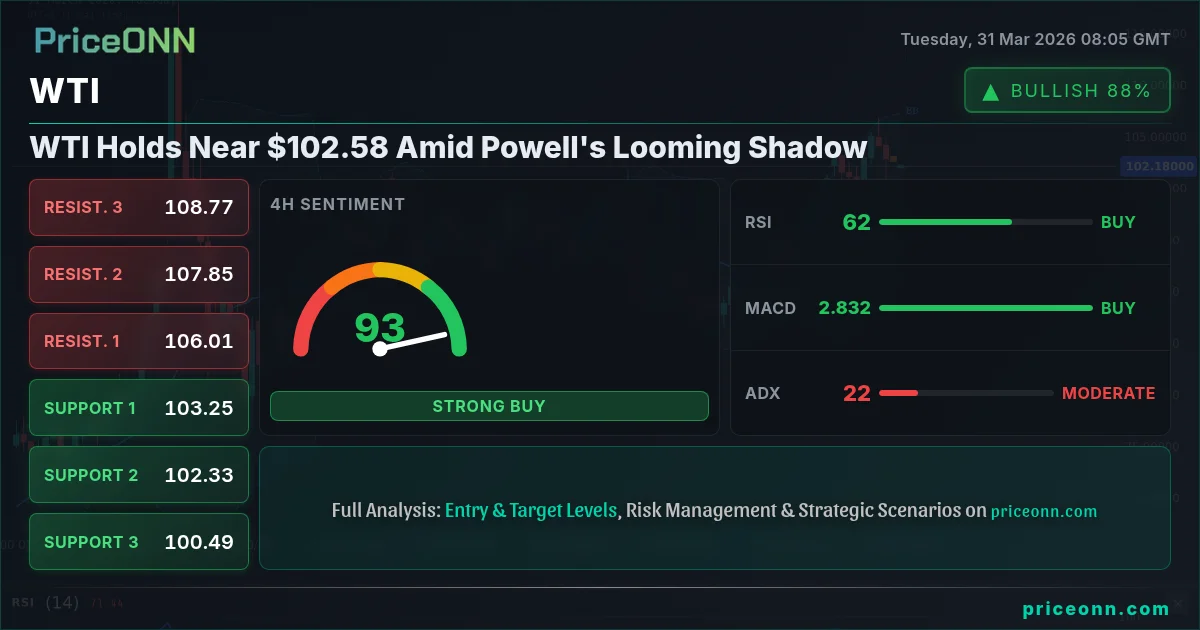
Market data shows that the price of Brent crude oil futures is currently trading around $112.94 per barrel, while West Texas Intermediate (WTI) is positioned near $102.73 per barrel. These elevated levels underscore the market's sensitivity to supply chain vulnerabilities, particularly those impacting energy lifelines.
Market Context
The immediate catalyst for the spike in fuel prices appears to be the growing instability around the Strait of Hormuz, a vital passage for global energy trade. Reports indicate that 28 ships, including vessels carrying crude oil, liquefied petroleum gas (LPG), and liquefied natural gas (LNG) to India, are stranded near the strait. This fleet comprises 18 Indian-flagged vessels and 10 foreign-flagged cargoes, all en route to India with essential energy commodities. The situation was confirmed by Indian governmental sources, with Rajesh Kumar Sinha, Special Secretary in India's Ministry of Ports, Shipping and Waterways, detailing the affected vessels, including four foreign-flagged crude oil tankers, three LPG carriers, and three LNG carriers.
Adding to the supply concerns, a Kuwaiti oil tanker, the Al Salmi, reportedly carrying 2 million barrels of oil, was set ablaze by an alleged drone attack while anchored in Dubai port. While authorities have since brought the fire under control, the incident highlights the heightened risks to energy infrastructure in the region.
Analysis & Drivers
The confluence of these events-disrupted shipping lanes and direct attacks on energy assets-is creating a palpable strain on global energy security. The Strait of Hormuz is indispensable, with its closure or severe disruption impacting the transit of millions of barrels of crude oil daily. This has a direct knock-on effect on refining operations and the subsequent availability of gasoline and diesel fuel in major consuming nations like the United States.
Analysts note that the volatility is exacerbated by fluctuating diplomatic rhetoric and threats. Recent statements from U.S. President Trump have included warnings of severe retaliation against Iran, including targeting its infrastructure, juxtaposed with occasional overtures for negotiation. This unpredictability fuels market anxiety and contributes to the upward pressure on oil prices. The targeting of civilian infrastructure, such as oil tankers, by state or state-sponsored actors raises significant concerns about adherence to international norms of warfare and could lead to further retaliatory measures or diplomatic isolation.
The impact extends beyond crude oil prices. Surging diesel prices, in particular, pose a growing risk to the broader economy by potentially reaccelerating inflation across various sectors that rely heavily on transportation and logistics.
Trader Implications
Traders should closely monitor developments in the Middle East, as any further escalation or de-escalation in the region will likely dictate the near-term trajectory of oil and gasoline prices. Key levels to watch for Brent crude include resistance around the recent highs near $115 per barrel and support at the $105 mark. For WTI, resistance lies near $105 per barrel, with support potentially found around $98.
The current environment favors a continuation of upward price pressure on energy commodities as long as supply disruptions persist. Traders looking to capitalize on this trend might consider long positions in crude oil or related energy products, but with a strong emphasis on risk management due to the inherent volatility. Conversely, any signs of a diplomatic breakthrough or a swift resolution to the shipping blockages could trigger sharp price pullbacks. The current situation suggests that gasoline prices are likely to remain above $4 per gallon in the US, with the potential for further increases if the geopolitical tensions intensify.
Outlook
The outlook for oil and gasoline prices remains highly sensitive to geopolitical developments. While authorities have contained the fire on the Kuwaiti tanker, the underlying threat to shipping in the region persists. Unless a diplomatic resolution is achieved or shipping routes are secured, energy prices are expected to remain elevated. The upcoming weeks will be critical in determining whether tensions de-escalate or lead to broader supply disruptions, potentially pushing crude oil prices into three-digit territory for an extended period and keeping gasoline prices at multi-year highs.
Frequently Asked Questions
What is causing the current spike in US gasoline prices?
US gasoline prices have surpassed $4 per gallon due to escalating conflicts in the Middle East, which are disrupting vital shipping lanes like the Strait of Hormuz and impacting crude oil supply. This reduction in available crude directly translates to higher refined fuel costs.
What are the current price levels for Brent and WTI crude oil?
As of recent market data, Brent crude oil futures are trading around $112.94 per barrel, and West Texas Intermediate (WTI) is near $102.73 per barrel. These prices reflect the market's reaction to supply chain anxieties and geopolitical risks.
What is the outlook for energy prices if Middle East tensions persist?
If Middle East tensions persist and shipping disruptions continue, energy prices are expected to remain elevated. This could lead to prolonged periods of crude oil trading above $100 per barrel and keep US gasoline prices above the $4 per gallon threshold, potentially impacting broader economic inflation.
Track markets in real-time
Empower your investment decisions with AI-powered analysis, technical indicators and real-time price data.
Join Our Telegram Channel
Get breaking market news, AI analysis and trading signals delivered instantly to your Telegram.
Join Channel