Is the Strait of Hormuz Closure Driving Oil Prices Above $100 Again?
West Texas Intermediate (WTI) crude futures have returned to three-digit territory, trading above $100 per barrel, as escalating geopolitical conflicts in the Middle East threaten vital energy supply routes. The national average for gasoline in the United States has also breached the $4 per gallon mark, underscoring the immediate impact of these disruptions on consumer prices and the broader economy.
Market Context: A Vital Chokepoint Under Siege
The critical Strait of Hormuz, a narrow waterway through which approximately 30% of the world's seaborne oil trade transits, is effectively closed due to escalating tensions. This development has sent shockwaves through global energy markets, particularly impacting major importers like Japan, which relies on the region for 90% of its crude oil. In response, Tokyo has released approximately 80 million barrels from its strategic petroleum reserves, a move designed to cover about 26 days of domestic oil demand. This action highlights the severe vulnerability of nations heavily dependent on foreign energy sources when chokepoints are compromised. The situation is further exacerbated by the fact that nearly 98% of Japan's liquefied natural gas (LNG) is also imported, with a small but significant portion of this supply traversing the Strait of Hormuz.
Analysis & Drivers: Geopolitics Fueling Price Hikes
The primary driver behind the current market turmoil is the heightened geopolitical risk stemming from the Middle East. Recent events, including an alleged Iranian drone attack on a fully laden Kuwaiti oil tanker, the Al Salmi, anchored in Dubai port, have intensified concerns. While Dubai authorities reported the fire was brought under control, the incident underscores the precarious security of maritime energy transport. This event follows a period of heightened rhetoric, with U.S. President Trump issuing threats against Iran's energy infrastructure. Analysts note that such actions and counteractions create a highly volatile environment, directly impacting oil supply. The disruption to the Strait of Hormuz is curtailing the daily flow of millions of barrels of crude oil, leading to a significant surge in both crude and refined product prices. Market data shows that West Texas Intermediate topped $100 per barrel at the end of last week, and Brent crude futures are trading around $112.94 per barrel. The upward pressure on fuel prices is expected to persist as long as global oil supplies are constrained by these disruptions.
Trader Implications: Watching Key Levels and Risks
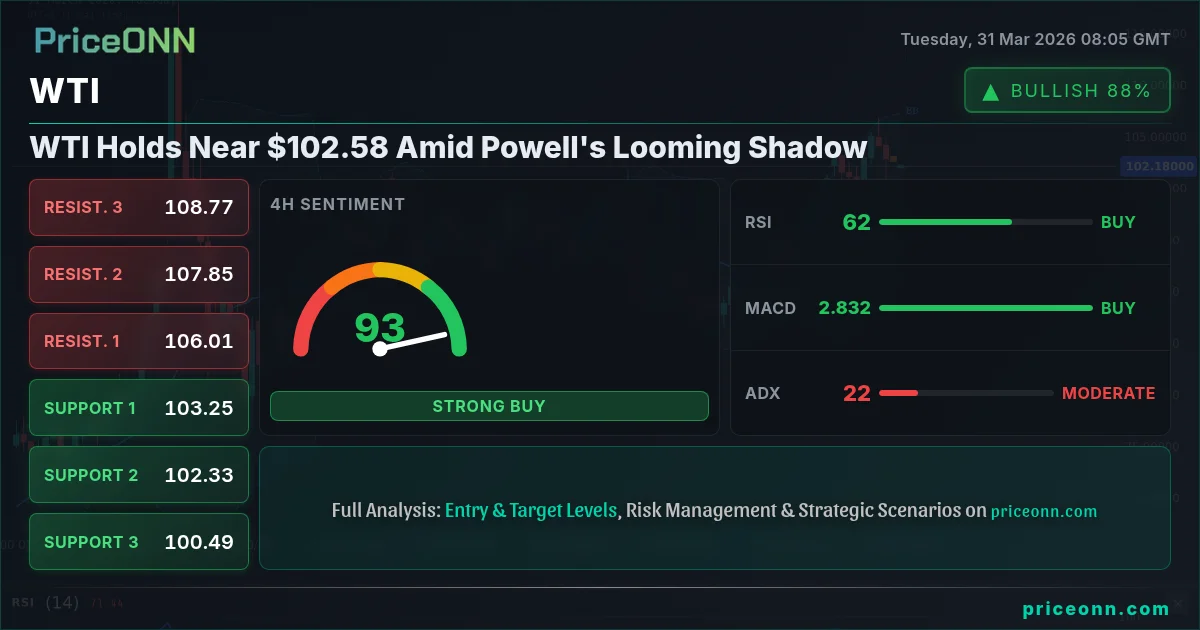
Traders should closely monitor developments in the Middle East, as any further escalation or de-escalation will have immediate price implications. The $100 per barrel mark for WTI has now become a significant psychological and technical level. Key resistance levels to watch for Brent crude are currently near the $115 per barrel mark. On the downside, support for WTI is being tested around the $95 per barrel level. The continued rise in gasoline prices, with the national average now above $3.950 per gallon (according to GasBuddy) and diesel prices potentially climbing towards $6 per gallon, poses a growing risk to the broader economy and could reaccelerate inflation. This makes energy commodities a key focus for both short-term trading and longer-term investment strategies. Traders should also be aware of the fluctuating U.S. diplomatic approach, which alternates between negotiation overtures and retaliatory threats, adding another layer of unpredictability.
Outlook: Persistent Volatility Expected
The outlook for oil prices remains highly volatile and unpredictable in the short to medium term. Unless the situation in the Middle East sees a significant de-escalation and the Strait of Hormuz is fully reopened, upward pressure on fuel prices is likely to persist. The release of strategic reserves by countries like Japan offers temporary relief but does not address the underlying supply constraint. Traders should brace for continued price swings and heightened market sensitivity to geopolitical news. Upcoming economic data releases, particularly inflation figures and consumer spending reports, will also be crucial in gauging the broader economic impact of these energy price hikes.
Frequently Asked Questions
What is the current price of West Texas Intermediate (WTI) crude oil?
West Texas Intermediate (WTI) crude futures have surpassed $100 per barrel due to escalating Middle East tensions and disruptions to the Strait of Hormuz. Market data shows prices have remained in three-digit territory.
How are U.S. gasoline prices affected by the Strait of Hormuz closure?
The national average price for gasoline in the United States has risen above $4 per gallon, with some sources reporting prices around $3.950 per gallon. Analysts predict these prices could remain elevated or climb higher without a resolution to the supply constraints.
What is the outlook for oil prices amid ongoing Middle East tensions?
The outlook for oil prices is highly volatile. Analysts anticipate persistent upward pressure on fuel costs as long as the Strait of Hormuz remains compromised. Any significant geopolitical shifts could lead to substantial price movements.
Track markets in real-time
Empower your investment decisions with AI-powered analysis, technical indicators and real-time price data.
Join Our Telegram Channel
Get breaking market news, AI analysis and trading signals delivered instantly to your Telegram.
Join Channel