Why Did Crude Oil Hold Above $110 Despite Iran Exit Report?
Global energy markets have largely discounted a report indicating a potential U.S. strategy shift concerning Iran, with Brent crude oil maintaining a firm stance above $110 per barrel. The resilience in oil prices suggests that immediate supply concerns and geopolitical tensions are overshadowing speculative news regarding diplomatic exits.
Market Context: Supply Risks Trump Geopolitical Speculation
Despite a brief dip, Brent crude quickly recovered and continues to trade with an upward bias, indicating that traders are prioritizing the tangible risks to global oil supply. The market's muted reaction to news of potential U.S. strategy adjustments towards Iran underscores the prevailing sentiment that the core issues-namely, the ongoing military operations and the effective closure of the Strait of Hormuz-remain unchanged. Asian stocks also experienced a reversal, turning negative after an initial speculative bounce, reflecting broader risk aversion.
The narrative driving market skepticism centers on the fact that the Strait of Hormuz, a critical chokepoint for global oil transit, remains largely impassable. Even if the U.S. administration aims to de-escalate or pivot to a containment strategy, the physical reality of blocked maritime routes and ongoing military activities continues to tighten supply conditions. Analysts note that the market's focus remains squarely on the potential for further disruption rather than diplomatic resolutions that have yet to materialize.
Analysis & Drivers: The Strait of Hormuz and Escalation Scenarios
The primary driver for oil's firm undertone is the persistent threat to supply emanating from the Strait of Hormuz. With a critical deadline approaching in early April concerning potential military actions, the market is pricing in a heightened risk of escalation. Industry reports indicate that if diplomatic efforts fail to reopen the Strait by the specified deadline, there is a significant possibility of the U.S. targeting critical Iranian infrastructure, including oil refineries and power grids. Such an escalation could provoke a severe retaliatory response from Iran, potentially leading to a deliberate physical blockage of the Strait with sunken vessels. This worst-case scenario is seen as a potent catalyst for oil prices to surge dramatically, potentially retesting previous record highs.
The current market behavior highlights an asymmetric risk profile for oil prices. While positive news regarding de-escalation might only lead to a shallow dip, negative developments or a failure to resolve the transit issues could trigger a sharp and substantial price increase. This dynamic is keeping traders cautious and supportive of current price levels, as the downside is perceived as limited compared to the upside potential in the event of further conflict.
Trader Implications: Watching Key Levels and Risk Factors
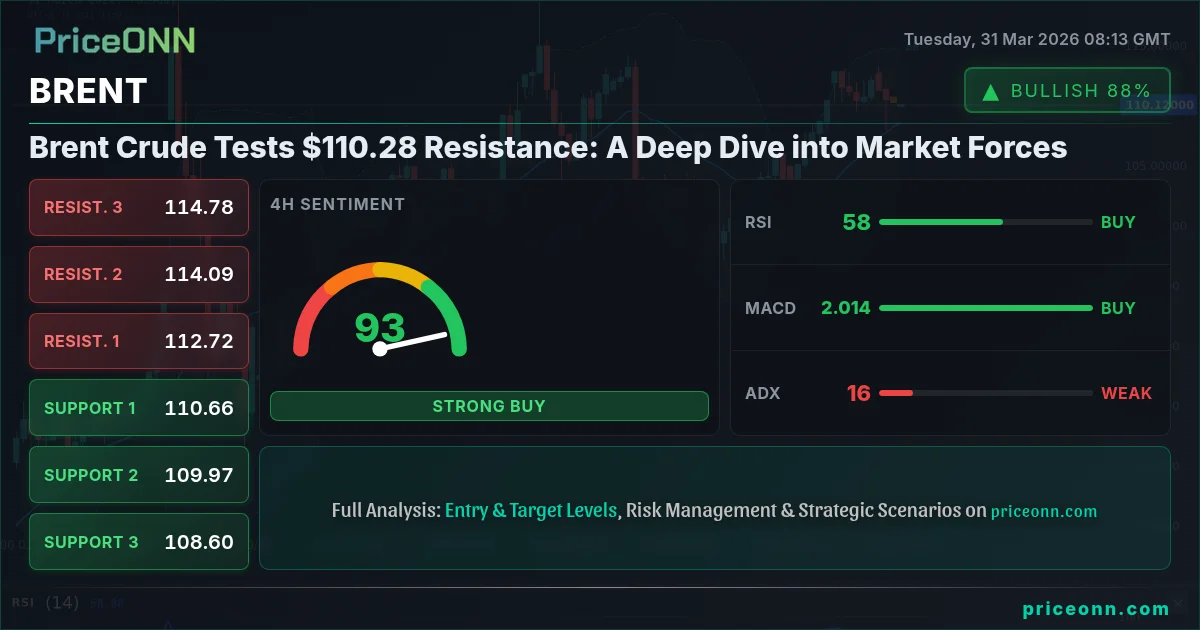
Traders are advised to closely monitor the developments surrounding the Strait of Hormuz and the approaching April deadline. Key price levels to watch for Brent crude include the recent highs and the psychological $120 per barrel mark, which could be tested if supply disruption fears intensify. Conversely, any confirmed breakthroughs in diplomatic efforts leading to the reopening of the Strait could see prices retreat, though the depth of any decline may be limited by underlying supply tightness.
Risk sentiment remains elevated, as evidenced by the strength in safe-haven currencies like the Japanese Yen. This indicates that market participants are not yet convinced of a peaceful resolution and are maintaining protective positions. For oil traders, the actionable insight is to remain attuned to geopolitical headlines while also tracking technical support and resistance levels. The potential for a rapid price move remains high, necessitating careful risk management and position sizing.
Outlook: Continued Volatility Expected
The outlook for crude oil remains one of elevated volatility, heavily influenced by geopolitical developments in the Middle East. While immediate market reactions to news might be muted, the underlying risk of significant supply disruption persists. Traders should anticipate continued price sensitivity to any shifts in tensions or progress on diplomatic fronts regarding the Strait of Hormuz. The coming weeks will be critical in determining whether prices will break higher towards $120 or face renewed selling pressure, though the latter appears less likely given the current supply-side concerns.
Frequently Asked Questions
What is the current price of Brent crude oil?
As of the latest market data, Brent crude oil is trading firmly above $110 per barrel, demonstrating resilience despite geopolitical news.
What is the significance of the Strait of Hormuz for oil prices?
The Strait of Hormuz is a critical chokepoint for global oil transit. Its effective closure due to military operations poses a significant risk to supply, keeping oil prices elevated and volatile.
What are the key price levels to watch for Brent crude?
Traders should monitor the $110 per barrel level as immediate support, with the psychological $120 per barrel mark serving as a key resistance target if supply disruption fears escalate.
Track markets in real-time
Empower your investment decisions with AI-powered analysis, technical indicators and real-time price data.
Join Our Telegram Channel
Get breaking market news, AI analysis and trading signals delivered instantly to your Telegram.
Join Channel