Why Did Crude Oil Jump 3% Today Amidst Escalating Middle East Tensions?
WTI Crude Oil prices experienced a significant rally on Monday, climbing 3.06% to $102.69 per barrel for May delivery. The surge was primarily driven by escalating geopolitical tensions in the Middle East, as the United States reinforced its military posture in the region and issued stern warnings to Iran concerning the vital Strait of Hormuz.
Market Context
The ongoing conflict, now in its fifth week, has created substantial uncertainty in global energy markets. Reports indicate that the U.S. has dispatched additional troops, including approximately 5,000 personnel and 2,500 U.S. Marines, to West Asia. This deployment signals a potential for heightened military intervention should diplomatic efforts fail. While U.S. President Donald Trump has previously extended a "pause" on attacks to pursue diplomatic resolutions and even presented a peace proposal, these efforts have reportedly been met with skepticism from Iranian officials, who deny engaging in ceasefire talks. The continued effective closure of the Strait of Hormuz, a critical chokepoint for global oil transit, remains a central concern, directly impacting supply routes and driving up oil prices.
Analysis & Drivers
The primary catalyst for the oil price spike is the heightened risk premium associated with potential supply disruptions originating from the Middle East. The U.S. government's assertive stance, including threats to obliterate Iranian energy infrastructure and even confiscate Kharg Island if a deal is not reached, while simultaneously expressing optimism about progress, has created a volatile market sentiment. This dual messaging-diplomatic overtures coupled with aggressive rhetoric-has led to increased anxiety about a protracted regional conflict. Furthermore, the involvement of Iran-backed Houthis in Yemen is contributing to broader instability, impacting shipping lanes and further pressuring oil prices. Market data shows Brent Crude trading above $115 per barrel early Monday, reflecting these growing concerns.
The conflict's impact extends to crucial pricing mechanisms. Saudi Arabia, the world's top crude exporter, faces challenges in setting its official selling prices (OSPs) for May-loading cargoes to Asia. Traditionally, these prices are benchmarked against the average of Dubai and Oman crude assessments. However, the disruption of oil flows through the Strait of Hormuz has caused these benchmarks to surge independently of physical supply increases. Analysts note that if the current pricing mechanism persists, the premium for Saudi Arabia's Arab Light crude could skyrocket to as much as $40 per barrel above the Oman/Dubai average, a dramatic increase from the $2.50 per barrel premium seen for April loadings. This divergence between paper benchmarks and available physical barrels is creating significant uncertainty for Asian refiners.
Trader Implications
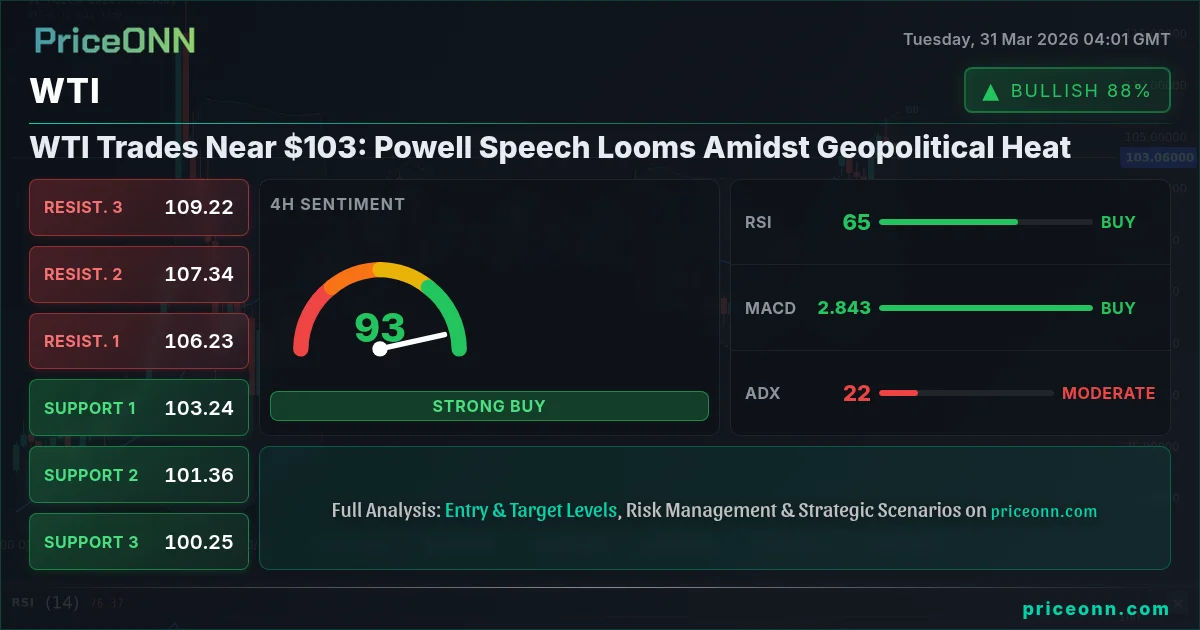
Traders should closely monitor developments in the Middle East, particularly any further military escalations or significant shifts in diplomatic rhetoric. Key levels to watch for WTI Crude include the recent high of $102.69 as immediate resistance, with a decisive break above this level potentially opening the door for further gains towards the $105-$110 range. Conversely, a de-escalation of tensions or a breakthrough in diplomatic talks could see prices retreat rapidly, testing support levels around $98 and then $95.
The potential for significant price volatility remains high. The threat of supply disruptions, coupled with the uncertainty surrounding Saudi Arabia's pricing for Asian markets, suggests that upward price momentum could be sustained if tensions persist. South Korea's contemplation of public driving restrictions if Brent Crude surpasses $120 per barrel highlights the broader economic implications and the potential for demand-side measures to emerge if prices remain elevated, creating a complex supply-demand dynamic.
Outlook
The immediate outlook for crude oil remains heavily influenced by the geopolitical situation in the Middle East. While diplomatic efforts are reportedly underway, the aggressive posturing and continued disruption of key transit routes suggest that oil prices are likely to remain sensitive to headlines from the region. Any definitive resolution or, conversely, a significant escalation, will dictate the next major price move. Traders should prepare for continued volatility as the market digests ongoing developments.
Frequently Asked Questions
What is driving the current surge in crude oil prices?
Crude oil prices, particularly WTI, have surged over 3% to $102.69 per barrel due to escalating geopolitical tensions in the Middle East. Increased U.S. military presence and warnings to Iran regarding the Strait of Hormuz are creating fears of supply disruptions.
How are Middle East tensions affecting oil pricing for Asia?
The conflict is disrupting traditional oil flow benchmarks, leading to price distortions. Saudi Arabia faces pressure to adopt alternative pricing for May cargoes to Asia, as Dubai and Oman benchmarks have surged independently of physical supply, potentially pushing premiums as high as $40 per barrel.
What are the key price levels for WTI Crude to watch?
Traders should watch the immediate resistance at $102.69. A sustained break above this level could target $105-$110. Conversely, support is seen around $98 and $95 should tensions de-escalate.
Track markets in real-time
Empower your investment decisions with AI-powered analysis, technical indicators and real-time price data.
Join Our Telegram Channel
Get breaking market news, AI analysis and trading signals delivered instantly to your Telegram.
Join Channel