
Brent Crude Surges Past $115 as Geopolitical Tensions Escalate

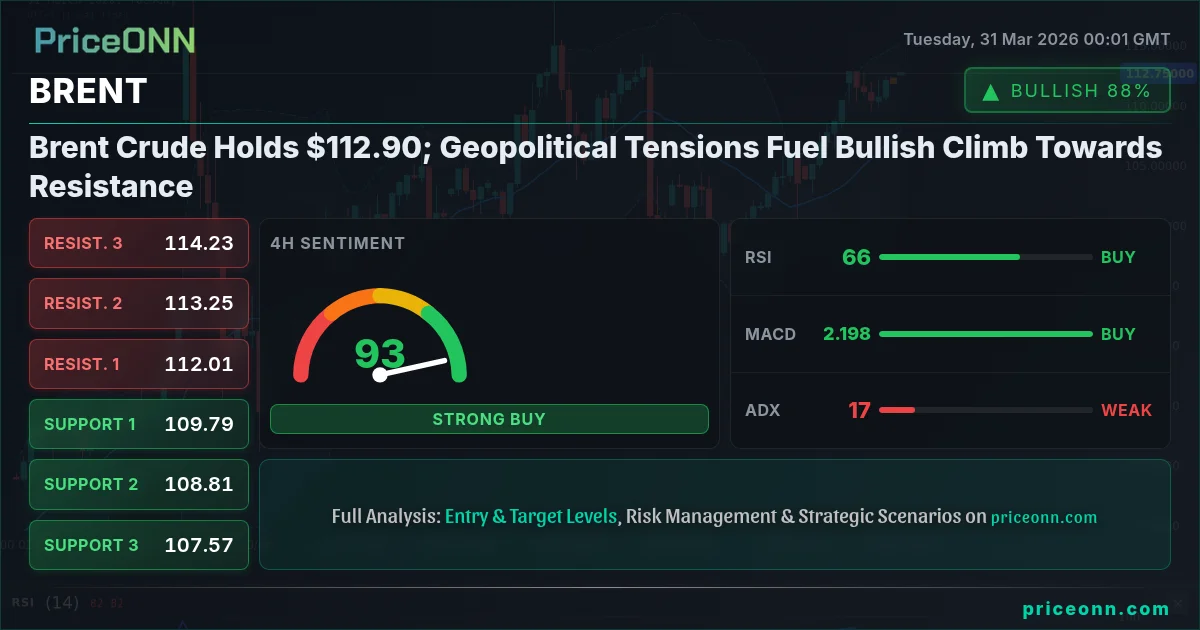
Brent Crude prices have surged past the $115 per barrel mark, driven by a potent cocktail of escalating geopolitical tensions and supply chain anxieties. The international benchmark traded at $115.52, after briefly topping $116 earlier in Asian trading, while West Texas Intermediate (WTI) climbed above $101.04 per barrel. This dramatic price action is occurring as nations like South Korea contemplate unprecedented measures, such as public driving restrictions, if oil prices breach the $120 per barrel level.
Market Context
The current surge in oil prices is largely a response to escalating conflict involving Iran-backed Houthis in Yemen and direct threats from the U.S. towards Iran's energy infrastructure. Early trading saw crude futures climb by over 2%, reflecting immediate market reactions. This volatility is particularly concerning for energy-importing nations, with South Korea already implementing staggered vehicle access for civil servants based on license plate digits. Such measures have not been seen on a public scale since 1991, underscoring the severity of the current energy cost pressures.
Analysis & Drivers
The primary drivers behind the recent price spike are multifaceted, rooted deeply in geopolitical instability. A joint U.S. and Israeli aerial campaign has reportedly choked off transit through the Strait of Hormuz, a critical chokepoint for global oil shipments. This disruption, coupled with President Donald Trump's explicit threats to destroy Iran's oil wells and power plants if a ceasefire is not reached, has injected significant uncertainty into the market. Analysts note that the traditional pricing mechanisms for Middle Eastern crude, particularly Saudi Arabia's official selling prices (OSPs) for Asian markets, are under immense strain. The benchmark average of Dubai and Oman crude assessments, historically used for Saudi sales, is becoming unreliable due to physical supply route disruptions. This could lead to a dramatic increase in premiums for Saudi crude, potentially soaring to $40 per barrel above the Oman/Dubai average, a stark contrast to the $2.50 premium for April loadings.
Furthermore, the potential for further supply disruptions looms. If Red Sea exports are significantly impacted, Saudi Arabia may need to reroute oil through the SUMED pipeline, which has a capacity of 2.5 million barrels per day. The market is also grappling with Iran's recent presentation of its own de-escalation conditions, including asserting sovereignty over the Strait of Hormuz and demanding reparations, adding another layer of complexity to diplomatic efforts.
Trader Implications
Traders should brace for continued volatility as geopolitical rhetoric intensifies and potential supply disruptions remain a tangible threat. Key levels to watch include the $115-$120 range for Brent crude, with a sustained breach above $120 potentially triggering more drastic demand-side measures from importing nations. The widening gap between paper benchmarks and actual physical supply is a critical indicator of market stress. Asian refiners, in particular, face a challenging environment as they await Saudi Arabia's OSPs, with the risk of significantly higher premiums impacting their refining margins. Traders should monitor:
- Geopolitical Developments: Any further escalation or de-escalation in the U.S.-Iran tensions will directly impact price direction.
- Supply Route Security: Developments regarding the Strait of Hormuz and Red Sea shipping lanes are crucial.
- Saudi OSP Announcements: The pricing strategy for May loadings will provide insight into market expectations and Saudi Arabia's pricing power.
The risk of oil prices achieving their largest monthly gain on record, potentially exceeding a 59% increase seen in March, remains high if current trends persist.
Outlook
The outlook for oil prices remains heavily dependent on the geopolitical chessboard. While diplomatic channels are reportedly showing some signs of progress, the explicit threats and ongoing conflict suggest that significant price support will persist in the near term. The market is walking a tightrope, with the potential for a ceasefire or a further escalation of hostilities posing distinct but equally impactful outcomes for global energy markets. Traders should remain cautious, prepared for sharp price swings as events unfold.
Frequently Asked Questions
What is the current price of Brent Crude and its recent performance?
Brent Crude is currently trading above $115 per barrel, having recently topped $116. The benchmark is on track to record one of its largest monthly gains, potentially nearing a 59% increase for March.
What measures might South Korea implement if oil prices reach $120 per barrel?
If Brent Crude surpasses $120 per barrel, South Korea is considering extending vehicle usage restrictions to the general public. This would be the first time such widespread driving curbs have been imposed since 1991.
How is the conflict impacting Saudi Arabia's oil pricing for Asia?
The conflict has disrupted traditional pricing benchmarks like the Dubai/Oman average. This could force Saudi Arabia to set significantly higher premiums for its May-loading cargoes to Asia, potentially reaching as high as $40 per barrel above the benchmark, compared to $2.50 for April.
Track markets in real-time
Empower your investment decisions with AI-powered analysis, technical indicators and real-time price data.
Join Our Telegram Channel
Get breaking market news, AI analysis and trading signals delivered instantly to your Telegram.
Join Channel


PriceONN