
Why Did WTI Crude Jump Over 3%? Tensions Escalate in the Middle East
West Texas Intermediate (WTI) crude oil prices experienced a significant rally, climbing over 3% to reach approximately $102.69 per barrel. This sharp upward movement occurred as geopolitical tensions in the Middle East intensified, driven by increased U.S. military presence and escalating rhetoric between the United States and Iran.
Market Context
The crude oil market saw a dramatic shift on Monday, with WTI futures for May delivery jumping by $3.05, or 3.06%. This surge follows a period of consolidation, where prices had pulled back from recent three-week highs near $101.40 but found support above the $98.50 mark. The underlying market sentiment remains sensitive to developments in the Persian Gulf, with traders closely monitoring any signs of supply disruption. The conflict involving the U.S. and Iran, now in its fifth week, has kept the market on edge, particularly concerning the vital Strait of Hormuz. Despite earlier indications of a potential diplomatic resolution, Iran's continued stance has fueled fears of a prolonged conflict, which could significantly impact global oil flows.
Analysis & Drivers
The primary catalyst for the recent price surge is the escalating geopolitical risk in the Middle East. Reports indicate that the U.S. has dispatched additional troops to the region, signaling a potential for increased military intervention. Concurrently, U.S. President Donald Trump issued a stern warning to Iran regarding the Strait of Hormuz, threatening severe repercussions if it remains obstructed. While the President also presented a peace proposal and spoke of progress, Iranian officials and media have largely refuted claims of ceasefire talks, underscoring the persistent diplomatic deadlock. The blockage or potential disruption of the Strait of Hormuz, a critical chokepoint for global oil transit, is a major concern for market participants. The deployment of approximately 5,000 U.S. troops, including 2,500 Marines, further heightens the risk of direct military engagement. This heightened uncertainty over supply, coupled with the persistent refusal of Iran to engage in substantive diplomatic de-escalation, is driving prices higher. Factors such as the value of the U.S. Dollar and weekly inventory reports from agencies like the EIA also play a role, but the immediate driver is the geopolitical risk premium being factored into oil prices.
Trader Implications
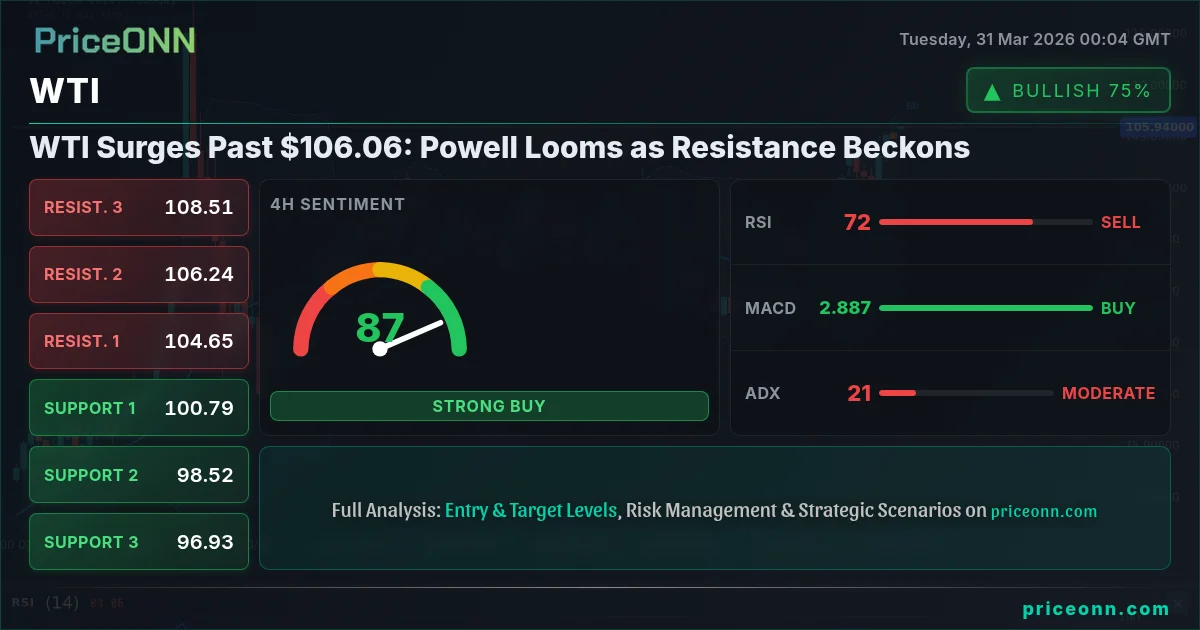
Traders should closely monitor developments surrounding U.S.-Iran relations and any official statements regarding the Strait of Hormuz. Key price levels to watch include the recent high of $102.69 as immediate resistance, with a sustained move above this level potentially signaling further upside towards the $105-$107 range. Support is currently seen holding firm around the $100-$98.50 area. Any news indicating a de-escalation of tensions or a diplomatic breakthrough could lead to a sharp correction, while further escalation or a physical disruption of oil transit would likely propel prices significantly higher. The market's sensitivity to supply-side shocks means that any adverse geopolitical event could trigger substantial volatility.
Outlook
The outlook for WTI crude oil remains heavily influenced by the geopolitical situation in the Middle East. While diplomatic efforts continue, the lack of concrete progress and the continued military posturing suggest that supply concerns will persist in the near term. Traders should anticipate continued volatility as the situation unfolds. Upcoming U.S. inventory data will provide further insight into demand-supply dynamics, but geopolitical headlines are expected to dominate market sentiment. A sustained conflict or a miscalculation could push oil prices substantially higher, while a genuine diplomatic resolution could lead to a significant price retracement.
Frequently Asked Questions
What is the current price of WTI crude oil?
As of the latest reports, West Texas Intermediate (WTI) crude oil is trading around $102.69 per barrel, marking a significant increase of over 3% due to escalating Middle East tensions.
What is driving the recent surge in oil prices?
The primary driver is the heightened geopolitical risk in the Middle East, specifically the increased U.S. military presence and the ongoing verbal exchanges between the U.S. and Iran concerning the Strait of Hormuz. This has amplified concerns about potential oil supply disruptions.
What are the key price levels to watch for WTI crude oil?
Traders should watch for resistance at the current high of approximately $102.69, with potential upside targets around $105-$107. Immediate support is located near the $100-$98.50 range. A sustained breach of these levels will indicate the next direction.
Track markets in real-time
Empower your investment decisions with AI-powered analysis, technical indicators and real-time price data.
Join Our Telegram Channel
Get breaking market news, AI analysis and trading signals delivered instantly to your Telegram.
Join Channel
PriceONN