
Why Did Crude Oil Jump 3% as Middle East Tensions Escalate?

Crude oil futures experienced a significant upward move on Monday, with West Texas Intermediate (WTI) for May delivery climbing by $3.05, or 3.06%, to trade at $102.69 per barrel. This sharp rise is directly attributable to escalating geopolitical tensions in the Middle East, a region critical for global energy supply, and concerns over potential disruptions to vital shipping lanes.
Market Context
The surge in oil prices comes as the Middle East faces heightened war tensions. Reports indicate that the United States has dispatched additional military forces to the region, while President Trump issued a stern warning to Iran regarding the Strait of Hormuz. The conflict, now reportedly in its fifth week, has created a volatile environment for energy markets. Despite previous diplomatic efforts, including an extended pause on attacks and a peace proposal, Iran's stance on negotiations has been refuted by some Iranian officials, leading to persistent uncertainty. The blockage of the Strait of Hormuz, a crucial chokepoint for global oil transit, remains a central point of concern, driving up fears of supply scarcity.
Analysis & Drivers
Several factors are converging to propel crude oil prices higher. Firstly, the increased military presence and strong rhetoric from the U.S. administration regarding Iran's actions, particularly concerning the Strait of Hormuz, are heightening fears of a broader conflict. This geopolitical risk premium is a significant driver in the energy market. Secondly, the ongoing conflict has directly impacted oil flows, leading to price distortions and uncertainty in pricing mechanisms. Saudi Arabia, the world's top crude exporter, is facing challenges in setting its official selling prices (OSPs) for May-loading cargoes to Asia. Traditional pricing benchmarks, like the average of Dubai and Oman crude assessments, are becoming unreliable due to the disrupted physical supply routes. Analysts note that if the current pricing mechanism persists, the premium for Saudi Arabia's Arab Light crude could skyrocket to as much as $40 per barrel above the Oman/Dubai average, a dramatic increase from the $2.50 per barrel premium seen for April loadings.
Adding to the supply side concerns, Iran-backed Houthis in Yemen are reportedly involved in the escalating conflict, further complicating the regional security landscape and potentially impacting shipping routes in other areas. This wider involvement increases the complexity and potential duration of the instability, thereby reinforcing upward pressure on oil prices.
Trader Implications
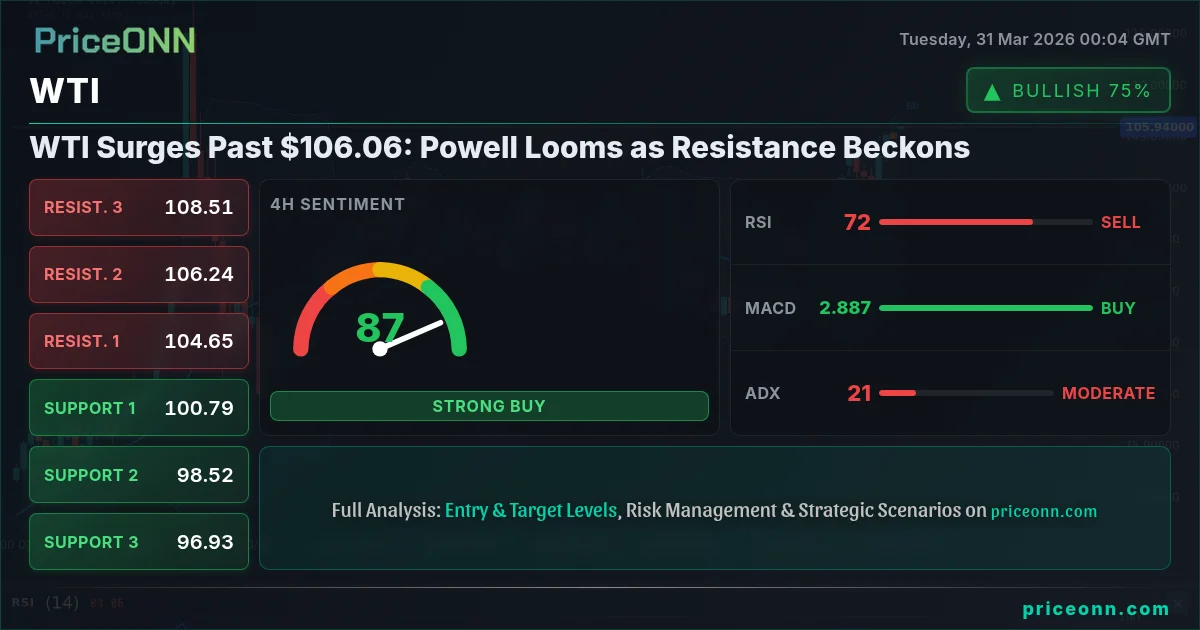
Traders should closely monitor the developments surrounding the Strait of Hormuz and any official statements from the U.S. and Iran. Key price levels to watch for WTI crude include immediate resistance around the $105 mark, with further upside potential targeting $110 if tensions continue to escalate. Conversely, a de-escalation in rhetoric or a clear diplomatic breakthrough could see prices retrace rapidly. The widening gap between paper benchmarks and actual physical supply suggests a market that is increasingly sensitive to supply disruptions.
Furthermore, the potential for demand-side measures, such as driving restrictions in countries like South Korea, could emerge if prices breach certain thresholds. Reports indicate that South Korea is contemplating extending driving curbs to the general public if Brent Crude surpasses $120 per barrel, a scenario that was last seen in 1991. While this is a precautionary measure, it highlights the sensitivity of major economies to sustained high energy costs and could signal future demand adjustments.
Outlook
The immediate outlook for crude oil remains bullish, driven by elevated geopolitical risks and supply concerns. The market will be highly sensitive to any shifts in the U.S.-Iran dynamic and the security of key shipping lanes. While diplomatic efforts may offer temporary respite, the underlying tensions suggest that oil prices could remain volatile and trend higher in the short to medium term. Traders should maintain a cautious approach, prepared for sharp price swings based on geopolitical headlines and evolving supply-demand fundamentals.
Frequently Asked Questions
What is the immediate impact of Middle East tensions on crude oil prices?
Crude oil prices jumped significantly, with WTI crude rising by over 3% to $102.69 per barrel on Monday. This surge is a direct response to heightened geopolitical tensions, increased U.S. military presence in the region, and fears of disruptions to vital oil transit routes like the Strait of Hormuz.
How might Saudi Arabia's oil pricing for Asia be affected?
The ongoing conflict is disrupting oil flows and distorting traditional pricing benchmarks. Saudi Arabia is under pressure to switch to alternative pricing as the average of Dubai and Oman crude assessments, typically used for setting prices for May-loading cargoes, has become unreliable. This could lead to a dramatic increase in the premium for Saudi crude, potentially reaching $40 per barrel.
What is the outlook for crude oil prices given the current situation?
The short-to-medium term outlook for crude oil prices remains bullish due to persistent geopolitical risks and supply concerns. Traders should expect continued volatility, with prices likely to trend higher unless there is a significant de-escalation in regional tensions or a clear diplomatic resolution.
Track markets in real-time
Empower your investment decisions with AI-powered analysis, technical indicators and real-time price data.
Join Our Telegram Channel
Get breaking market news, AI analysis and trading signals delivered instantly to your Telegram.
Join Channel
PriceONN