Will Middle East Tensions Push Brent Crude Past $120 and LNG to $26 Per MMBtu?
Brent crude oil prices are forecast to reach an average of $120 per barrel in the second quarter, while Japanese Liquefied Natural Gas (LNG) prices are expected to hit $26 per MMBtu, as the Middle East crisis deepens and extends beyond initial predictions.
Market Context
The energy markets are grappling with a significantly more substantial and persistent shock originating from the Middle East conflict. What was initially anticipated as a shorter-term disruption has now evolved into a crisis projected to impact supply and prices for an extended period. Market data indicates that vital shipping lanes, particularly the Strait of Hormuz, face potential closures lasting up to eight weeks, a considerable escalation from earlier forecasts of a one-month interruption. This prolonged disruption is not only expected to elevate peak energy prices but also to lengthen the timeline for market recovery.
The path back to normalcy for energy flows is now seen as a protracted one. Projections suggest traffic through key maritime chokepoints may not reach more than 20% of its usual volume until May, with a full return to pre-crisis operational capacity not anticipated until the end of 2026. Several factors contribute to this slower normalization: limited shipping access for nations not directly involved in the conflict, persistently high insurance premiums reflecting ongoing risks, and the complex logistical challenges shipping companies face in rerouting vessels and securing new contracts.
Analysis & Drivers
The primary driver behind the upward revision in price forecasts is the escalating severity and duration of the Middle East crisis. Industry reports indicate that the extended closure of critical transit points and the slower pace of reopening are forcing smaller Gulf producers into temporary production halts, or 'shut-ins,' due to storage capacity limitations. Analysts now estimate a global oil production shortfall of approximately 6 million barrels per day for the second quarter, exacerbated by damage to existing energy infrastructure.
While major oil-producing nations like Saudi Arabia and the UAE possess capabilities to reroute exports via operational pipelines and may tap into strategic reserves, the overall risk profile for supply remains heavily skewed downwards. Further damage to energy infrastructure or the potential involvement of other critical shipping routes, such as the Red Sea, could trigger an even more dramatic escalation in prices and supply constraints. The impact on LNG prices is also significant, with Japanese LNG benchmarks closely mirroring the upward pressure seen in crude oil markets due to the interconnectedness of global energy supply and demand dynamics.
Trader Implications
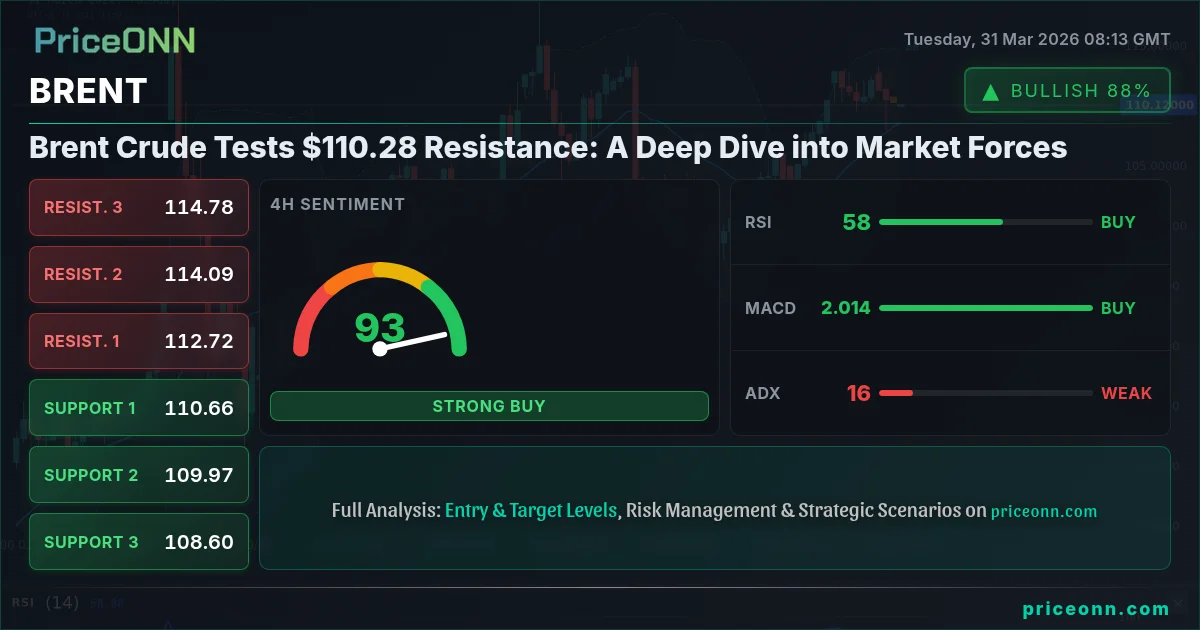
Traders should brace for continued volatility in energy markets. The projected peak of $120 per barrel for Brent crude and $26 per MMBtu for Japanese LNG represent significant upside potential, suggesting a bullish short-to-medium term outlook for these commodities, provided the geopolitical situation remains tense. Key levels to watch for Brent crude will be the psychological $100 mark and the previously established highs, with $120 acting as a potential target. For LNG, the $20 per MMBtu level will be a crucial psychological barrier, with $26 representing a significant upside target.
Risk factors include any de-escalation in the Middle East conflict, which could rapidly reverse price gains, or a swift resolution to shipping lane blockades. Conversely, any further escalation, including broader regional conflict or direct attacks on major energy facilities, could push prices even higher than currently forecast. Traders should consider hedging strategies or options plays to manage the heightened risk and potential for sharp price movements. Monitoring shipping data, geopolitical statements, and inventory reports will be critical in navigating this environment.
Outlook
The outlook for oil and gas prices remains heavily dependent on the geopolitical trajectory in the Middle East. With forecasts pointing to prolonged disruption and higher price peaks, the energy landscape appears set for continued turbulence. The potential for increased inflation, particularly in countries heavily reliant on energy imports like Australia, where CPI is now expected to peak at 5.4% in the June quarter, adds another layer of complexity. Traders and investors should maintain a cautious yet attentive stance, prepared for potential further price appreciation should the situation deteriorate, while remaining aware of the risks associated with a sudden de-escalation.
Frequently Asked Questions
What is the projected peak price for Brent crude oil amid the Middle East crisis?
Market data indicates that Brent crude oil is projected to peak at an average of $120 per barrel in the second quarter of the year due to prolonged supply disruptions and infrastructure damage.
How long is the Strait of Hormuz expected to be significantly impacted?
The Strait of Hormuz could remain effectively impassable for up to eight weeks, with traffic only expected to return to approximately 20% of normal volumes by May, and full recovery not anticipated until the end of 2026.
What are the key risks for traders in the current energy market?
Key risks include a rapid de-escalation of the Middle East conflict which could cause prices to fall sharply, or conversely, further escalation leading to even higher price surges. Monitoring geopolitical developments and shipping data is crucial.
Track markets in real-time
Empower your investment decisions with AI-powered analysis, technical indicators and real-time price data.
Join Our Telegram Channel
Get breaking market news, AI analysis and trading signals delivered instantly to your Telegram.
Join Channel