
Why Are US Gas Prices Surging Despite Domestic Oil Production?

The specter of geopolitical conflict has once again sent shockwaves through the energy markets, with US gasoline prices experiencing a dramatic surge. Drivers are grappling with an increase of approximately 50 cents per gallon in a remarkably short period, following escalating tensions in the Middle East. This sudden spike has pushed the national average price of gasoline up by nearly $1.00 per gallon over the last month, marking one of the fastest ascents in decades, according to market data.
Market Context: A Rapid Price Escalation
The immediate catalyst for this sharp rise appears to be the outbreak of hostilities involving Iran, a significant oil-producing nation and a key player in global energy transit routes. The Strait of Hormuz, through which approximately 20% of the world’s oil supply flows, is a critical chokepoint. Any disruption or perceived threat to this waterway immediately impacts global oil prices as traders price in the heightened risk of supply disruptions. This has led to an almost instantaneous reaction in prices, even though the gasoline in consumers' tanks was refined from crude oil purchased weeks prior when prices were considerably lower.
While the rapid price increase may feel exploitative to consumers, attributing it solely to corporate greed oversimplifies a complex interplay of global market dynamics, supply chain vulnerabilities, and predictable behavioral patterns. The perception of energy independence in the United States often clashes with the reality of its deep integration into the global energy system. Despite the US being the world's largest oil producer, domestic prices are not set in isolation. Instead, they are intrinsically linked to global benchmarks, as US crude is sold into international markets. Consequently, American refiners must compete in this global marketplace, often paying prices that reflect international supply and demand, as well as geopolitical risk premiums.
Analysis & Drivers: Beyond Domestic Production
The core of the issue lies in how oil, and subsequently gasoline, is priced. The global oil market operates as a single, interconnected system. When supply is threatened anywhere in the world, prices tend to react universally. The US, while a major producer, is not immune to these global forces. Its status as the largest producer simply means it is deeply embedded within this system, rather than insulated from it. When a critical transit point like the Strait of Hormuz faces risk, traders worldwide immediately adjust their bids and offers for crude oil, factoring in the potential for reduced supply. This risk premium is then reflected in the price of oil futures, which in turn influences the cost of refined products like gasoline.
Furthermore, the refining process itself introduces a time lag. The gasoline sold at the pump today was produced from crude oil that was likely purchased and processed weeks ago. However, the price consumers pay reflects the current cost of replacement crude, which includes the latest risk premiums and market sentiment. This explains why prices can jump significantly even when the physical product in the tank originated from cheaper feedstock. The market is forward-looking, constantly adjusting to anticipate future supply and demand conditions, as well as potential geopolitical disruptions.
The current situation highlights several key drivers affecting gasoline prices:
- Geopolitical Risk Premium: Escalating tensions in the Middle East, particularly concerning Iran and the Strait of Hormuz, have injected a significant risk premium into global oil prices.
- Global Supply & Demand Dynamics: While US production is high, global demand remains robust, and any perceived threat to supply from major producing regions or transit routes can trigger price spikes.
- Refinery Input Costs: The cost of crude oil used as feedstock for gasoline production has increased, directly impacting the wholesale price of gasoline.
- Consumer Behavior: Anticipation of further price increases can sometimes lead to a temporary surge in demand as consumers attempt to 'top off' their tanks, further exacerbating upward price pressure.
Trader Implications: Navigating Volatility
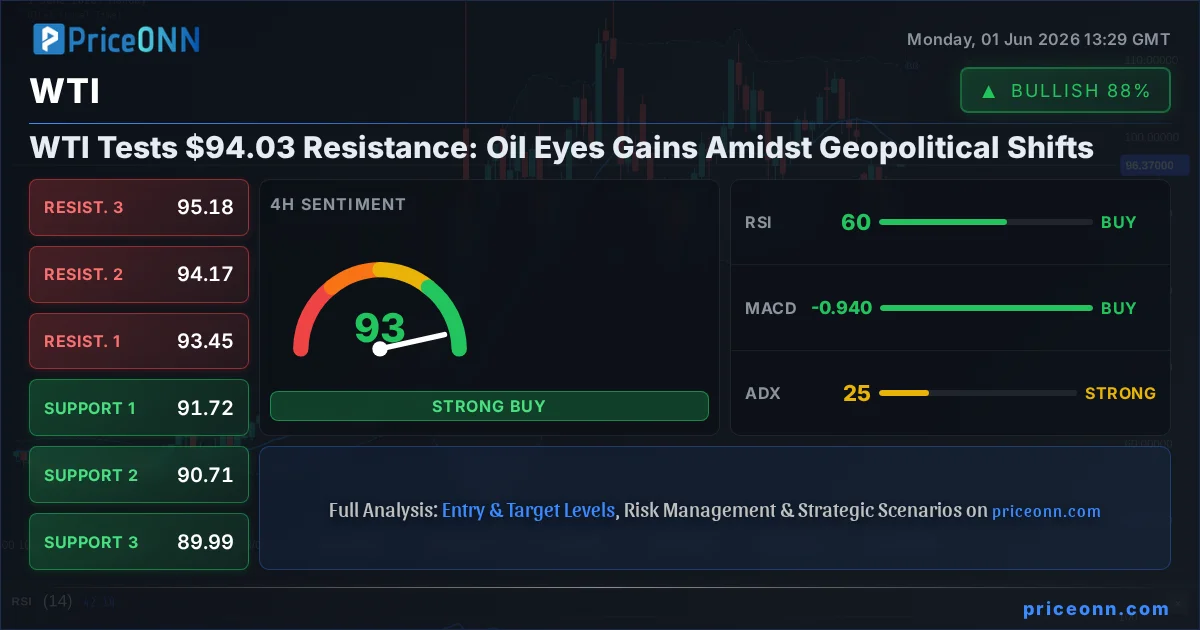
For traders, the current environment presents both opportunities and significant risks. The heightened volatility in crude oil and gasoline futures requires a cautious approach. Key levels to watch include the recent highs in West Texas Intermediate (WTI) and Brent crude oil benchmarks, which have shown strong upward momentum. Resistance levels previously established during periods of geopolitical tension will be critical to monitor.
Traders should pay close attention to developments in the Middle East, as any de-escalation or further escalation will have a direct impact on market sentiment and pricing. Economic data releases, particularly those related to inflation and consumer spending, will also be important, as they can influence demand expectations. For those looking to trade energy commodities, understanding the interplay between geopolitical events, supply chain logistics, and global demand is paramount. Short-term trading strategies might focus on the immediate reactions to news flow, while longer-term positions would require a deeper analysis of the sustainability of supply disruptions and potential shifts in global energy policy.
The implication for traders is clear: expect continued volatility. The $80 per barrel mark for WTI crude has been a significant psychological level, and its breach, coupled with the rapid ascent in gasoline prices, suggests underlying market strength driven by fear and potential scarcity. Support levels for crude oil are now being tested, with a decisive break above $85 potentially signaling further upside. Conversely, a swift de-escalation of tensions could lead to a rapid unwinding of the risk premium, causing prices to retreat sharply.
Outlook: An Uncertain Path Ahead
The immediate future for gasoline prices remains closely tied to the geopolitical situation in the Middle East. If tensions de-escalate, we could see a correction in oil and gasoline prices as the risk premium subsides. However, the market has demonstrated a strong sensitivity to supply-side risks, and any lingering concerns about the stability of global oil flows could keep prices elevated. The upcoming OPEC+ meeting will also be crucial, as any decisions regarding production quotas could further influence supply dynamics. For now, consumers and traders alike should brace for continued price fluctuations as the energy market navigates this period of heightened uncertainty.
Frequently Asked Questions
Why have US gas prices jumped by nearly $1.00 per gallon in a month?
The surge is primarily driven by escalating geopolitical tensions in the Middle East, particularly concerning the Strait of Hormuz, which accounts for about 20% of global oil flow. This has added a significant risk premium to global oil prices, impacting refinery input costs and subsequently gasoline prices, which have risen nearly $1.00 per gallon in the past month.
How does US oil independence relate to these price increases?
Despite being the world's largest oil producer, the US is deeply integrated into the global energy market. US crude is sold internationally, meaning domestic refiners must compete at global prices. Geopolitical events affecting supply anywhere in the world, like those near the Strait of Hormuz, impact global benchmarks, which then dictate prices for US refiners and consumers, even with high domestic production.
What should traders watch for in the coming weeks?
Traders should monitor geopolitical developments in the Middle East closely, as well as key price levels for crude oil benchmarks like WTI, watching for breaks above resistance at $85 per barrel. Economic data impacting demand and any production decisions from OPEC+ will also be critical factors influencing price direction and volatility.
Track markets in real-time
Empower your investment decisions with AI-powered analysis, technical indicators and real-time price data.
Join Our Telegram Channel
Get breaking market news, AI analysis and trading signals delivered instantly to your Telegram.
Join Channel PriceONN News
The Iran war suddenly turned what had started as a year of oversupply in global oil and LNG markets into the worst oil and gas supply disruption in history. Three months after the U.S.-Israeli strikes on Iran began on February 28, the world has already lost 1 billion barrels of crude oil supply, oil and gas prices have found a new, much higher floor, and whipsaw with violent volatility nearly every day, trade routes have shifted, and tanker rates have spiked. Actual supply shortages are...
PriceONN News
Crude oil prices experienced a significant drop, with WTI futures falling over 1.8% to $87.25, as optimism grew for a U.S.-Iran deal potentially reopening the Strait of Hormuz.
PriceONN News
Crude oil prices experienced a significant downturn as market sentiment shifted towards optimism about a potential US-Iran Memorandum of Understanding that could reopen the Strait of Hormuz. WTI futures fell nearly 2% on the news.
PriceONN News
(RTTNews) - Crude oil prices have tumbled on Friday as expectations of the U.S. and Iran signing a Memorandum of Understanding run high. The MoU would allow for immediate reopening of the Strait of Hormuz and pave the way for the resumption of oil and energy trade.
PriceONN News
Crude oil futures experienced a dramatic intraday reversal on Thursday, soaring overnight on geopolitical fears only to pull back significantly as reports of a potential diplomatic understanding between the U.S. and Iran emerged.
PriceONN News
Crude oil futures experienced a dramatic intraday reversal, soaring to $92.52 before pulling back significantly on Thursday. The volatile session was driven by shifting geopolitical narratives and U.S. inventory data.
PriceONN News
Crude oil futures experienced a dramatic reversal, soaring overnight to $92.52 before plummeting nearly 6% to $89 a barrel. This volatility was driven by escalating US-Iran tensions followed by reports of a potential preliminary diplomatic understanding.
PriceONN News
(RTTNews) - Crude oil futures skyrocketed overnight but have shown a significant pullback over the course of the trading day on Thursday.
PriceONN News
The market’s faith in an imminent US-Iran peace breakthrough has clearly weakened today - but it has not disappeared yet. Oil prices jumped again in after fresh military escalation around the Strait of Hormuz reignited fears of prolonged supply disruptions across the Gulf. Brent crude pushed back toward the mid-$90s after new U.S. strikes inside […] The post Brent Oil Holding Below $100 Suggests Markets Still See Room for a US-Iran Deal appeared first on ActionForex.
PriceONN News
(RTTNews) - Extending the losses from yesterday's session, crude oil prices have gone into freefall on Wednesday as investor expectations on a potential U.S.-Iran agreement continue to rise despite the U.S. refusing to ease its demands.
PriceONN News
(RTTNews) - Crude oil prices have tumbled on Tuesday as optimism about a U.S.-Iran peace deal that could lead to reopening of the Strait of Hormuz soon grows despite reports of fresh U.S. strikes on Iran yesterday.
PriceONN News
Crude oil benchmarks experienced a sharp decline of over 5% this week, driven by renewed optimism surrounding U.S.-Iran peace talks and a potential easing of Middle East tensions. Both Brent and WTI futures saw significant drops as market sentiment shifted towards de-escalation.