
Will Euro Area Inflation Re-Accelerate Past 2.5%? Key Data Due Today


Euro Area inflation is expected to show a marked increase in March, with market data indicating the headline Harmonised Index of Consumer Prices (HICP) could reach 2.6% year-on-year, a substantial jump from February's 1.9%. This surge is largely attributed to rising energy costs, particularly a projected 15% month-on-month increase in petrol prices and a 28% rise in diesel prices, which are estimated to add 0.9 percentage points to the headline figure.
Market Context
The anticipated inflation rebound in the Eurozone comes at a critical juncture, with energy market disruptions stemming from geopolitical tensions casting a shadow over economic stability. While the headline inflation is expected to climb, core inflation, which excludes volatile energy and food prices, is forecast to see a slight dip to 2.3% from 2.4%. This divergence highlights the impact of energy price shocks on the overall inflation basket. The data is a crucial input for the European Central Bank (ECB) ahead of its April meeting, though analysts note that the March print will not fully capture the immediate effects of recent global events, making the April inflation report on April 30 potentially more influential for policy decisions.
Analysis & Drivers
The primary driver behind the expected jump in headline inflation is the significant uptick in energy prices, exacerbated by ongoing geopolitical instability affecting oil and gas markets. EU energy ministers are reportedly coordinating responses to these disruptions, with some nations implementing price caps and energy support packages. On the core inflation front, a slight decrease is anticipated as the inflationary impact of the Winter Olympics in Italy, particularly on services, begins to wane. Central bank officials from both the ECB and the US Federal Reserve are scheduled to deliver speeches, with markets keen to glean insights into their views on inflation dynamics and the potential impact of rising oil prices on economic growth. In the US, the February JOLTS job openings report will provide early labor market signals, following a stronger-than-expected January reading that indicated robust labor demand.
Trader Implications
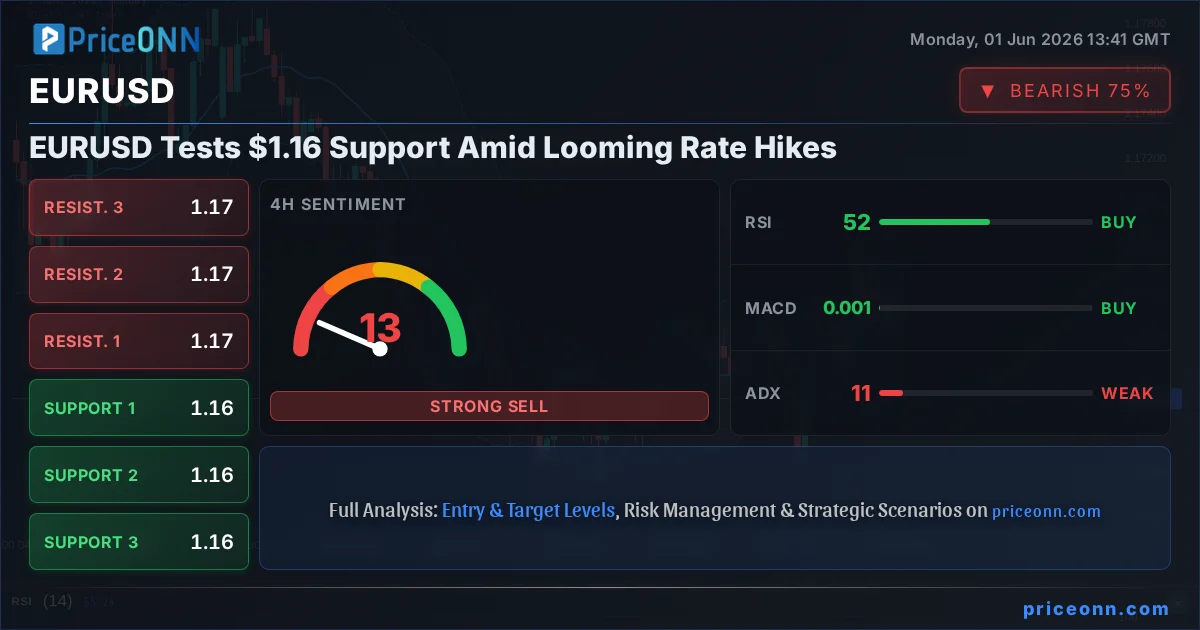
Traders should monitor the Euro Area inflation data closely, particularly the divergence between headline and core figures. A headline HICP print at or above 2.6% could increase pressure on the ECB to adopt a more hawkish stance, potentially strengthening the Euro (EUR). Conversely, if core inflation falls more sharply than anticipated, it might provide some relief and temper immediate rate hike expectations. Key levels to watch for EUR/USD include the 1.0800 support and the 1.0950 resistance. Any commentary from ECB officials regarding the inflation outlook and their reaction function to supply shocks will be critical. For USD traders, the US JOLTS report will offer insights into labor market conditions, which could influence Fed policy expectations.
Outlook
The upcoming Euro Area inflation data is poised to be a significant market mover, dictating short-term sentiment for the Euro and influencing the ECB's forward guidance. While energy prices are expected to push headline inflation higher, the trajectory of core inflation will be key for assessing underlying price pressures. Traders should remain vigilant for potential volatility as the market digests these figures and any accompanying central bank commentary, with the April inflation report on April 30 serving as the next major data point for longer-term policy outlooks.
Frequently Asked Questions
What is the expected inflation rate for the Euro Area in March?
Market data suggests that the headline HICP inflation for the Euro Area in March is expected to rise to 2.6% year-on-year, up from 1.9% in February. This increase is primarily driven by higher energy prices.
How might this inflation data affect the Euro (EUR)?
A headline inflation figure of 2.6% or higher could signal persistent price pressures, potentially leading the ECB to adopt a less dovish stance. This might support the Euro, with key resistance noted around 1.0950 against the US Dollar.
What is the significance of the core inflation forecast?
The core inflation forecast, expected to slightly decrease to 2.3%, is important as it excludes volatile energy and food prices. A sharper-than-expected decline in core inflation could ease concerns about broad-based price pressures, potentially tempering immediate hawkish expectations from the ECB.
Track markets in real-time
Empower your investment decisions with AI-powered analysis, technical indicators and real-time price data.
Join Our Telegram Channel
Get breaking market news, AI analysis and trading signals delivered instantly to your Telegram.
Join Channel PriceONN News
USD/JPY is testing the critical 160 level as stalled US-Iran negotiations and hawkish Federal Reserve rhetoric fuel inflation concerns and a potential for further rate hikes. Traders are closely watching upcoming US Non-Farm Payrolls and Eurozone CPI data for direction.
PriceONN News
EUR/USD stalled below 1.1660 as the US Dollar defied expectations, refusing to weaken despite reports of a US-Iran ceasefire extension. Market participants remain cautious, awaiting concrete confirmation and assessing lingering inflationary pressures.
PriceONN News
EUR/USD closed at 1.1640, showing resilience amid mixed signals. Easing US-Iran tensions initially pressured the dollar, but persistent inflation concerns and political ratification hurdles are keeping the greenback surprisingly steady.
PriceONN News
The EUR/USD faces headwinds as core US PCE inflation unexpectedly rose to 3.3% year-over-year, reinforcing a 'higher for longer' interest rate narrative. Meanwhile, a US-Iran ceasefire extension boosted global risk appetite, potentially drawing capital away from safe-haven currencies.
PriceONN News
EUR/USD stabilized around 1.1640 as reports of a US-Iran ceasefire extension and potential Strait of Hormuz reopening eased inflation fears. However, the US Dollar's resilience suggests lingering caution among forex traders.
PriceONN News
Oil markets have stabilised lower for now and global equity markets have rallied this week on the back of renewed optimism around a deal in the Middle East. On Thursday afternoon, media reports emerged that the US and Iranian negotiators had settled on a Memorandum of Understanding (MOU) that would extend the ceasefire by 60 […] The post Weekly Focus – Optimism Around Iran Deal Lifts Market Sentiment appeared first on ActionForex.
PriceONN News
USDJPY has returned to the area of previous interventions. The ECB is moving towards a rate hike in June. The US dollar retreated on Friday amid new record highs for stock indices and rumours of amendments to the US-Iran agreement. However, tit-for-tat exchanges between the adversaries pushed the dollar index back into the support zone […] The post Yen Braces for a New Storm appeared first on ActionForex.
PriceONN News
The US Dollar experienced a notable decline last week as markets priced in a potential diplomatic resolution to the US-Iran conflict, leading to a drop in oil prices and Treasury yields. This shift in sentiment suggests a move away from stagflation fears towards a more stable economic outlook.
PriceONN News
Canada's labor market is showing signs of stabilization, with analysts predicting a dip in the unemployment rate to 6.8% in May, driven by an expected 25,000 new jobs. This follows a period of sluggish GDP growth and rising joblessness earlier in the year.
PriceONN News
Markets are pricing in a potential de-escalation in the US-Iran conflict, leading to a significant drop in crude oil prices and a weakening US Dollar as diplomatic efforts appear to be gaining traction.
PriceONN News
Canada's economy showed signs of a slowdown in early 2026, but upcoming May jobs data is expected to reveal a modest uplift. Analysts anticipate the unemployment rate to fall to 6.8%.
PriceONN News
USD/CAD faces pressure as Canada's economy shows signs of stalling, with Q1 GDP contracting 0.1% and domestic demand weakening. This comes as trade negotiations and geopolitical shifts add layers of uncertainty.