
Will Fed's Rate Path Remain Unclear Amidst Geopolitical Oil Shocks?
The US Dollar finds itself at a crucial crossroads as Federal Reserve officials grapple with an uncertain path forward for monetary policy, heavily influenced by external geopolitical factors. San Francisco Federal Reserve Bank President Mary Daly indicated that the trajectory of interest rates remains unclear, particularly if escalating geopolitical tensions, such as those involving Iran, lead to sustained increases in oil prices.
Market Context: Geopolitics and Inflationary Pressures
The delicate balance the Federal Reserve aims to maintain between stable prices and maximum employment is being tested by global events. Recent geopolitical developments have injected a significant layer of uncertainty into the economic outlook, with specific attention being paid to the potential impact on energy markets. An oil price shock, if prolonged, could reignite inflationary pressures that the central bank has been diligently working to subdue. This scenario complicates the Fed's decision-making process, as raising rates to combat inflation could inadvertently stifle economic growth, while keeping rates lower could allow inflation to become more entrenched.
The Federal Reserve's primary tool for managing inflation and economic activity is the federal funds rate. Historically, when inflation exceeds the Fed's 2% target, the central bank typically tightens monetary policy by increasing this benchmark rate. This action makes borrowing more expensive, thereby cooling demand and, often, strengthening the US Dollar as capital seeks higher yields. Conversely, a weakening economy or disinflationary pressures might prompt a rate cut, stimulating economic activity and potentially weakening the dollar.
Analysis and Drivers: The Oil Price Dilemma
The critical factor currently influencing the Fed's policy path is the volatility in crude oil prices, exacerbated by geopolitical instability. Market data shows that disruptions in oil supply or significant increases in demand can directly translate into higher consumer prices, a key component of inflation. If the current geopolitical situation leads to a persistent rise in oil costs, the Fed faces a difficult choice: either tighten policy to curb inflation, risking a slowdown, or tolerate higher inflation in the short term to support economic growth.
Furthermore, the Fed's dual mandate means that any policy decision must consider both inflation and employment. A significant hike in oil prices could negatively impact consumer spending and business investment, potentially leading to job losses. This creates a complex trade-off for policymakers. Analysts note that the Fed's reaction function will likely depend on whether the oil price increase is perceived as a temporary supply shock that can be 'looked through' or a more sustained inflationary force.
Beyond interest rate adjustments, the Fed also has unconventional tools at its disposal. Quantitative Easing (QE), which involves expanding the central bank's balance sheet by purchasing assets, has historically been associated with a weaker dollar. Conversely, Quantitative Tightening (QT), the process of shrinking the balance sheet, is generally seen as supportive of the dollar. While these tools are not currently the primary focus, their potential deployment in extreme scenarios cannot be entirely discounted.
Trader Implications: Navigating USD Volatility
For forex traders, the uncertainty surrounding the Fed's next move presents both risks and opportunities. The US Dollar's strength is intrinsically linked to interest rate expectations. Any hint of a more hawkish stance from the Fed, perhaps due to persistent inflation concerns, could see the dollar strengthen against its major counterparts. Conversely, signals that the Fed might pause or even consider easing policy, especially if economic growth falters due to external shocks, could lead to dollar weakness.
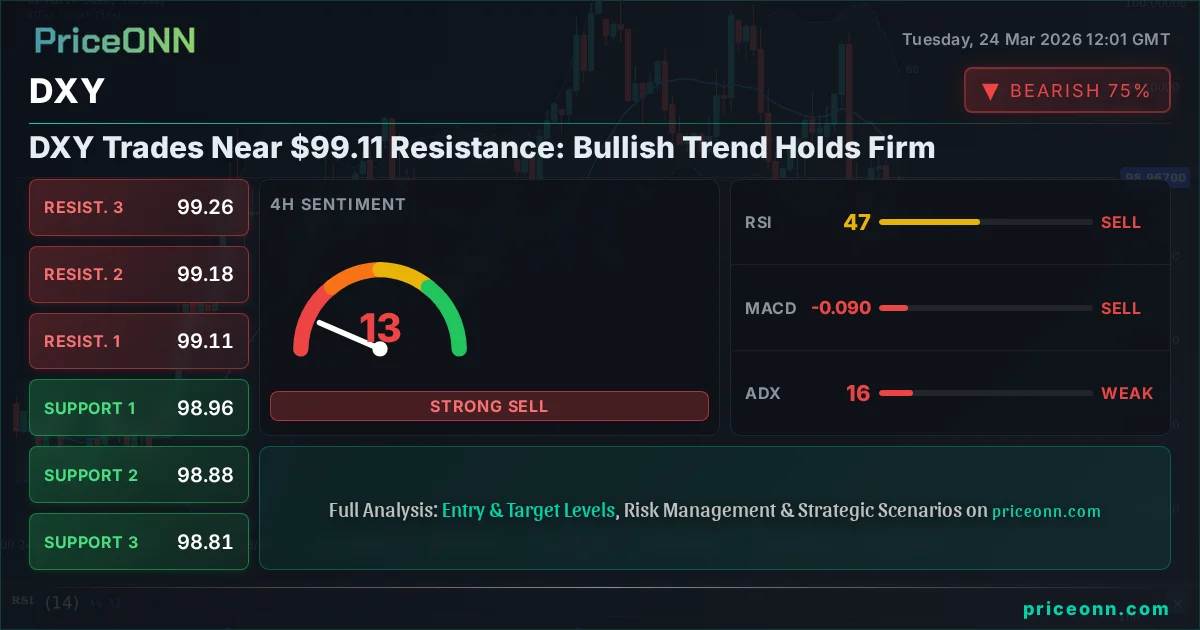
Key levels to watch for the US Dollar Index (DXY) will be crucial. A sustained move above 105.00 could indicate renewed dollar strength, driven by risk aversion or hawkish Fed sentiment. Conversely, a break below 103.50 might signal growing concerns about the US economic outlook or a dovish shift in Fed expectations. Traders should closely monitor economic data releases, particularly inflation figures (CPI and PPI) and employment reports, as these will heavily influence the Fed's narrative.
Geopolitical developments remain a paramount risk factor. Any significant escalation or de-escalation in global hotspots could trigger sharp, unpredictable movements in currency pairs, especially those sensitive to commodity prices like the CAD and NOK. Therefore, maintaining a vigilant eye on news flow related to energy markets and international relations is essential for risk management.
Outlook: A Waiting Game for Monetary Policy
The immediate outlook suggests a period of heightened vigilance for currency markets as traders await clearer signals from the Federal Reserve. The central bank is likely to adopt a data-dependent approach, carefully assessing incoming economic information and the evolving geopolitical landscape. Until a more definitive path for monetary policy emerges, the US Dollar may experience elevated volatility, with price action heavily dictated by inflation data and global risk sentiment. Upcoming FOMC meetings and speeches from key officials will be closely scrutinized for any shifts in tone or policy direction.
Frequently Asked Questions
What is the Fed's primary concern regarding oil prices?
The Fed's primary concern is that sustained increases in oil prices could reignite broader inflationary pressures, making it harder to achieve their 2% inflation target. This complicates their decision on whether to raise interest rates further or hold steady.
How might oil price shocks affect the US Dollar?
Significant oil price shocks can lead to increased inflation expectations, potentially prompting the Fed to tighten policy, which would typically support the US Dollar. However, if the shock severely impacts US economic growth, it could lead to dollar weakness as the Fed might be forced to consider easing.
What is the key indicator for traders to watch regarding the Fed's next move?
Traders should closely monitor US inflation data, particularly the Consumer Price Index (CPI) and Producer Price Index (PPI), as well as employment figures. A CPI reading consistently above 3.5% would likely signal continued hawkish pressure from the Fed.
Track markets in real-time
Empower your investment decisions with AI-powered analysis, technical indicators and real-time price data.
Join Our Telegram Channel
Get breaking market news, AI analysis and trading signals delivered instantly to your Telegram.
Join Channel
PriceONN