
Will the RBA Hike Again as Oil Shocks Push Neutral Rates Higher?

The Australian dollar experienced notable volatility following remarks from the Reserve Bank of Australia (RBA) Assistant Governor Christopher Kent. He warned that ongoing geopolitical tensions in the Middle East are elevating the economy's estimated 'neutral' interest rate, a level considered neither stimulative nor restrictive. This development suggests that current monetary policy might be less restrictive than previously assessed, opening the door for potential future increases in the official cash rate.
Market Context
Assistant Governor Kent highlighted that the persistent supply disruptions stemming from the Middle East conflict are creating significant inflationary pressures. These energy price shocks are effectively acting as a broad tax, diminishing purchasing power and potentially hindering economic output. While global instability typically cools market sentiment, the current scenario presents a dual challenge: managing the immediate economic slowdown caused by supply shocks while actively preventing these price surges from becoming entrenched in long-term inflation expectations. The RBA is grappling with how to respond to substantial asset repricing driven by the conflict, particularly in energy markets, which Kent described as a form of "wealth tax" on the nation.
Analysis & Drivers
The core driver behind the RBA's hawkish undertones is the concept of a rising neutral interest rate. This rate, often referred to as R-star, is an theoretical economic concept representing the interest rate at which the economy is neither expanding nor contracting. If this neutral rate is increasing due to structural factors like prolonged geopolitical instability affecting supply chains, then the current policy rate may not be sufficiently restrictive to curb inflation. The conflict in the Middle East is a critical factor, as it directly impacts global energy supply and prices. Any sustained increase in oil and gas prices translates to higher input costs for businesses and reduced disposable income for consumers, both of which can fuel inflation. The RBA's dilemma is that it cannot directly control global oil supply but must manage the domestic economic consequences, which include inflation and potential shifts in consumer and business behavior that could embed higher price expectations.
Trader Implications
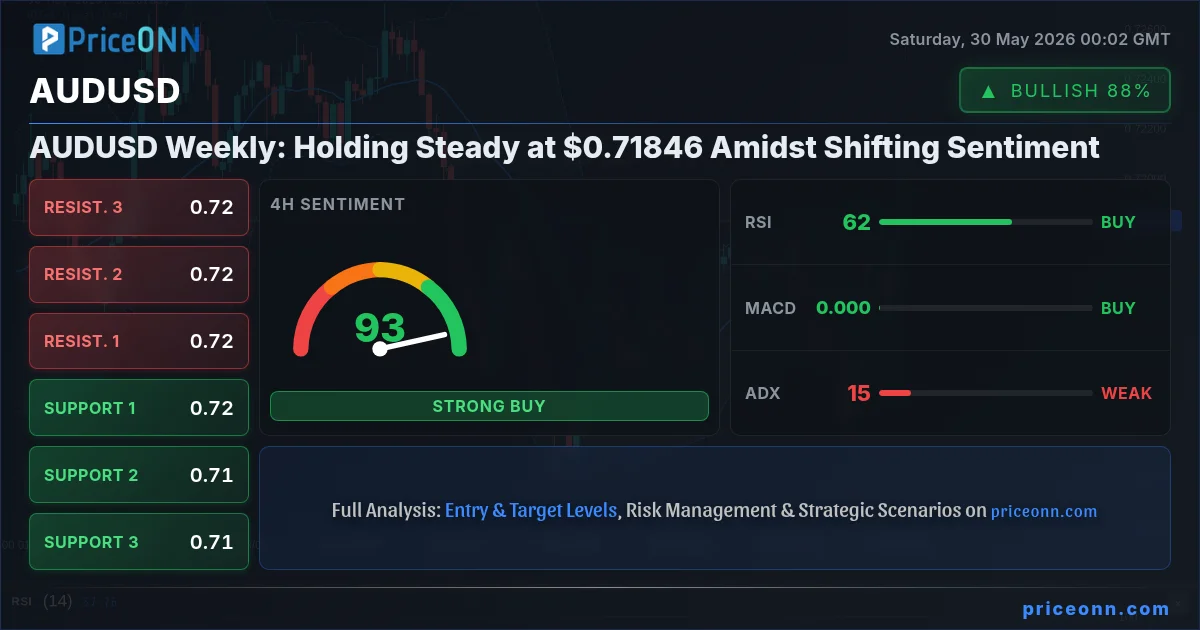
For forex traders monitoring the AUD, the RBA's commentary signals a potential for increased volatility and a bias towards higher interest rates. Key levels to watch for AUD/USD will be influenced by upcoming inflation data and RBA meeting minutes. If the central bank signals a clear intention to hike rates further to combat imported inflation, the Australian dollar could find support. Conversely, any indication that the supply shocks are causing a significant economic downturn could pressure the AUD. Traders should closely monitor energy price movements and assess how these feed into Australian inflation reports and RBA forward guidance. The perceived increase in the neutral rate implies that the RBA might need to maintain a tighter policy stance for longer than previously anticipated, potentially offering a tailwind for the AUD if other major central banks remain dovish.
Outlook
The path forward for the Australian dollar and RBA policy hinges on the trajectory of the Middle East conflict and its impact on global energy markets. If energy prices continue to climb and inflation proves persistent, the RBA may indeed be forced to adopt a more restrictive monetary policy stance, potentially leading to further cash rate hikes. Traders should anticipate continued focus on inflation data and central bank communication, with a keen eye on any shifts in market expectations regarding the RBA's terminal rate. The 'wealth tax' effect of higher energy prices could also dampen domestic demand, creating a balancing act for policymakers.
Frequently Asked Questions
What is the RBA's main concern regarding the Middle East conflict?
The RBA's primary concern is that the conflict is increasing Australia's 'neutral' interest rate and causing energy price shocks that act as a 'wealth tax,' potentially necessitating a more restrictive monetary policy stance to prevent embedded inflation.
How might rising energy prices impact the Australian dollar (AUD)?
Rising energy prices driven by the conflict could lead the RBA to hike interest rates, which historically supports the AUD. However, if these prices significantly slow the Australian economy, it could create downward pressure on the currency.
What are the key levels traders should watch for AUD/USD?
Traders should monitor upcoming Australian inflation data and RBA meeting minutes. Key technical levels for AUD/USD will be influenced by the market's interpretation of the RBA's stance on rate hikes and the persistence of energy-driven inflation, with significant support or resistance potentially forming around 0.6500 or 0.6700.
Track markets in real-time
Empower your investment decisions with AI-powered analysis, technical indicators and real-time price data.
Join Our Telegram Channel
Get breaking market news, AI analysis and trading signals delivered instantly to your Telegram.
Join Channel PriceONN News
USDJPY has returned to the area of previous interventions. The ECB is moving towards a rate hike in June. The US dollar retreated on Friday amid new record highs for stock indices and rumours of amendments to the US-Iran agreement. However, tit-for-tat exchanges between the adversaries pushed the dollar index back into the support zone […] The post Yen Braces for a New Storm appeared first on ActionForex.
PriceONN News
For a market supposedly obsessed with geopolitics, investors appear remarkably calm. The proposed US-Iran agreement remains unsigned, key details are still unresolved, and military exchanges between the two sides continue. Yet financial markets are behaving as though a lasting settlement is only a matter of time. Oil remains well below recent highs, Treasury yields are […] The post Trump Says “Relax”, Markets Appear To Be Listening Despite Ongoing Iran Tensions appeared first on ActionForex.
PriceONN News
USD/CAD is showing signs of potential weakness as Canada's economy struggles with a -0.1% Q1 GDP contraction and the specter of renewed trade uncertainties, while global oil prices react to Middle East truce hopes.
PriceONN News
The US Dollar experienced a notable decline last week as markets priced in a potential diplomatic resolution to the US-Iran conflict, leading to a drop in oil prices and Treasury yields. This shift in sentiment suggests a move away from stagflation fears towards a more stable economic outlook.
PriceONN News
Canada's labor market is showing signs of stabilization, with analysts predicting a dip in the unemployment rate to 6.8% in May, driven by an expected 25,000 new jobs. This follows a period of sluggish GDP growth and rising joblessness earlier in the year.
PriceONN News
The Canadian dollar faces headwinds as domestic demand cools and investment remains sluggish. However, upcoming trade negotiations could offer a much-needed catalyst for a rebound.
PriceONN News
Markets are pricing in a potential de-escalation in the US-Iran conflict, leading to a significant drop in crude oil prices and a weakening US Dollar as diplomatic efforts appear to be gaining traction.
PriceONN News
Canada's economy showed signs of a slowdown in early 2026, but upcoming May jobs data is expected to reveal a modest uplift. Analysts anticipate the unemployment rate to fall to 6.8%.
PriceONN News
The dominant story across financial markets last week was not artificial intelligence, central banks, or economic data. It was a dramatic shift in expectations regarding the future of the US-Iran conflict. Investors increasingly embraced the view that the three-month war is moving toward a diplomatic resolution after reports emerged that negotiators had drafted a 60-day […] The post US-Iran Endgame in Sight? Markets Vote for Peace as Oil, Yields and Dollar Fall appeared first on ActionForex.
PriceONN News
USD/CAD faces pressure as Canada's economy shows signs of stalling, with Q1 GDP contracting 0.1% and domestic demand weakening. This comes as trade negotiations and geopolitical shifts add layers of uncertainty.
PriceONN News
Canada's economy showed signs of life in early 2026, with analysts expecting a moderate job growth of around 25,000 positions and a potential dip in the unemployment rate to 6.8% for May.
PriceONN News
AUD/USD’s late break of 0.7183 resistance suggests that pullback from 0.7277 has already completed at 0.7076, after defending 55 D EMA. Initial bias is back on the upside this week for retesting 0.7277 high first. Firm break there will resume larger up trend. For now, risk will stay on the upside as long as 0.7076 […] The post AUD/USD Weekly Report appeared first on ActionForex.