
Will Sticky Inflation Push GBP/USD Lower Ahead of UK CPI Data?

The British Pound is under scrutiny as traders anticipate the release of the UK's February Consumer Price Index (CPI) data on Wednesday. Market expectations suggest that inflation pressures are likely to remain elevated, posing a significant challenge for the Bank of England's efforts to bring price stability back to the economy. The upcoming ONS figures, due at 07:00 GMT, will be a critical gauge of current inflationary trends.
Market Context
The UK economy has been grappling with persistent inflation, which measures the rate at which general prices for goods and services are increasing, thereby eroding purchasing power. The February CPI print is expected to underscore this ongoing trend. Core inflation, which excludes volatile food and energy prices, is a particularly important metric for central banks as it provides a clearer picture of underlying price pressures. The Bank of England, like many of its global counterparts, typically targets an inflation rate of around 2%. When inflation consistently surpasses this target, it signals potential overheating and often necessitates a tightening of monetary policy, leading to higher interest rates. This has been a recurring theme in the UK, with the market closely monitoring any indications of further policy action or shifts in interest rate expectations.
Analysis & Drivers
The primary driver for the anticipated sticky inflation figures is a combination of global supply chain issues and domestic cost pressures. While global factors may be easing, the UK's specific economic landscape, including labor market dynamics and energy costs, continues to contribute to elevated price levels. The Bank of England's monetary policy response is heavily influenced by these inflation readings. Higher interest rates, if implemented or strongly signaled, can make UK assets more attractive to foreign investors seeking higher yields. This increased capital inflow can, in turn, strengthen the Pound. However, persistent high inflation also carries the risk of dampening consumer demand and hindering economic growth, creating a delicate balancing act for policymakers.
Trader Implications
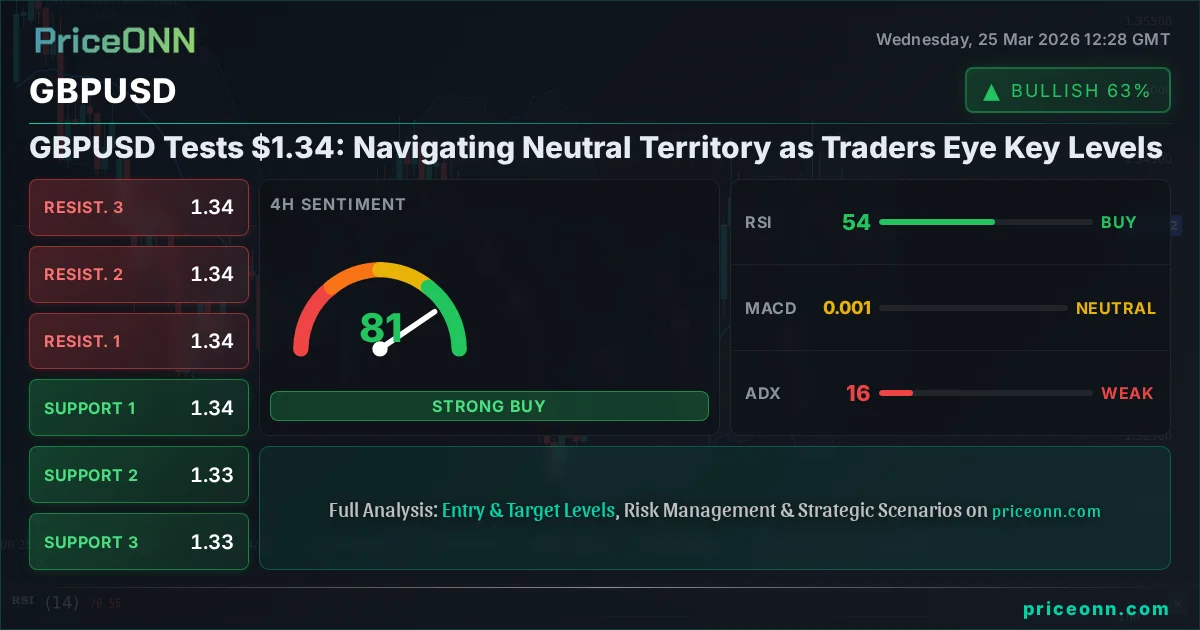
Traders will be closely watching the February CPI data for any surprises that could deviate from the consensus forecast of persistent inflation. A reading significantly above expectations could trigger a hawkish reaction from the Bank of England, potentially leading to a stronger GBP/USD. Conversely, a softer-than-expected inflation print might fuel speculation about potential rate cuts sooner rather than later, putting downward pressure on the Pound. Key technical levels to watch for GBP/USD include immediate resistance around 1.2750 and support near 1.2600. A strong CPI release could see the pair test the upper bounds of this range, while a weaker-than-expected outcome might push it towards the lower support.
Outlook
The outlook for GBP/USD remains heavily dependent on the upcoming inflation data and the subsequent reaction from the Bank of England. While global economic conditions and geopolitical events, such as the ongoing Iran conflict, contribute to broader inflation concerns, the UK's domestic inflation trajectory will be the immediate focus. Traders should remain vigilant for any shifts in market sentiment following the CPI release, as it could set the tone for the currency pair in the short to medium term. The RBA's recent methodology shift to monthly CPI readings in Australia, while a different market, highlights a global trend of closer inflation monitoring, underscoring the importance of these economic indicators.
Frequently Asked Questions
What is the expected UK CPI for February 2026?
Market consensus anticipates that the UK's February Consumer Price Index (CPI) will reflect persistent inflation, though specific percentage forecasts are not universally agreed upon ahead of the official release. However, the underlying trend suggests inflation remains well above the Bank of England's 2% target.
How might the UK CPI data affect GBP/USD?
Higher-than-expected CPI figures could lead the Bank of England to maintain a hawkish stance, potentially strengthening GBP/USD towards the 1.2750 resistance level. Conversely, a surprisingly low print could weaken the pair, testing support around 1.2600.
What is the Bank of England's inflation target?
The Bank of England's primary mandate is to maintain price stability, and its official inflation target is set at 2%. Persistent deviations from this target typically influence monetary policy decisions, including interest rate adjustments.
Track markets in real-time
Empower your investment decisions with AI-powered analysis, technical indicators and real-time price data.
Join Our Telegram Channel
Get breaking market news, AI analysis and trading signals delivered instantly to your Telegram.
Join Channel



PriceONN